During the Month of Spirits, the elders of Mushan Village still whisper a warning born from a dark, forgotten ritual: if the dead begin to count, do not help them finish.
They say the dead count to steady themselves. Numbers replace names. Numbers keep their rotting minds from unraveling in the dark. But if a living person answers—even once—the count no longer belongs to the dead alone.
When I was younger, I treated that warning like every other foolish taboo. Don’t whistle at night, point at the moon, or leave chopsticks upright in a bowl of rice. I did not understand that some rules are not mere superstitions. Some exist to keep something contained.
I learned what those rules were meant to contain far too late.
My mother called me the night before I left for Mushan Village, her voice trembling through the phone.
“Ah-Ming,” she warned, “if you hear the dead counting in the darkness, keep your mouth shut. Don’t answer them, and above all, don’t count with them.”
“It’s just an old superstition, Ma.” I tried to laugh it off. “I’m only going there to clean the house before selling it.”
“It isn’t a game!” she snapped, her breath ragged. “Your grandfather forgot the warning. He answered the count. That is why he died alone in that hall.”
I dismissed her fear as the product of age and grief. I still believed the dead stayed buried.
Arrival & Unease

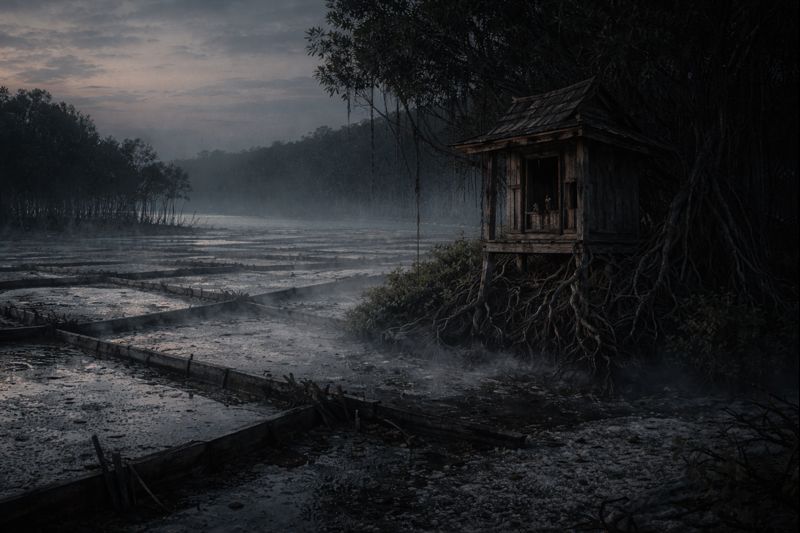
I returned to my ancestral home in Mushan Village just before the Month of Spirits began.
The house had stood empty for years, slowly surrendering to mildew and rot after my grandfather’s mysterious death. As the eldest remaining descendant, clearing it out for sale had fallen to me.
The villagers watched from their porches as I unloaded my bags, neither smiling nor waving.
“You shouldn’t be here, boy,” an old farmer spat as he shuffled past my car.
“I’m only clearing the place out for sale,” I replied, trying to sound friendly.
He paused, staring at me through milky-white eyes. “Then do it quickly. When the red lanterns fade, lock your doors. If you hear the dead counting in the wind… pray.”
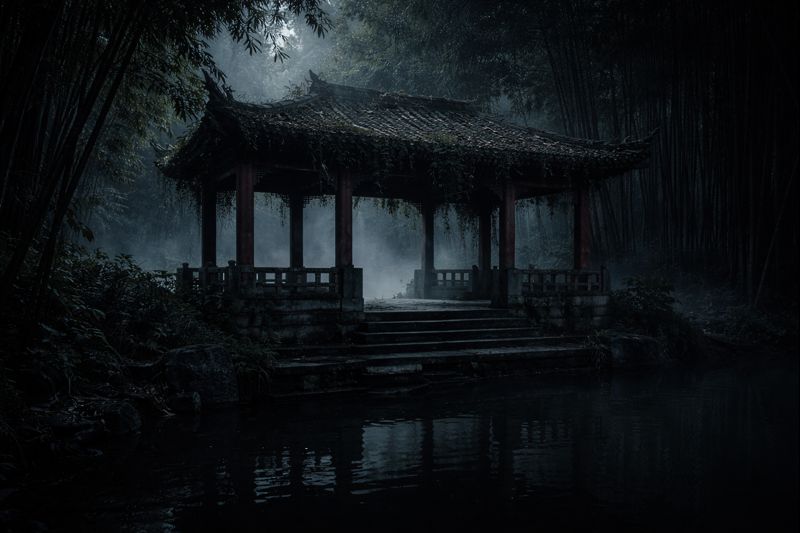
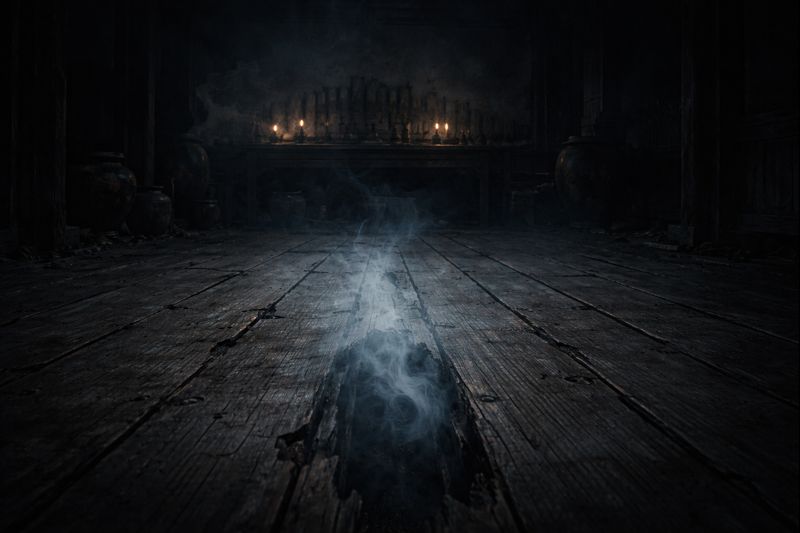
The house was built in the old style, with low beams darkened by incense smoke, faded red images of door gods peeling at the edges, and an ancestral hall lined with wooden tablets arranged like jagged teeth.
Inside, the air smelled of dust and old paper, touched with something faintly metallic. Like fresh blood.
That evening, I swept the floors and burned mosquito coils. When night fell, the village went dead still. No crickets. No wind.
A floorboard creaked in the hallway behind me.
“Who’s there?” I called out, my heart hammering against my ribs.
Only silence answered. The silence felt occupied.
The Counting at 3:17 a.m.
At 3:17 a.m., I woke up to a sound that chilled me to the marrow.
It was counting.
“Fourteen… fifteen… sixteen…”
The voice rasped from directly beneath the floorboards. It was hollow and brittle, like dead leaves scraping across a grave marker. Calm. Precise. Patient.
Each number was followed by an agonizing pause, deliberate enough to feel like an invitation.
“Seventeen…”
The floorboards beneath my bed creaked and bowed as though something heavy were pressing up from below. My skin prickled as cold sweat broke across it. An overwhelming compulsion urged me to fill the silence.
Eighteen, my brain screamed.
My mouth opened. The syllable formed at the back of my throat, ready to escape.
At the last second, I slammed my hand over my mouth, biting back the noise. The temperature in the room plummeted. Frost bloomed across the bedroom window.
Beneath the floor, a slow dragging sound began, moving toward the head of my bed. Then came the scrape of what sounded like a long fingernail against the underside of the floorboards.
It was waiting for me.
I clamped my eyes shut and lay rigid until sunrise, breathing as quietly as I could. If I had spoken, the count would no longer have belonged to the dead alone.
What the Keepers Counted
The next morning, my hands were still shaking as I hurried down the dirt path to the village elder’s house. I found him sitting on his porch, folding golden joss paper into intricate ingots.
“I heard them last night,” I blurted out, my voice cracking. “Under the floor. Counting.”
The elder’s hands stilled. He set the joss paper down without looking at me.
“Your family were keepers,” he said quietly. “Not priests. Not mediums. Accountants.”
“Accountants?” I echoed, stepping onto the porch. “Of what?”
“Your family kept track of the count during the Month of Spirits,” he replied, his gaze fixed on the mountains. “The dead count to hold themselves together—to remember they once existed. But if the dead reach ninety-nine and a living person gives them one hundred, that person dies. Their soul is claimed and added to the tally.”
A sickening cold settled in my stomach. “My grandfather…”
“Your grandfather did not forget,” the elder snapped, finally looking at me. “He answered deliberately, believing he could interrupt the count—but failed.”
He shoved a stack of unburned joss paper into my hands.
“Burn these at the four corners of the house,” he warned. “And leave before the fifteenth night of the Month of Spirits. If the count reaches ninety-nine… do not let your tongue give them the final number.”
Tally Marks in the Ancestral Hall
That afternoon, I brought a flashlight into the ancestral hall. As I swept the beam across the floorboards, my breath caught.
Fresh, deep scratches scarred the dark wood—thin, deliberate lines grouped in clusters of five.
I had swept this room the day before. The marks had not been there.
That night, the cold returned, heavy and suffocating. At midnight, the brittle voice rose from directly beneath my chair.
“Twenty-two… twenty-three… twenty-four…”
It was closer now—not merely beneath the house, but rising through the cracks between the floorboards.
Despite every instinct telling me to move away, I knelt and pressed my palm against the floorboards. They were ice-cold, slick with a sickening layer of condensation.
“Who are you?” I whispered into the dark.
The counting abruptly stopped.
The silence stretched for ten agonizing seconds. Then, a wet breath scraped against the underside of the wood right beneath my fingers.
“Still… short,” several voices rasped together, each one scraping through a ruined throat. “Give… us… the next.”
The dead were demanding the next number. I yanked my hand back as the floorboards rattled violently and began to splinter, as if something were clawing its way up.
The Ledger of the Lost
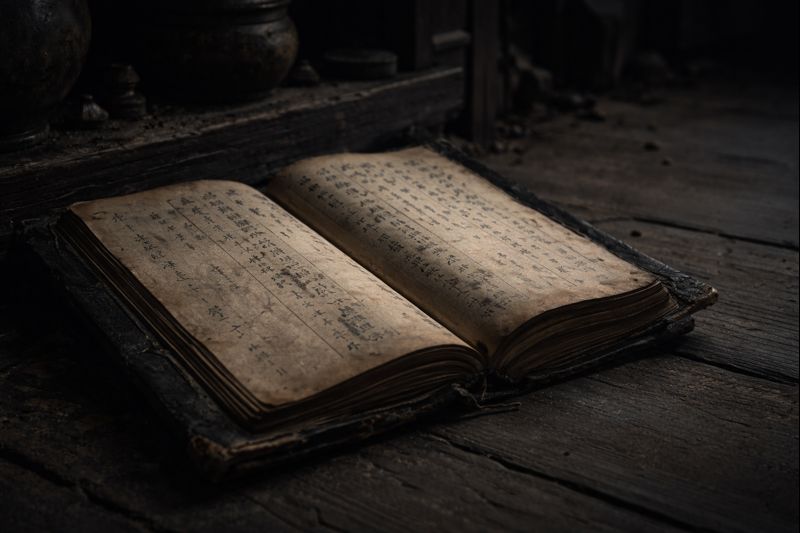
By the fifth night, I could no longer pretend the house was merely haunted. It was a cage holding something hungry beneath it.
Desperate for answers, I searched the ancestral hall. Behind the altar, beneath a loose floor panel, I found a ledger wrapped in rotting silk.
Bound in cracked black leather, the ledger was unnaturally heavy. Dark, viscous oil seeped from its cover and coated my fingers. Inside, narrow columns written in traditional Chinese characters filled every yellowed page:
Name. Date. Tally Number. Status.
Every finished entry bore the same stamp in dried red ink: COMPLETED.
The earliest dates stretched back to the Japanese occupation, followed by famine years, epidemics, and typhoons. The handwriting shifted through generations—including my grandfather’s distinct calligraphy—but the horrifying structure never changed.
No one was recorded as dead. Each victim had been assigned a number.
Every completed entry belonged to someone who had supplied one hundred after the dead stopped at ninety-nine. That person had been found dead, their soul claimed and added to the tally.
I flipped frantically to the final page. Two figures had been written across the top:
Total Spirits: 108
Souls Claimed: 64
Below them, an unfinished entry waited:
Name: [Blank]
Next Tally Number: 65
Status: Pending
My stomach dropped. The ledger was not recording how high the dead counted beneath the house. It was recording how many souls they had claimed.
Sixty-four people had already been claimed. If I gave them one hundred, I would become number sixty-five.
The Burden of the Keepers
That night, the cold returned, pressing against my chest until every breath hurt.
“Ninety-seven… ninety-eight…”
The air grew thick enough to burn my lungs. Rot mingled with the stale incense, and in the dim light, the eyes in my ancestors’ portraits seemed to recede into shadow.
“Ninety-nine…”
Ragged breathing rose through the floorboards.
In the silence after ninety-nine, whispers filled my head with the names recorded in the ledger. Then I understood. The ledger was not a record of worship. It was part of the prison holding the dead beneath the house.
Whenever war, disease, famine, or disaster filled the village with restless dead, my family recorded every soul they claimed. The keepers remained in this house to contain the counting and prevent it from reaching the rest of the village.
“Help us…” a voice pleaded beneath my feet, sounding horribly like my grandfather. “Say one hundred… give us the next soul…”
They were not asking to be freed. They wanted another soul added to their number. During the Month of Spirits, they grew strong enough to count beneath the house and tempt the living into finishing for them.
“No,” I whispered, tears blurring my vision. “I won’t give you another soul.”
The Ledger Chooses a Keeper
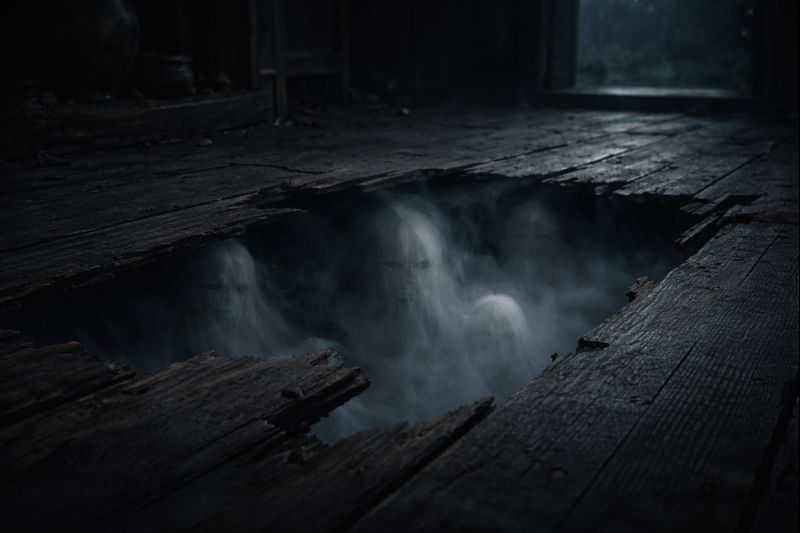
On the thirteenth night, the floorboards split open.
On the thirteenth night, the ash from the elder’s joss paper lifted from all four corners of the house at once. Then the centre of the ancestral hall shattered.
The floorboards split apart, and freezing, stagnant water surged through the opening. Pale, water-swollen heads pushed through the gap, their mouths stitched shut with blood-red thread.
A chorus thundered from behind their stitched mouths, vibrating through the foundations of the house.
“Ninety-nine…”
The black ledger grew searingly hot in my hands, smoke curling from beneath my fingers.
“Ninety-nine…” the chorus repeated.
Then the voices changed. My grandfather promised that one word would set him free. Beneath his voice, I heard my own whispering the number they needed.
All 108 spirits were pressing against the seal, but none of them could complete the count. They needed a living voice to give them one hundred.
At 3:17 a.m., the floor bowed violently as something massive shifted beneath the wood.
“Say it!” the chorus roared. “Give us one hundred!”
The house groaned. Plaster rained from the ceiling as the number pressed against the back of my tongue.
I bit down until blood filled my mouth.
“No.”
The chorus stopped.
The swollen heads dropped beneath the floor. The boards slammed together, sealing the darkness below, and the ledger snapped shut in my hands.
I fell to my knees, gasping for air. By dawn, the ancestral hall was pristine. There were no cracks in the floor and no trace of water.
I opened the ledger to the final page. The unfinished entry had not changed:
Name: [Blank]
Next Tally Number: 65
Status: Pending
But beneath it, fresh characters were spreading across the paper:
Current Keeper: Ah-Ming
Status: Active
The One Who Remains
The villagers came the next morning, carrying gifts of fresh fruit and white candles. They thanked me for “settling things.”
There was no joy in their faces. Only quiet recognition.
“Your grandfather would be proud, Ah-Ming,” the old farmer said softly, laying a basket at my threshold. “The village is safe while you remain.”
I stared at them as the realization settled inside me like lead.
The house would never be sold, and I would never return to my old life. I wanted to scream, to run, to let the numbers swallow the village whole. But when I stepped toward my car, an unseen grip closed around my throat and cut off my breath.
The ledger had recognised me as its keeper, and it would not allow me to leave.
A keeper had to remain with the ledger, maintain the seal, and prevent the counting from reaching the village.
Now, every night before the counting begins, I light a single candle and sit alone in the ancestral hall with the black ledger open across my knees.
Below me, the wood begins to freeze.
“One…” a voice rasps from the darkness beneath my chair.
“Two…” another joins, hollow and pleading.
My palms bleed as my fingernails bite into them. Minutes stretch between the numbers, every pause heavy with the urge to continue the count. But I remain silent, and the count remains unfinished.
I am the keeper of the silence. Until the day I die, I must listen as they count to ninety-nine and deny them one hundred.
If I ever fail, the ledger will record its own keeper as number sixty-five.
Related Story
Some presences count the living until a number is reached. Others wait beneath the sea until the offering is given.
Along the coast of Ban Chao, fishermen whisper of a presence beneath the waves — one that listens carefully to every word spoken near the shore, waiting for the moment the sea decides to answer.