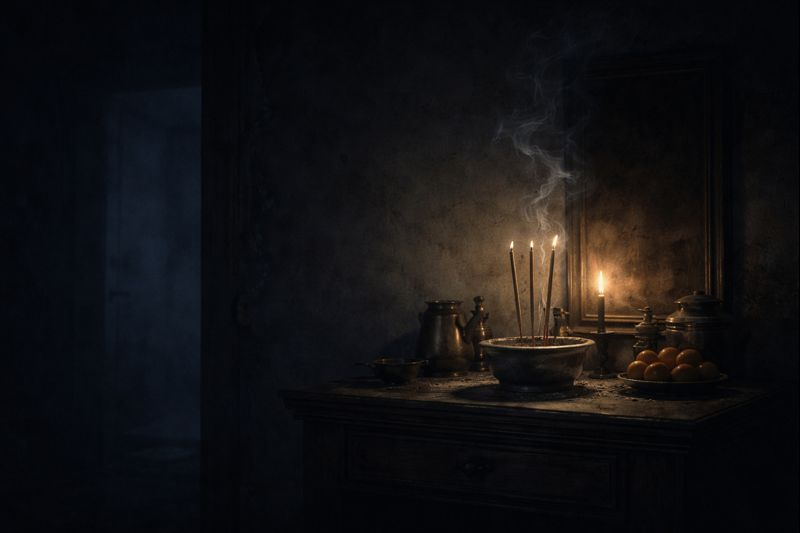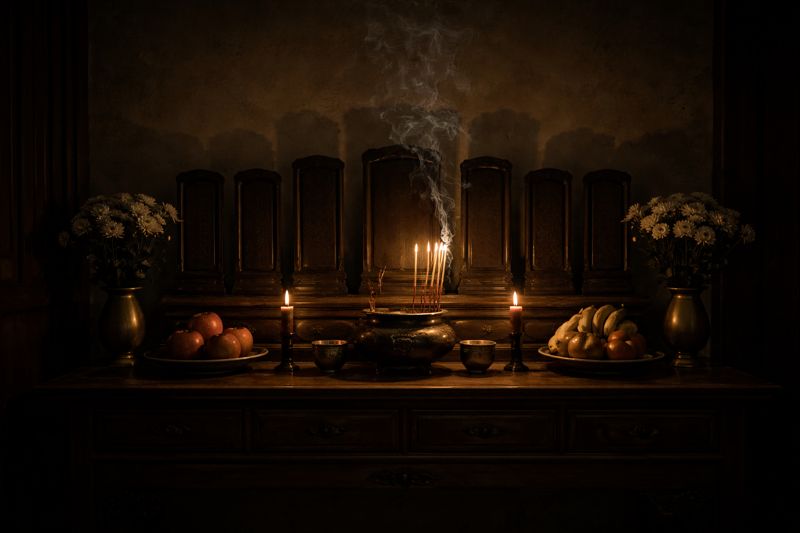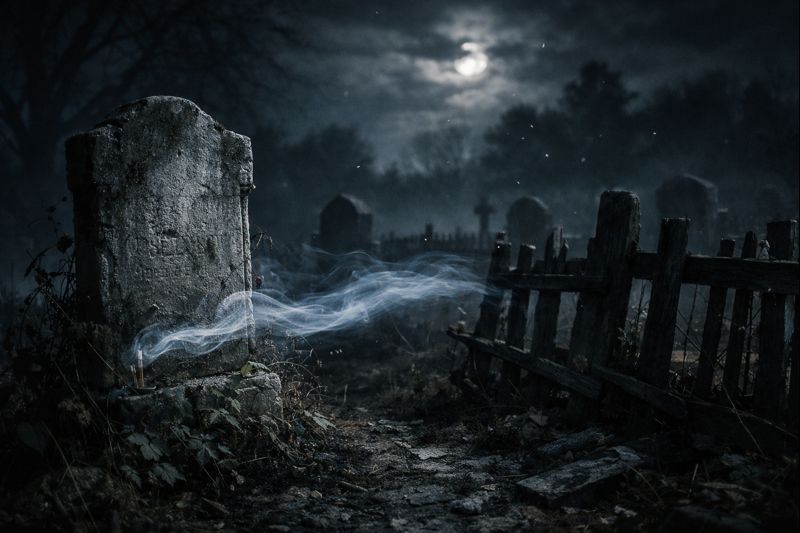
I was poor in the quiet, unremarkable way that never earns sympathy. It was the kind of poverty that forced patience—because impatience always cost money I didn’t have.
I worked nights unloading freight at a warehouse where the fluorescent lights hummed like tired insects and a battered radio hissed old pop songs that never quite finished.
The air smelled of motor oil, rusted iron, and old rain trapped in damp concrete.
Every Monday, another notice from my landlord waited beneath my door—polite at first, then sharp, then cruel.
Out of habit, not hope, I checked my pockets every morning. Coins never multiplied; bills always did.
To stay sane, I helped the new workers with the heaviest crates.
It felt good to be useful—to prove I was still made of flesh and bone. But generosity didn’t pay the rent, and kindness didn’t keep the cold out.
I didn’t just want money. I wanted to stop feeling invisible.
That was when I first heard about a ritual that allowed the desperate to borrow another person’s luck and turn it into fortune.
I heard about it on a night when my pockets held nothing but lint and desperation.
The Terms of Borrowed Fortune
I learned the ritual from Carter, a man who never lost at cards and never smiled when he won. The backroom smelled of stale beer and cheap cologne, its fluorescent lights bleaching everyone’s skin a sickly pale.
“The dead hold onto things they don’t need anymore,” Carter said, shuffling the deck with a dry, mechanical flick.
“With Borrowed Fortune, you aren’t stealing. You’re leasing.”
“What’s the interest rate?” I asked.
Carter wiped his palms against his worn jeans. “You state your repayment aloud. Exact words. And you never, ever pretend the debt isn’t real.”
He fed me the rules one fragment at a time.
Not every grave would answer. You needed someone who had died suddenly—someone whose luck had been severed mid-breath and still clung to their cold bones.
The tombstone had to be neglected. No fresh flowers. No footprints in the weeds.
You had to go after midnight, before the first bird sang.
No moonlight. No rain. If the wind blew while you spoke, it could twist your words backward—and a twisted oath never closed the account.
Repayment came last. Not money. Not blood. Something far more personal.
Carter finally raised his hollow eyes to mine. “Luck always collects, kid.”
After a long pause, his voice fell to a whisper. “I don’t use the word promise anymore.”
That night, the plumbing knocked like knuckles behind my apartment walls. By morning, the idea had settled inside me with the weight of something inevitable.
The Ritual at the Grave
The overgrown cemetery felt claustrophobically narrow in the dark.
Far-off traffic hummed like a dying engine, and a stray cat watched from a low wall, its eyes wide, unblinking, and entirely unnatural.
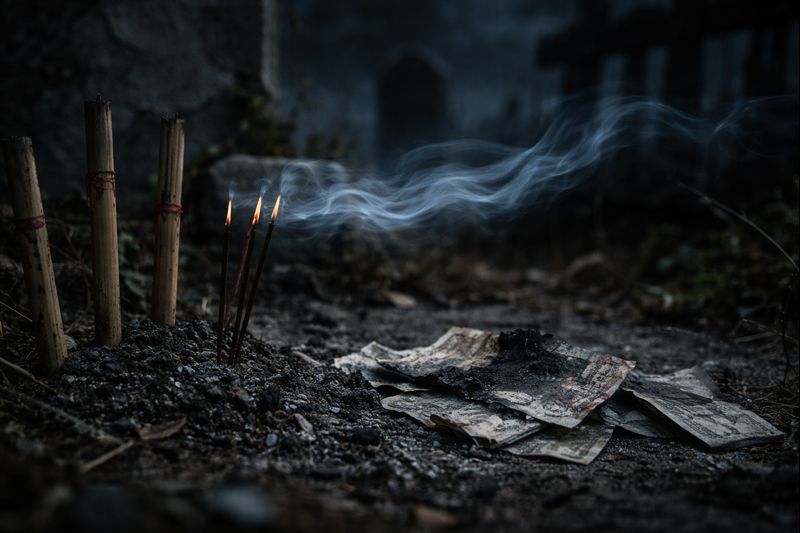
I found the grave tucked against a collapsed fence, choked by weeds that clutched the decaying granite like fingers.
The grave belonged to a young heir who had died in a sudden, violent crash.
I set the Hell Bank notes alight in three distinct bundles: for what he earned, what he lost, and what he left behind.
The paper curled into coal-black ash, but the smoke didn’t rise. It crawled across the cold earth, heavy and suffocating, clinging to my coat like damp wool.
I planted four bamboo stakes around the plot, brushing raw, coppery chicken blood along the grain.
When I lit the incense, the air instantly rotted—sickeningly sweet, laced with sour decay. The temperature plunged.
Frost hissed across the grass as the cold pinpricked my bare wrists.
Kneeling in the dirt, I swallowed hard and forced my voice into a steady, flat tone.
The exact terms of repayment came first, followed by my plea to borrow what his corpse no longer needed.
Then the world stopped breathing.
The distant traffic vanished. The cat bolted. The silence didn’t just fall—it pressed down on my shoulders, ice-cold and heavy.
Behind the tombstone, the earth didn’t shift, but something underneath it settled with a soft, wet squelch.
A breath that was not my own brushed against the back of my neck, freezing the sweat on my skin.
It hadn’t rejected me. It had signed the contract.
Luck That Felt Like Mine
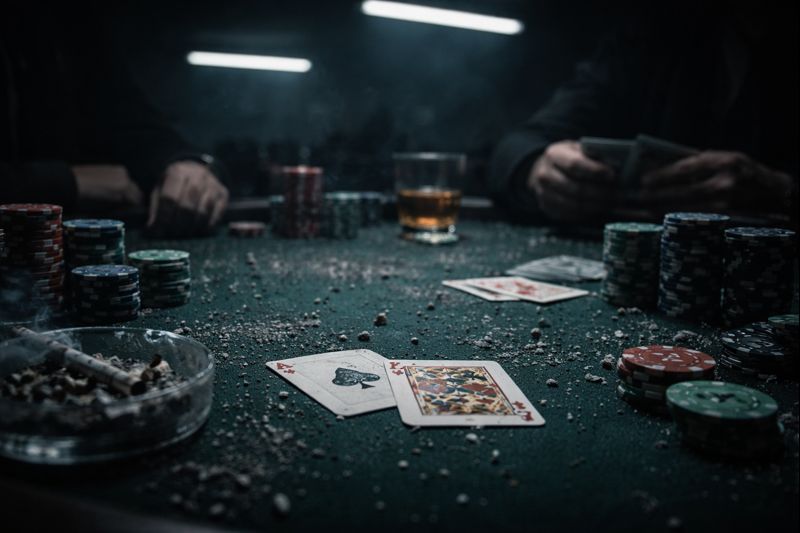
At first, the luck didn’t feel like magic. It felt like bad math working in my favor.
The first night back in the card room, the dice settled without a wobble, rolling sixes as smoothly as if the felt were sloped. I walked out with rent.
The second night, a hand I should have folded turned into an ace-high flush on the river. I cleared my oldest debt before midnight.
By the third night, the luck stopped feeling like chance and started feeling like a parasite.
I sat at a high-stakes table where the felt was stained dark.
I drew a card—the King of Spades. My thumb traced a sharp, accidental crease on its top corner.
To test a rising dread, I secretly slipped it into my coat pocket.
Two hands later, the dealer slid a card face-up toward me.
The King of Spades. The exact same sharp crease stared back at me from the table.
I reached into my pocket.
My fingers touched cold, empty air. The card had left my coat.
The dealer froze, his fingers hovering over the felt.
He blinked, checking the deck, his face draining of color. “Hold on,” he muttered, shuffling with erratic, trembling hands.
The room grew dead silent. Men stopped drinking. The pit boss stepped out of the shadows, eyes locked on my hands.
The dealer dealt again. I flipped my card.
A second King of Spades. Identical crease.
A sharp gasp rippled through the table.
People backed away from my chair as if I were carrying a disease.
Nobody accused me of cheating—because no cheat could be this blatant, or this impossible. They just stared, terrified of whatever was sitting beside me.
The Arrogance of Fortune
At work, the shift in energy was intoxicating.
Managers leaned in whenever I spoke. Coworkers lingered by my locker, eyeing my expensive new wool coat. The invisible warehouse rat was gone; in his place stood a man of substance.
The leather wallet carried a faint, clingy scent of sweet incense. I didn’t care.
When Carter called, I let the phone vibrate across the nightstand until it went still.
When my sister called, her voice was warm and small. “Come by Sunday,” she offered. “I made that cheap potato soup you like.”
For a fraction of a second, I missed it—the steam fogging the narrow kitchen window while rain rattled the tin roof. But I couldn’t be dragged back into the mud.
“I’m busy,” I snapped, sharper than intended. “I’ll make it up to you later.”
A heavy silence stretched across the line. “Okay,” she whispered, and hung up.
At 12:16 one night, the battered warehouse radio dipped in volume. A sudden, instinctual panic made my hands tremble. I pulled out the scrap of paper where I had scribbled my repayment terms.
At 12:17, the music dissolved entirely into static.
I stared at the slip of paper, then chuckled. The luck wasn’t the dead man’s—it was mine. I was just smart enough to claim it. I ripped the paper in half, then into quarters, and threw it into the trash.
The deadline came and went. My heart kept beating.
I didn’t drop dead.
The ritual was just superstitious garbage, a placebo for desperate fools.
I threw my head back and laughed—too loud, too long—filling my empty room with the arrogant sound of a man who thought he’d outsmarted the dark.
The Price of Broken Terms
Consequences never arrive with a scream; they slip in through the floorboards.
First, the wins narrowed. Then, they vanished.
At 12:16, the air would press against my eardrums like deep water. At 12:17, complete, unnatural silence. The quiet was infinitely worse than noise.
Desperate, I dusted flour across my apartment floor to catch whatever was stalking me. In the morning, the flour lay undisturbed—but a fine, gray ash filled my bathroom sink.
Panicked, I ran back to the grave.
I lit incense and tried to speak the repayment aloud, but the words withered in my throat.
The smoke didn’t rise; it veered sharply away from the tombstone, recoiling from me.
The grave had closed its ledger.
The attacks began small.
A freezing breath against the shell of my ear on the warehouse stairs, followed by a violent strike between my shoulders.
I pitched forward down the concrete steps, narrowly missing a crushing stack of iron pallets, tasting dust and blood.
I quit gambling and tried to run. A one-way bus ticket should have taken me out of the state, but the engine died on the icy suspension bridge—at precisely 12:17.
My phone buzzed in the dark cab. Sister Calling.
I stared at her name, tears pricking my eyes. Dragging her into this trap was unthinkable, so I let the phone vibrate until the screen flickered, glitched with static, and died forever.
When I looked up into the bus’s rearview mirror, the aisle behind me was empty.
But in the reflection, sitting directly in the seat behind mine, was a shadow draped in an old, rotten suit.
It wasn’t here to negotiate. It was here to occupy what was left of my life.
Account Closed

On my final night, the stillness of a cemetery flooded the room.
I sat at my desk, my shaking hand racing across these pages, desperate to record the truth before the darkness swallowed me whole.
The air beside my bed dipped inward with an oppressive weight.
Joss smoke filled my lungs until breathing felt like swallowing wool. I tried to speak—to offer anything—but my tongue froze.
A thin line of gray ash drifted down onto my chest.
Then, the smell of incense vanished.
Outside, a bird sang—late, broken, and wrong. Miles away, soup cooled on a dark stove.
My confession ends here. The air is cold, and the smoke is in my throat.
I’m Carter. I had a bad feeling about Leo when he stopped answering his phone.
Three weeks passed before his landlord called the cops over the smell. I arrived while the police were still stringing yellow tape across the hallway.
I took charge of the arrangements, standing beside his sobbing sister at a bleak, rain-soaked funeral.
Before the city cleared out Leo’s room, I found his diary open on the desk. I sat on his creaking bed and read every line of his desperate, terrified confession before sliding the book into my coat.
His account was settled. His debt had been cleared in full.
A week after the funeral, I finally went back to the card room. I rubbed my thumb against my index finger—the same fingers that had held his diary.
The motion released a faint, familiar scent of sweet burial incense and ash.
“Smells like smoke,” I muttered.
Nobody else noticed. But I put the deck down, and for the first time in years, my hands wouldn’t stop shaking.
Related Stories
Borrowing fortune was never meant to stay quiet.
Elsewhere in the city, a gambling den owner once arranged five black bowls beneath a baccarat table at 3:33 a.m., hoping unseen hands would carry wealth to his side of the table.
The Forbidden Wealth Ritual and the Five Shadows
But some bargains reach deeper than luck.
In one family, protection came from something older than money — a ritual that slowly erased a name from memory in exchange for the ancestors’ protection.