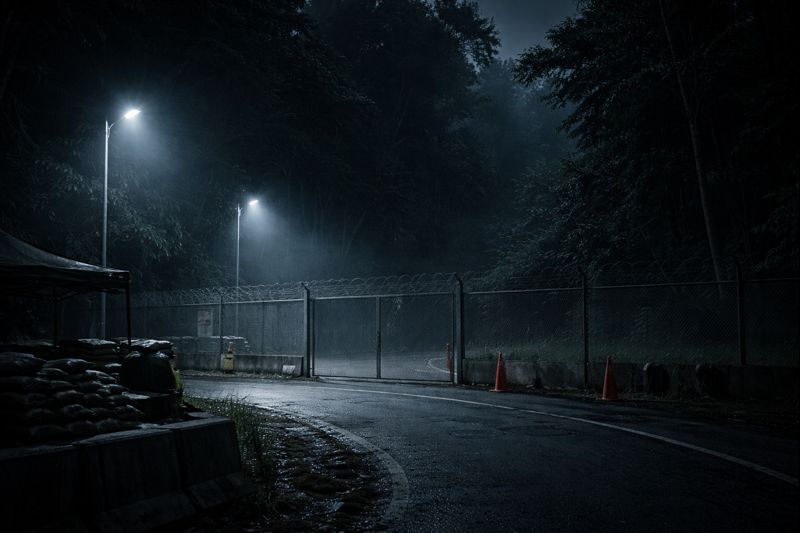
The coastal training camp stood on the rotting edge of an ancient mangrove reserve, where the black tide swallowed every sound at dusk.
Recruit Zhang arrived that afternoon, trudging across the gravel path with a heavy canvas duffel slung over one aching shoulder.
The damp concrete building had its own insidious way of keeping count—a secret the men would uncover before morning. Sweat had dried into cold, stinging crusts along Zhang’s collar.
Hours of intake processing, physical checks, and relentless yelling beneath the afternoon sun had reduced him to pure habit, leaving no room for thought.
Every aching muscle begged for sleep.
Yet when he reached Barrack 4, he slowed. The room felt wrong.
The air inside was colder and unnaturally heavy, thick with mildew and iron, pressing against his face like a wet cloth.
Overhead, a fluorescent tube emitted a piercing hum, flickered into darkness, then steadied into a sickly amber glow.
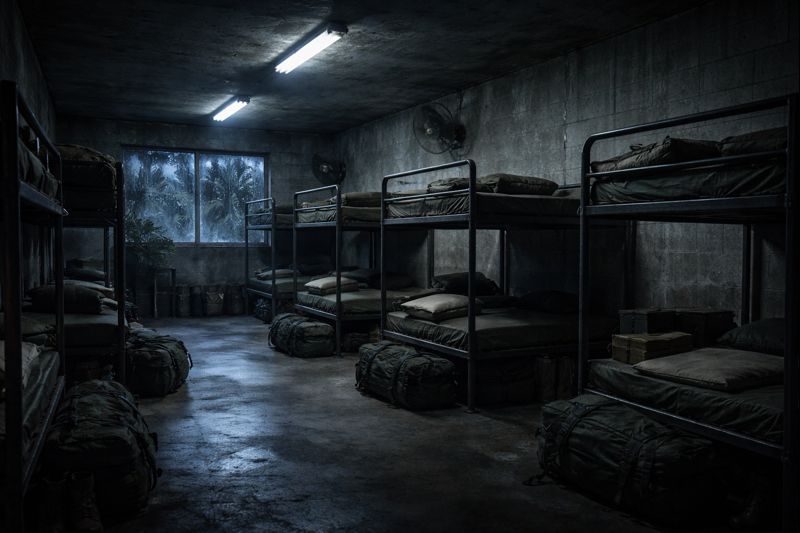
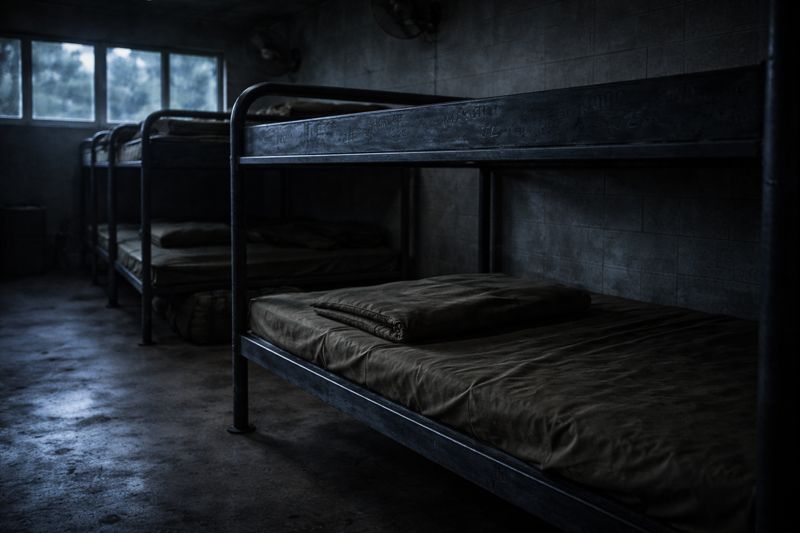
Twenty rusted metal bunk beds stood in rigid, precise rows. Every mattress was occupied by recruits who had arrived that same morning, their eyes wide and sleepless.
Nothing was broken. Nothing was out of place. Still, instinct warned him that something inside the barrack had shifted.
Zhang hesitated, then stepped across the threshold, careful not to let his uniform touch the iron doorframe.
The Rules of Barrack 4
Minutes before the lights-out command, the duty sergeant stopped at the entrance. His polished black boots halted just short of the iron threshold, as though he refused to cross it.
The corridor seemed to grow colder as he recited the night orders in a flat, rehearsed voice.
“Lights out at 2200 hours. No talking. No unauthorized movement.”
Then he paused. Silence settled over the room.
The sergeant looked above the recruits, fixing his gaze on the dark doorframe.
“Sleep with your head facing the door,” he ordered, his voice falling to a harsh rasp. “After lights out, if you hear your name called from the hallway, do not answer. Do not open your eyes. Do not make a sound.”
A nervous, high-pitched laugh escaped from the back of the room, but died beneath the sergeant’s stare. No one dared to ask why.
Above the doorway, Zhang noticed a thin, jagged streak running across the crumbling concrete.
It was uneven, faded, and rust-brown, disturbingly similar to dried blood. When the sergeant glanced at it, his jaw tightened and his throat worked.
Without another word, he pulled the wooden door shut from the corridor.
The lock clicked with sickening finality, and the buzzing lights went out, plunging the barrack into complete darkness.
The First Omen
Rain began shortly after midnight, hammering the corrugated metal roof in a frantic rhythm.
Zhang lay stiff beneath the thin blanket, his eyes fixed on the faint outline of the wooden door. Then, from the darkness beyond it, a voice spoke his full name, and his breath stalled in his lungs.
The voice was calm and certain, carrying the unmistakable authority of a senior officer conducting roll call.
Instinct urged him to answer, the response already forming on his lips.
At the last second, the sergeant’s warning flashed through his mind, and Zhang bit down hard before a single sound could escape.
Sweat slid from his temples into his hair as he kept his eyes fixed on the doorframe, counting each shallow breath so his body would not betray him.
The silence that followed was worse, stretching on as though the voice were still waiting just beyond the door.
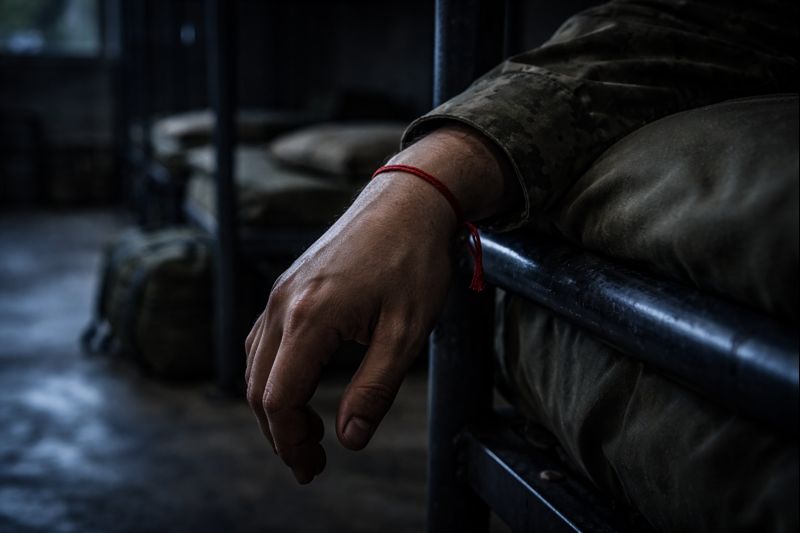
The morning bugle tore through the barrack. As Zhang pushed himself upright, a flash of crimson against his skin caught his eye—a thin thread had been knotted tightly around his left wrist.
He clawed at the knot, but each desperate tug drew the thread tighter, cutting a burning red line into his skin.
Panic tightened around his chest as he searched the room. Among all the bare wrists, only one other recruit carried the same blood-red thread around his left wrist.
During morning inspection, the sergeant’s gaze caught on Zhang’s wrist before sliding to the only other recruit bearing the thread. His eyes narrowed for a fraction of a second, but he offered no explanation.
He continued down the line in silence, his jaw locked so tightly that a muscle twitched beneath his cheek.
The Fourth Night
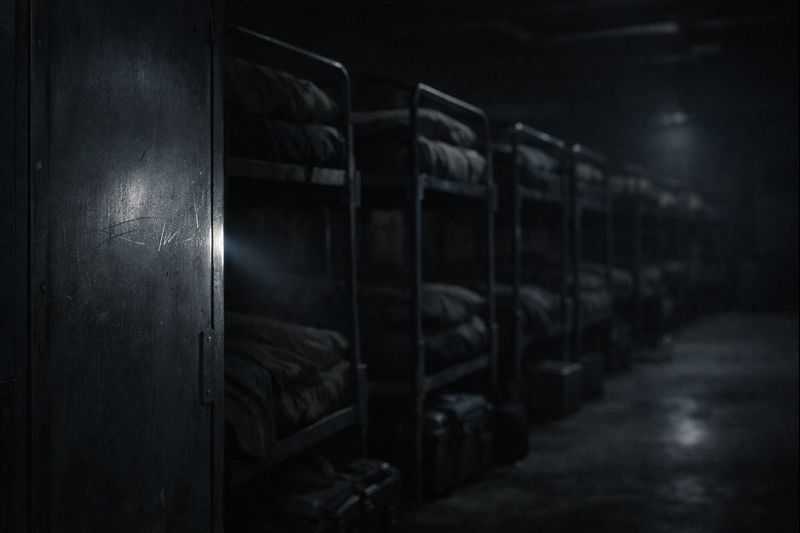
The punishing days blurred beneath the coastal sun, but the nights inside Barrack 4 changed first.
After lights out, heavy footsteps often stopped outside the threshold, though no shadow crossed the moonlit floor. Light flickered beneath the wooden door, but no torch beam swept the corridor.
No one admitted to hearing the footsteps or muffled whispers. Exhaustion made it easier to dismiss them as stress.
On the fourth night, Zhang was assigned watch duty inside the barrack.
He stood alone near the entrance, a flashlight in hand, listening to the slow, synchronised breathing of the sleeping recruits.
Then a voice rose from beneath the damp floorboards.
“One… two… three…”
The counting continued at the same measured pace, each number whispered clearly through the rotting wood. Zhang remained frozen as the voice moved steadily through the sleeping barrack.
“Eighteen… nineteen… twenty.”
At twenty, a sharp metallic scrape cut through the barrack.
Zhang immediately swung the flashlight towards the rows of lockers. As the beam swept across their dull green surfaces, a fresh scratch caught the light.
He stepped closer. A full name had been carved deep through the locker’s paint. Beneath it was a date—today’s date.
His pulse quickened as he checked the neighbouring lockers.
Their surfaces remained smooth and untouched. When the beam reached his own locker and revealed nothing, the breath trapped in his chest finally slipped free.
Suddenly, Zhang realised he knew the carved name.
It belonged to the only other recruit who had woken with a blood-red thread—the man assigned to the bed beside Zhang’s.
A cold weight dropped through his stomach as he turned the flashlight towards it.
Its blanket lay flat and undisturbed. The bed was empty.
The Counting Beneath Barrack 4
By dawn, the missing recruit’s absence could no longer be ignored.
At formation, the sergeant announced that the man had been reassigned to another unit overnight. His hard stare silenced every question, though no one believed him.
Three nights later, the voice returned.
It rose from beneath the damp wooden floorboards, counting slowly through the darkness. Each number came after the same measured pause, as though unseen lips were pressed against the rotting wood.
Zhang lay rigid beneath his blanket. He already knew what the voice was counting.
“One… two… three…”
Around him, the remaining recruits held themselves unnaturally still, each man pretending to be asleep.
The numbers continued.
“Seventeen… eighteen… nineteen.”
At nineteen, the floor shifted beneath the beds. The ageing wood released a long, miserable groan that travelled through the barrack, and the blood-red thread around Zhang’s wrist pulled painfully against his skin.
When morning came, all nineteen recruits were still there.
Yet Zhang felt no relief.
That afternoon, the dread twisting inside him drove him back to the silent barrack alone. He stopped before his own locker and raised the flashlight.
His full name had been freshly carved through the dull green paint. Beneath the jagged letters, a date had been cut deep into the metal.
Tomorrow’s date.
The flashlight slipped from Zhang’s hand. He understood at once—he was the nineteenth. By tomorrow, only eighteen recruits would remain inside Barrack 4.
The Unfinished Tally
Zhang considered reporting sick, feigning collapse, even wrenching his ankle—anything to escape Barrack 4 before nightfall. But whenever he neared the compound gates, the blood-red thread tightened until pain forced him back.
That evening, while the platoon settled uneasily into their bunks, the duty sergeant motioned Zhang into the dim corridor.
“You found your name on the locker,” the sergeant murmured. It was not a question.
Zhang nodded, his throat dry as ash. The sergeant lowered his gaze towards the floorboards between them.
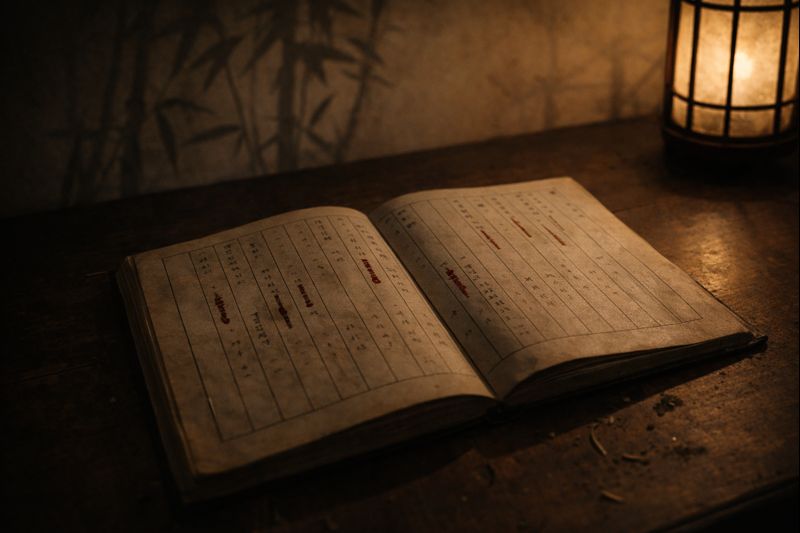
“Before this became a training camp, one hundred and eight prisoners were crammed inside Barrack 4 during a forgotten war,” the sergeant said. “Each morning, guards counted them while a record keeper entered their names into a ledger.”
“When evacuation orders came, the doors were chained and the prisoners were abandoned. The record keeper died before completing the final tally.”
“Since then, the barrack has continued counting.”
“The tally began at one hundred and eight. Each recruit it takes lowers the number by one. When your intake filled all twenty beds, the tally matched the men inside. Two threads appeared. It intends to take two of you.”
Zhang swallowed against the tightness in his throat. “How do I stop it?”
The sergeant finally met his eyes, his face pale beneath the flickering corridor light.
“You cannot,” he said. “The thread has already chosen you.”
The sergeant stepped farther from the threshold. “It will not let you leave the camp, and if you try to expose what happens here to anyone who does not already know, it will close your throat before the words come out.”
“The night rules protect the unmarked,” the sergeant said. “They cannot save someone wearing that thread. Your bunkmate was the twentieth. You are the nineteenth. Once it takes you, eighteen will remain.”
The Final Roll Call
That night, Zhang lay rigid beneath his blanket, his head turned towards the wooden door. The blood-red thread tightened around his wrist until numbness spread through his fingers.
No counting came from beneath the floorboards. It had already ended at nineteen.
From the corridor, the same calm voice spoke his full name.
Zhang squeezed his eyes shut and clenched his jaw. The night rule had saved him once, but the sergeant’s warning returned with terrible clarity: the rules protected only the unmarked.
The thread jerked hard around his wrist.
A soft click came from the wooden door.
No one moved. Around Zhang, the other eighteen recruits lay stiff beneath their blankets, pretending not to hear the slow scrape crossing the floor.
By sunrise, two beds now stood empty.
One had belonged to the first marked recruit. The other was Zhang’s.
His blanket remained flat and undisturbed, but Zhang was gone. The name and date carved into his locker had vanished, leaving the dull green paint smooth and unbroken.
A single severed crimson thread rested on the dusty floor beneath it.
At morning formation, the sergeant opened his ledger and read eighteen names without hesitation. Zhang’s name was absent. No missing recruit was acknowledged, and no reassignment was announced.
Beneath the floorboards, the ageing wood settled with a low, satisfied sigh. Barrack 4 had taken both marked recruits, and for now, it was quiet.
Months later, as the next fresh intake dragged their heavy canvas duffel bags along the crunching gravel path, the floorboards inside Barrack 4 began to count again.
Related Stories
Some deaths are remembered by the places where they happen. Others are written down long before they arrive.
In an old ledger bound with red thread, names continued to appear even after the people themselves were gone — as if the book had already decided who would never escape its pages.
The Red Thread Ledger: A Curse That Refuses to End
But some counts are not written at all. They are called out into the night.
At another training ground, recruits sometimes heard a roll call long after lights out — and one name was always answered by a voice that no longer belonged to the living.