I was born into a family that lived like quiet fugitives within our own ancestral home—a sprawling, rotting house buried deep in the mist of the northern valleys.
To an outsider, we were just reclusive.
But within those drafty halls, every child was raised knowing one inescapable truth: our bloodline had been marked.
The elders never spoke the curse out loud.
In our family, silence was a sanctuary, and naming a dark thing only gave it eyes to find you. So the truth remained in the cold air between us, heavy as something waiting to be named.
From a young age, I was taught to count birthdays not as celebrations, but as warnings.
We never celebrated the years gained. Instead, we measured the shrinking distance between ourselves and twenty-seven—the age at which the curse chose one member of every generation.
In every generation, the shadow chose one of us and took them at twenty-seven.
No sickness preceded it. No accident explained it.
On their twenty-seventh birthday, the chosen relative would simply fail to return home. It was as though the world quietly closed over them, erasing them so completely that even their footprints disappeared from the mud.
Because of this, we learned to live small, hoping to escape the notice of whatever kept count. We convinced ourselves that if we left no mark upon the world, fate might overlook us.
But fate had never forgotten a name.
My older brother turned twenty-seven last night. By dinner, his chair was empty—and no one in the house dared speak his name.
A Bloodline Curse Recorded in Red Ink
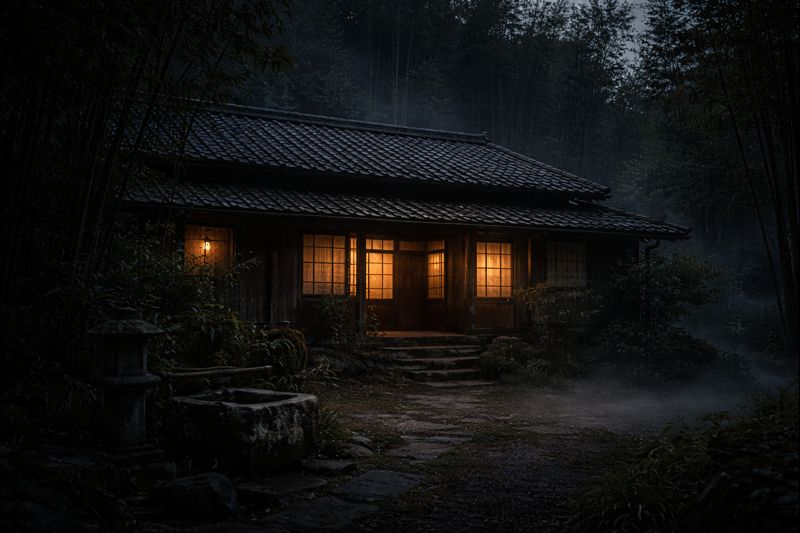
The empty chair meant it was time.
That night, my grandmother led me down a drafty corridor to a locked cabinet that smelled of dried tea leaves and damp, ageing wood.
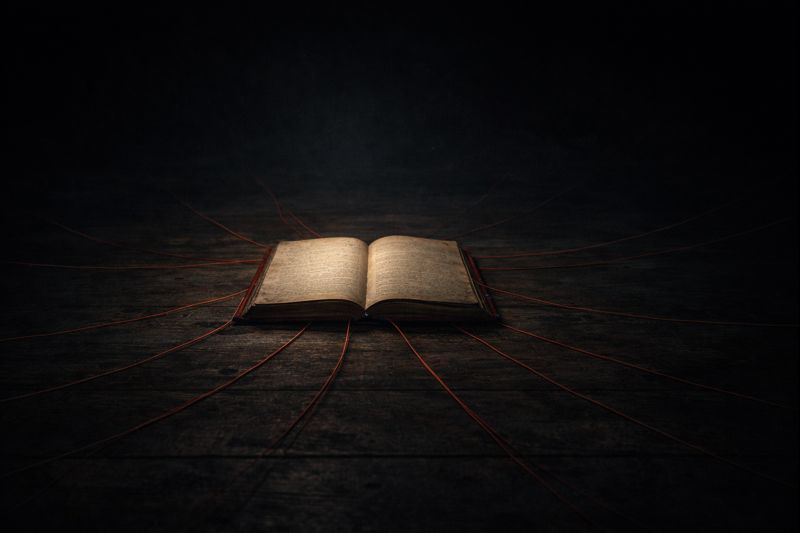
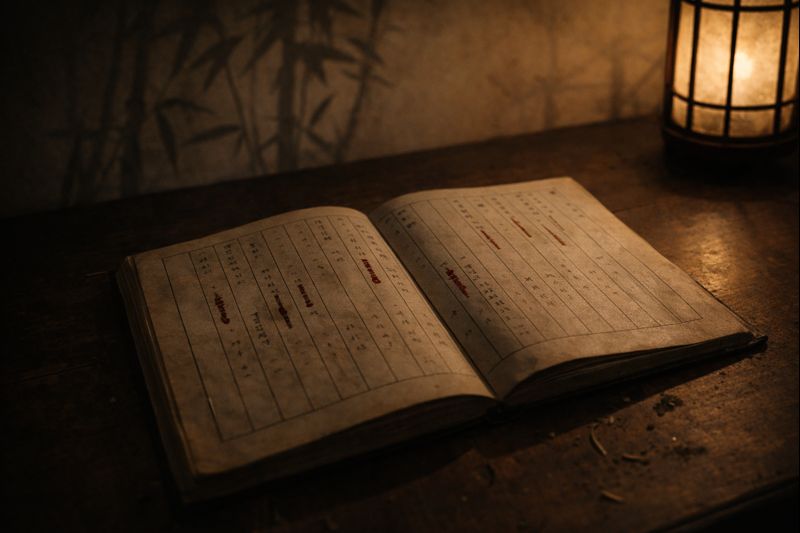
Inside lay our most closely guarded heirloom: a hand-bound family register, its silk cover worn threadbare beneath generations of fearful hands.
She opened it beneath the weak, unsteady flame of an oil lamp.
Each page recorded births, marriages, and deaths. Beside every name ran a narrow column of entries written entirely in dark red ink.
The same number appeared beside different names, generation after generation: 27.
Whenever one of them reached that age, the red entry ended abruptly, as though the writer’s hand had been pulled away.
“Some roots grow too deep,” Grandmother whispered, one frail finger tracing the edge of the parchment.
“And when they are torn out, the soil remembers what was buried beneath them.”
Her finger stopped beneath my brother’s entry, where his birthdate remained alone, waiting for the book to record what had become of him.
“The book finishes what we cannot.”
I remembered a cousin from years ago who had refused to live in fear.
On his twenty-seventh birthday, he walked into the bamboo grove and simply never returned. After he vanished, no one spoke his name again.
His existence was swallowed, leaving behind nothing but a name in the register and that crimson number beside it.
Grandmother slowly closed the register, her palm resting on its threadbare silk cover.
“The calendar has run out for your brother,” she murmured, looking past me into the dark. “And the book is waiting for its next line.”
How the Curse Began
Grandmother didn’t put the register away.
Instead, she turned the pages back through decades of silence and centuries of fading ink until she reached the very first page.
The paper there was brittle as dry leaves, stained dark around the edges.
“It did not begin with a witch’s malice or a devil’s bargain,” she whispered, tracing the crude, faded calligraphy at the top. “It began with a promise.”
Three hundred years ago, our family’s founder was a desperate farmer facing a famine that stripped the valley to bone and ash.
To save his dying clan, he struck a deal with something ancient that dwelt deep beneath the roots of the bamboo grove—an entity that demanded life in exchange for the family’s prosperity.
“Our ancestor offered a trade,” Grandmother said, her voice dropping to a harsh rasp. “One life from every generation. One soul returned to the soil when its life reaches full harvest. Twenty-seven years to grow, to love, to build—then the debt comes due.”
She turned the brittle page over. On the back, sunk deep into the fibre, was a dark, dried stain unlike any ink made by human hands.
“The entity gave us wealth, survival, and long life for the rest of us,” she murmured, looking up, her eyes wide with ancient terror.
“But it bound our blood to its appetite. In every generation, when the chosen one turns twenty-seven, the earth opens its jaws, and the register claims its tax.”
She grabbed my wrist, her grip surprisingly tight.
“And with your brother gone… you are the only one left in this generation.”
The Curse’s Darker Truth
“If the entity gave us prosperity,” I asked, my voice trembling in the dim light, “why is our family shrinking? Why are these halls so empty?”
Grandmother’s grip on my wrist tightened, her cold fingers biting into my skin.
“Because the curse is a parasite, child. It does not merely harvest one life; it poisons everything that might come after.”
She motioned toward the vast, silent house around us. “First, no one knows who the register will select until the shadow falls. How do you build a future when every child is a target?”
She turned another fragile page, where fewer and fewer names were recorded with each passing decade.
“And second… as the centuries wore on, the bargain mutated. The dark thing beneath the bamboo grew greedy. Its stain seeped deep into our blood, blighting our ability to conceive. Wombs grew cold. Marriages yielded silence instead of cradle songs.”
My heart hammered against my ribs as the horror settled in.
“In my generation,” Grandmother whispered, staring past me into the shadows, “there were seven of us. The curse took one of us at twenty-seven. Disease and grief claimed the others. I am all that remains of the past.”
She slowly turned her hollow gaze toward me, her eyes reflecting the dying oil flame.
“And now, with your brother swallowed by the dark, you are all that remains of the future. The bloodline isn’t just cursed, my boy. It is dying out—and when you are gone, there will be nothing left.”
Why No One Could Escape the Curse
Grandmother saw the desperate calculation in my eyes before I could speak.
“Don’t imagine that running will free our blood,” she warned, her voice cutting through the heavy silence like a blade. “Do you think you are the first to try?”
She ran one withered hand over the fragile pages, stopping at a cluster of entries from forty years earlier.
“Your Uncle Thomas fled to the crowded capital. He changed his name, burned his papers, and hid in a windowless room, believing concrete and distance could thin the blood. Your Aunt Mei crossed the ocean and settled in a land where no one around her spoke our language. She later died in an accident, far from home. Thomas’s fate proved that distance offered no protection.”
Her hollow gaze locked onto mine with pitiless certainty.
“When the register chooses someone, the curse does not hunt them by name, child. It does not follow paper trails or street addresses. It follows the blood beating in their veins.”
“On his twenty-seventh birthday, Thomas’s landlady found his door locked from the inside. The room was empty. His bags were untouched, the walls were solid, and the only door remained locked from within. His shoes sat beside the bed.”
Grandmother closed the register. Its heavy thud echoed down the dark corridor like the sealing of a coffin lid.
“Distance is an illusion. Silence is not mercy—it is only the entity waiting. You can alter your records and hide in the deepest shadow on earth, but when the soil calls in its debt, the roots will always know where to find you.”
When the Bloodline Curse Found Me
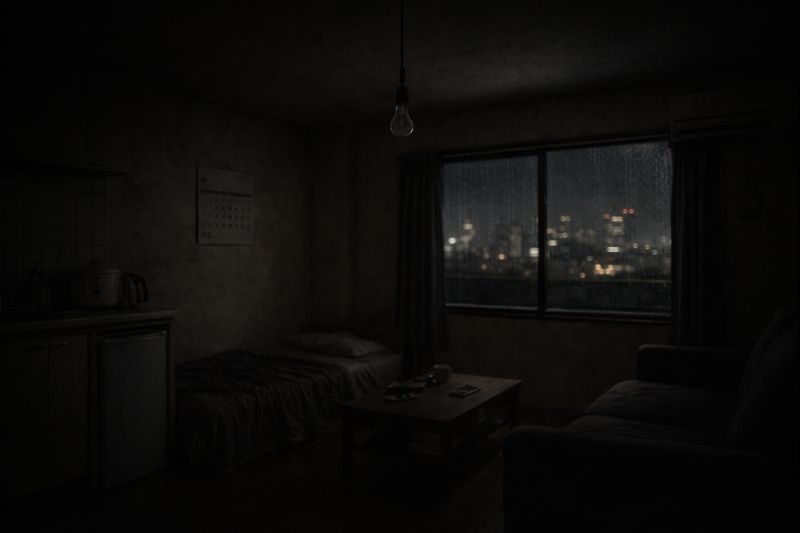
The old bargain had already taken its toll on my brother, but the thing beneath the bamboo had grown greedy. I was the last life our bloodline had left to offer, and I refused to wait for the soil to claim me too.
Three months before my twenty-seventh birthday, I vanished.
I withdrew my savings in cash and smashed my phone, severing every line that connected me to the world.
A windowless concrete room in a nameless city hundreds of miles from home became my shelter. I locked the iron door, covered every crack with tape, and sat in the dark counting down the hours.
It was easy to believe I was different—to convince myself that by becoming nothing, the curse would find nothing to take.
Midnight arrived. The date shifted. Twenty-seven.
For hours, the room remained dead quiet. No whispers came through the walls. No shadows stretched across the floor.
My heart leaped with a frantic, triumphant hope—I had outsmarted it. I had survived.
Then, a faint damp smell filled the sealed room—the heavy, rich scent of wet earth and crushed bamboo.
A parcel appeared on the small wooden table beside my bed, wrapped in coarse paper and dripping with rainwater that could not have entered the sealed room.
My hands trembled violently as I tore it open. Inside lay a single, brittle sheet torn from our family register.
My name was written at the top. Beneath it, dark red ink seeped through the fibre, drawing itself stroke by stroke into the same number that had marked every chosen life before mine: 27.
The air thickened to sludge. The hum of the city outside dissolved into total, suffocating silence.
The curse hadn’t lost me. It had only waited until I believed I had survived.
What Remains After Everything Is Accounted For
Grandmother later recorded what remained after I was gone.
By morning, the windowless room stood entirely vacant. The iron door remained locked, the tape across every crack unbroken, yet no trace of me remained inside.
The neighbours on the same floor later told her that no one had ever leased the room. Official records across the country had altered themselves with perfect consistency, wiping away my name as though it had been nothing more than a clerical inconvenience.
Miles away, deep in the valley, Grandmother sat alone in the silent house. As bamboo whispered beyond the walls, she opened the family register without lifting her brush.
The leaf that had vanished from the binding now rested in its proper place. She watched as dark red ink welled from deep within the paper, completing the final entry beneath my name.
27.
Beyond that crimson number, the register held only blank pages—pages no one remained to fill.
There were no future generations waiting to be counted. No children left to fear the ticking clock.
Grandmother closed the register for the very last time, her palm resting on its worn silk cover. The three-hundred-year bargain had collected its final payment in absolute silence.
The bloodline had surrendered its final name. And beneath the roots of the grove, the dark, hungry soil finally rested.
Related Stories
Some families inherit the age of their death. Others inherit the years they must repay.
In one old shophouse, a hidden ledger beneath loose floorboards quietly recorded how many years each family member owed — and how many had already been taken.
Inherited Debt Beneath the Ancestral Floorboards
But not every fate is written in a family book. Some places remember long before anyone arrives.
At a remote training camp, one metal bunk quietly marked the final night of every recruit who slept there, as if something had already counted who would never leave the camp alive.