I returned to the ancestral shophouse as a fresh graduate, now responsible for my younger sister. Since our parents died in a plane crash, Grandma had been our sole anchor.
Now she was gone, too.
The old building sat squeezed between glass towers pressing in from both sides, brooding in their shadows.
Decades of neglect and cheap repairs had left its bones brittle, but it was all we had left.
On a quiet afternoon, dust hung in the slanting sunlight like it had nowhere else to go.
I had just set Grandma’s brass incense burner back on the altar when a floorboard shifted under my heel with a soft, tired groan.
At first, I told myself it was rot. The shophouse was old, its timbers warping in the quiet heat. Still, the creak felt wrong. Too hollow.
I knelt, brushing away decades of soot, and pried up the loose plank.
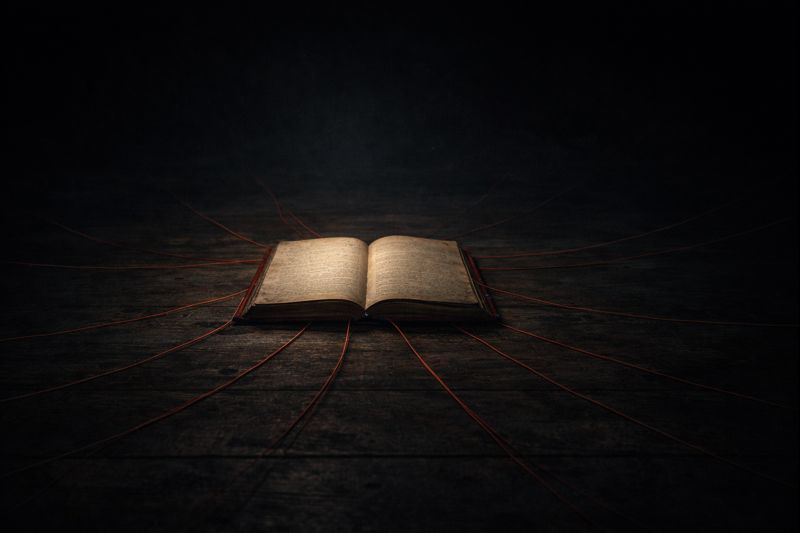
What rested in the darkness beneath was not decay, but a heavy, leather-bound volume strangely untouched by dust or rot.
Its cover was unnaturally cold, a sharp chill seeping straight into my skin.
I pulled it out into the light. Stamped across the cracked leather spine was a single, faded word: Ledger.
As my thumb caught the edge of the cover to open it, the house seemed to freeze around me—like a lung holding its breath.
The Ledger of Borrowed Years

Outside, smoke drifted past the shutters.
The neighbors were burning incense again—a habit as old as the street itself.
Grandma once said they had done it ever since my great-grandfather returned as the only survivor from his famine-stricken village.
People called our family fortunate. No one ever said why.
Across the lane, an auntie watched me through her window. When our eyes met, she lowered her glance. Not a greeting. Not respect. Something closer to dread.
What’s wrong with her? I thought, pulling the window shut. And why did no one ever mention this ledger?
The book felt far heavier than paper should. Fine grit clung to my fingers—an oily ash that refused to brush away.
I opened the cover.
On the first page, my family name was rendered in precise, dark ink. Beneath it ran a single, hand-calligraphed line:
For age at collection and years taken.
My chest tightened, air suddenly scarce in the quiet room.
Age at Collection… years taken.
I glanced through the narrow gap in the shutters. The auntie was still standing behind her curtain. Then I looked down at the neat rows of names filling the pages that followed.
Some were crossed out in faded red; others gleamed with ink that had barely dried.
A horrible, cold realization took root. This was no ordinary record of debt or time. Somehow, I knew it was a tally of life.
And my family hadn’t survived on good fortune—they had been collecting.
The Ledger of Inherited Debt
The pages were not about money. Each entry held a name, a birth date, and three narrow columns: Age at Collection, Years Taken, and Recipient.
Some were stamped in faded cinnabar: 已清—Settled.
Halfway down a page, my blood ran cold.
Cousin Ming. Eight under Age at Collection. Forty-six under Years Taken. Grandma’s name under Recipient.
The room tilted.
Years ago, the doctors had diagnosed Grandma with a severe heart condition. They warned us that even with treatment, she might have only weeks left.
Then Cousin Ming died without warning.
I remembered helping carry his coffin—remembered how unnaturally light it was, like bearing an empty shell.
Three days after his funeral, Grandma sat upright in her hospital bed and demanded rice porridge. The doctors repeated every test, but the damage to her heart had vanished.
They called it a miraculous recovery.
Further down, my grandmother’s name appeared repeatedly under Recipient across decades. Every transfer was stamped clean in bright crimson.
She had lived to a hundred and five, laughing loudly, coughing into her sleeve, and scolding me for wasting rice.
“What did you do?” I whispered to the empty room, horrified by the truth. Her long life hadn’t been a blessing. It was a harvest.
Near the bottom, fresh ink glinted in the dim light.
My name.
Beside it, a single word had been written: Keeper. Beneath my name, the columns for Age at Collection, Years Taken, and Recipient were completely blank.
A cold shudder spilled down my spine as the silence of the old shophouse settled over me.
The ledger hadn’t been left to me as a family heirloom. It was an obligation.
The family debt had passed to me, and the first entry under my name had yet to be filled.
Does this mean… it’s my turn to collect?
What the Inherited Debt Demands
I shoved the ledger under the bed, my skin crawling.
If this book had allowed Grandma to take years from others, why had she died at all? Couldn’t she have lived forever? There had to be rules—or a terrible price.
By morning, my hands trembled as I poured tea. The silence of the house felt heavy, suffocating.
A dark thought crept in: What if I could pass it to my sister?
I imagined taking her wrist and guiding her thumb to the cold leather. She would trust me without question. Perhaps the burden would leave my shoulders and settle upon hers.
But the image twisted my stomach with disgust. I had lost my parents; I couldn’t destroy her, too.
Retrieving the book from beneath the bed, I traced the dry ink of my own name.
If Grandma had passed this curse to me, then I was its keeper now. But I refused to become a monster, preying on neighbors to buy myself years.
I needed rules. Boundaries.
I whispered my vow to the empty room. “The book stays closed. I will never take a single year—unless there is no other choice.”
Suddenly, a knock rattled the front door.
The Price of a Vow
I pulled open the heavy wooden door.
My younger sister, Meiling, stood on the threshold, newly returned from the hospital. Her face was pale, her skin glistening with cold sweat, and her breathing was shallow and ragged. In one trembling hand, she clutched a crumpled hospital envelope.
“I didn’t want to tell you…” Her voice cracked, barely above a whisper. “I thought the doctors were wrong. But they said… my heart is failing. They said I have weeks. Maybe less.”
The world seemed to tilt beneath my feet. First our parents, then Grandma—and now the only person I had left in this world was fading before my eyes.
I pulled her into a tight embrace, resting my chin on her shoulder. Over her back, my gaze drifted past the open doorway to the lane outside.
Across the street, the auntie was still watching from her window, morning incense burning beside her. Old. Healthy. Her frightened eyes fixed upon the shophouse as though she already knew what choice had been placed before me.
My vow echoed in my mind, cold and mocking.
Meiling sobbed softly against my chest, her weak heart fluttering like a trapped bird.
I held her tighter, looking back toward the dark bedroom.
The ledger didn’t just contain a curse. It offered an exchange. And if saving my sister meant taking someone else’s years to give to her, then my vow had already found its exception.
The First Exchange
Night fell over the shophouse, heavy and silent.
Meiling was asleep upstairs, her breathing weak and rattling through the wooden walls. Every strained exhale felt like a countdown.
I sat at the low table, the ledger lying open before me. Beside it, Grandma’s old calligraphy brush lay dry, resting next to a fresh dish of dark red ink.
My mind raced through the options. Whose life?
The auntie across the lane? A stranger in the city? The thought sent a violent wave of nausea through my stomach. To choose someone meant playing God. It meant becoming the very monster I had promised I would never be.
Hours bled away. Midnight passed. The candle flickered, casting long, twisting shadows across the ancestral altar.
I looked up at Meiling’s closed door. I couldn’t let her die. But I couldn’t murder a neighbor, either.
A terrible, desperate logic took hold.
If a life must be given… it doesn’t say it has to belong to someone else.
My hand stopped trembling. I dipped the brush into the thick red ink. I didn’t write the auntie’s name.
Instead, on the next empty line, I carefully painted a name in bold, deliberate strokes.
My own.
Under Age at Collection, I wrote my current age.
Years Taken, I wrote: Fifteen.
Recipient, I wrote: Meiling.
The moment the ink met the page, a sharp, searing pain tore through my chest, as if a thread deep inside me had been violently snapped.
The ledger drank the wet red ink instantly, sealing the exchange in place.
The Keeper’s Chains
The searing pain in my chest collapsed into absolute darkness. I slumped across the table, believing I had traded fifteen years of my life for hers.
When morning light broke through the shutters, I opened my eyes.
I gasped, sitting up in confusion. I’m still alive? A sudden wave of panic crushed me. Had it failed? Was Meiling—
“Morning,” a soft voice called.
Meiling stood in the doorway, holding two bowls of porridge. Her cheeks were flushed with color, her breathing full and steady. She smiled—a real, vibrant smile. Whatever had been destroying her heart was gone.
My heart hammered against my ribs as I turned back to the desk.
The ledger remained open.
Beneath my name, a single crimson line had bled across the entry offering fifteen years, cancelling it completely. The ledger had rejected my attempt to surrender my own years.
Instead, a fresh entry had bled into existence on the next empty line:
Name: Lin Mei Xue.
Age at Collection: seventy-two.
Years Taken: fifteen.
Recipient: Meiling.
A sudden, sharp wailing shattered the morning quiet outside. I rushed to the window and pushed open the wooden shutters.
Across the lane, white funeral lanterns were already being hung. Auntie Lin’s son knelt in the doorway, sobbing into his hands.
Cold horror pooled in my stomach.
As the ledger’s keeper, my own life wasn’t mine to give. The book preserved its keeper—and satisfied the exchange by taking from the first person I had considered offering.
I looked down at my hands. Fine red ash clung to my skin, refusing to brush away.
I was not the master of the ledger. I was its prisoner. And as long as the ledger kept me alive, everyone around me would remain within its reach.
Related Story
Some families inherit curses written in red ink. Others inherit debts written beneath their own floorboards.
In another house, a family register quietly recorded the same age beside different names across generations — each one stopping at twenty-seven, as if the book itself knew when a life should end.
The Bloodline Curse That Waits for the Last Breath
Some debts are written in ink.
Others are buried beneath the land itself.
In a village irrigation field, a dying farmer once whispered a curse that would not claim a man or his son — but the third generation.