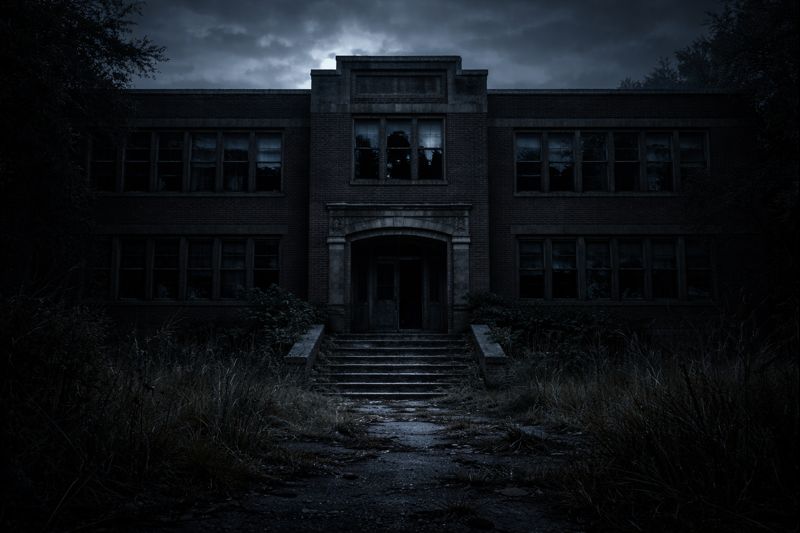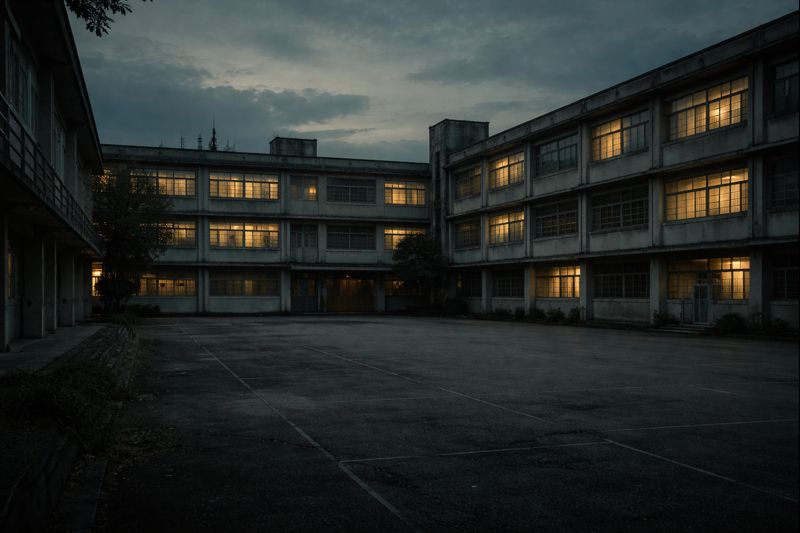
The school had stood at the heart of the estate for as long as anyone could remember.
Though redevelopment erased old flats and reshaped familiar streets, the school grounds remained untouched—a quiet monument to the estate’s earliest days. Alumni spoke of it with equal parts nostalgia and caution.
There were always rumors, of course.
Classrooms that stayed unnaturally cold, stairwells where footsteps echoed too long, lights that flickered without reason.
Students laughed them off. Old buildings made noise. Old wiring failed.
Except for Block C.
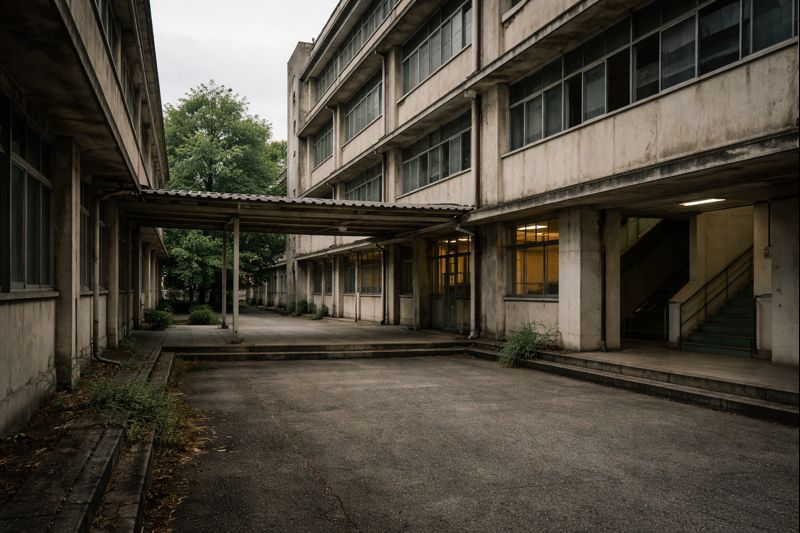
Older than the rest, it stood apart, linked only by a shadowed walkway most students avoided. While lower floors held noisy, routine lessons, the atmosphere shifted higher up.
Teachers rarely scheduled classes above the third floor.
No rule forbade going up there; avoiding the upper floors had simply become a quiet, unspoken agreement among the students.
I transferred in my final year after my family moved to care for my grandfather.
While everyone else navigated the campus by instinct, I learned by watching—which corridors emptied first, which doors remained deadbolted, and which stairwells made people quicken their pace.
That was how I first noticed Room C-4 at the end of the top hallway.
As the weeks passed and I began staying later, I finally understood the truth behind the haunted classroom stories.
They weren’t about cold drafts, failing bulbs, or creaking doors.
They were about a room that never seemed to empty, no matter how many students walked out.
A Class in Room C-4
Room C-4 sat at the very end of Block C’s top corridor, right where the afternoon sunlight always stopped short.
Officially, the school still recognized it. The room’s designation popped up on internal floor plans and digital timetables, yet no one could remember the last actual lesson held inside.
When I asked, the answers were carefully bland. “Under review.” “Overflow space.”
Even during mid-year examinations—when every available desk was in demand—C-4 remained strictly off-limits.
Yet the fourth floor wasn’t abandoned.
The fluorescent lights hummed steadily, the floor tiles gleamed, and the notice boards displayed outdated safety announcements no one ever tore down. It was meticulously maintained, just never occupied.
Then came Thursday.
A fresh printout appeared in the glass frame beside C-4’s newly replaced door: a morning period for my class, scheduled at 0800. No subject listed. No teacher assigned.
I checked the portal that night; the entry was live, glowing faintly on my phone screen.
The next morning, my class shuffled into the courtyard beneath Block C.
Eyes darted toward the fourth-floor windows, then quickly away. Whispers died down as our teacher, Mrs. Chen, approached.
She tapped her tablet, scanned the screen, and froze. For a fraction of a second, her face drained of color.
Without explanation, she pivoted on her heel. “Block D today. Quiet line.”
No one questioned her. No one asked why her hands were shaking as she adjusted her glasses.
As we marched toward the newer buildings, I glanced back up at Block C.
Through the fourth-floor windows, the lights in Room C-4 were already on—and the faint, dark silhouettes of an entire class sat perfectly still at their desks.
The Empty Seat
Curiosity eventually outweighed caution.
The fourth floor held an unnatural silence that pressed against my ears.
Though morning light spilled into the stairwell, it vanished before reaching the end of the corridor, leaving the final stretch in perpetual gloom.
My footsteps echoed loudly, sounding strangely detached from my own movement.
The door to Room C-4 was unlocked.
I stood there for a long moment, my hand hovering over the cold handle. It’s just a room, I lied to myself, pushing it open.
Inside, the air felt ancient and sealed, like a forgotten tomb.
Desks were arranged in precise, rigid rows. The blackboard was wiped clean, yet faint, ghostly chalk lines lingered across the slate, as if countless lessons had been written and frantically erased over decades.
On the teacher’s desk lay an open class register.
I stepped closer, my pulse hammering in my throat. Dozens of names were checked off in fresh blue ink—marked Present.
The dates were undeniably recent, entered in the exact format the school used that term. Yet not a single name matched anyone in my cohort—except at the very bottom, where the name Lim Wei Jun slowly materialized in wet blue ink, as if drawn by an invisible hand.
A thunderous BANG shattered the silence as the door slammed shut behind me.
I lunged back and grabbed the metal handle, twisting it frantically, but it wouldn’t budge. The handle had fused in place, and the keyhole had vanished beneath smooth, unbroken metal.
I was trapped.
Beside the board, the seating plan quivered. Every square but one contained a neat block-printed name, mapping out a nearly full room. The only empty square was in the back row.
Beneath that lone vacant square, written in dark, glistening ink that hadn’t yet dried, was my transfer ID number.
Marked Present
The temperature plunged. My breath bloomed in thick, white clouds as a sickening pressure seized my chest, dragging my gaze toward the back row.
The empty chair slid out from beneath the desk on its own, scraping across the tiles with a screech that vibrated in my teeth. Unseen weight settled into the chairs, row by row.
Shadows elongated, bending toward me like a crowd leaning in to watch.
On the teacher’s desk, the blue pen twitched. It lifted into the air, its tip hovering over the Present box next to my name.
If it marks me, I don’t leave.
Panic cleared the fog in my head. Attendance didn’t just record who was there—it commanded the room.
I grabbed the pen mid-air, the plastic ice-cold against my fingers, and slammed it onto the register. My hands shook so violently I could barely grip it, but I forced the tip against the page.
With one frantic, jagged stroke, I crossed my name out.
A collective, furious gasp echoed from every empty corner of the classroom. The room seemed to exhale in one violent burst.
Above me, the fluorescent lights shattered, showering the room with sparks before plunging it into darkness. The wooden door behind me jolted open an inch.
I didn’t look back. I threw my weight against the door, bursting out into the dim corridor, and sprinted down the stairwell three steps at a time.
Behind me, high up on the fourth floor, a bell rang faintly for dismissal—and then, total silence.
Rescheduled
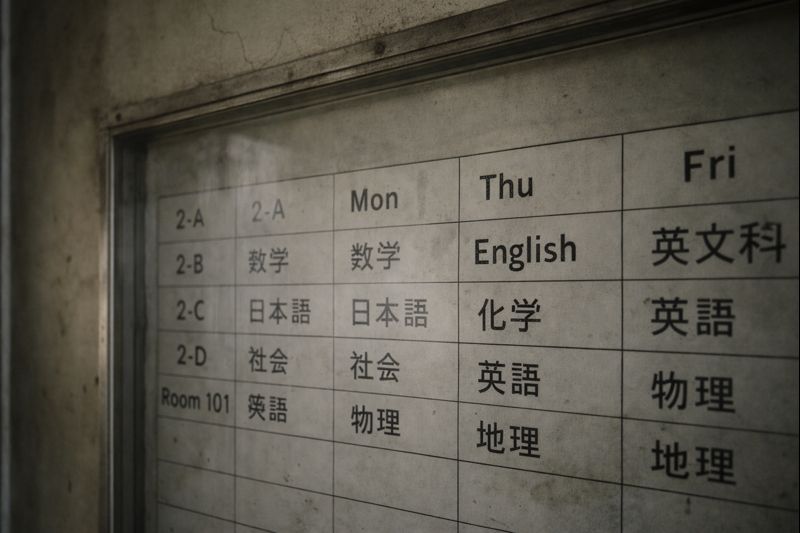
Crossing my name out should have set me free. Instead, the classroom remembered—and simply rescheduled me.
By Monday, the room’s influence had begun leaking beyond its walls. It started with my digital timetable, constantly rerouting my morning schedule to Room C-4.
During the second period, my geography teacher stared right through me. “Lim Wei Jun,” he murmured, his eyes hollow. “Why are you here? You’re supposed to be upstairs.”
My classmates stopped looking at me altogether.
When I sat down at my desk in Block D, the girl beside me subtly shifted her chair away, as if my seat was already occupied by cold, empty air.
Then came the physical pull.
It started as a bone-deep vibration behind my ears whenever the bell rang.
By Wednesday, my body moved on autopilot. Between lessons, I’d catch myself mid-stride on the concrete stairwell of Block C, my legs carrying me upward against my will.
My muscles strained, my chest burning with a suffocating pressure that only eased when I took another step toward the fourth floor.
It was pulling me in, thread by thread, erasing my place in the living world to make a place for me within itself.
On Friday afternoon, the final bell rang. The halls emptied in seconds, leaving me standing at the base of Block C.
My hands were clammy, my vision narrowing until only the top of the stairwell remained. A soft scraping echoed from above—a wooden chair being pulled back.
My feet moved forward on their own. I reached the top corridor and pushed open the door to Room C-4.
The blue pen sat waiting on the teacher’s desk.
And at the back by the window, my chair was pulled out, waiting for me to take my seat.
The Awakening Bell
I stood in the doorway, staring at the pulled-out chair.
For a terrifying second, I imagined sitting down.
I felt the strange, magnetic pull of letting the confusion end—of finally being recorded somewhere permanent.
My body moved on autopilot, each heavy step dragging me toward the back row. That quiet urge to surrender unsettled me more than the freezing air itself.
Then, from the courtyard below, the school’s automated chime sounded a second time—the same sharp electronic pulse that had ended the final period minutes earlier.
The familiar sound shattered the room’s spell. My thoughts snapped into focus as the suffocating fog lifted from my mind.
As the chime sounded, the room reacted. The fluorescent lights flickered in time with its pulse, and the shadows around the desks shifted toward the door, as if waiting.
Dismissal.
The realization hit me like a splash of ice water.
The room wasn’t merely haunted; it was trapped in the rigid machinery of the school day. It kept forcing attendance because its final lesson had never been formally dismissed. If it obeyed the school’s routines, then it was still waiting for the command that ended every class.
My gaze returned to the open register on the front desk. Attendance began a lesson. Dismissal ended it.
It didn’t just want a body to sit in that chair. It needed to be told that class was over.
Dismissal
Hands shaking, I picked up the blue pen from the desk. I read the first name aloud.
“You are dismissed.”
My voice trembled in the silence. I drew a firm line through the name. A chair leg scraped softly across the tiles behind me. Swallowing hard, I read the next name.
“You are dismissed.”
With every name I crossed out, the suffocating pressure in the air loosened. The faint scraping sounds shifted backward, row by row, as if unseen bodies were standing up and stepping away.
Finally, only my name remained at the bottom.
If I was wrong about this, drawing that line meant locking myself here forever. I took a deep breath and forced the words into the silence.
“You are dismissed.”
I drew the final line through my name.
The room held its breath.
Then the fluorescent lights flickered and died. Paint blistered and dulled; orange rust blossomed across the window hinges. Decades of dust blanketed the desks in an instant.
Beside the window, the pulled-out chair tipped slightly, then slid silently back into place.
I backed into the corridor. For the first time, sunlight reached all the way to Room C-4. After that day, I never looked up at the fourth floor again.
By that evening, Room C-4 had vanished from every digital timetable.
I graduated that year.
Yet even now, whenever an attendance call pauses just a beat too long, I feel that same cold static stretch through the room—and I wonder if somewhere, in a classroom kept clean but never used, a chair is still waiting for my name to be called.
Related Stories
Some rooms refuse to empty. Others quietly change around the people inside them.
In an aging apartment block, residents began noticing something impossible: every year, the stairwell seemed to lose another level — as if the building itself were slowly erasing the floors, and the lives once lived there.
Haunted Apartment Stairwell That Loses One Floor a Year
But some buildings do not erase people at all. They simply keep count.
In an old school building, students whispered about a staircase that seemed to know exactly how many people were inside — and on certain nights, the number it counted was always one too many.