
The elders never spoke the words out loud, yet everyone in my family understood the meaning of a bloodline curse. From a young age, I learned to count birthdays differently. We did not celebrate how old someone was becoming. We counted how close they were to the age already marked for all of us—the one no one ever survived.
Every generation lost exactly one person, always at the same age. No sickness followed. No accident explained it. One day, the person simply failed to return home, as if the world had quietly adjusted itself.
Because of this, our family learned to live carefully. And yet, fate never learned to wait.
A Bloodline Curse Recorded in Red Ink
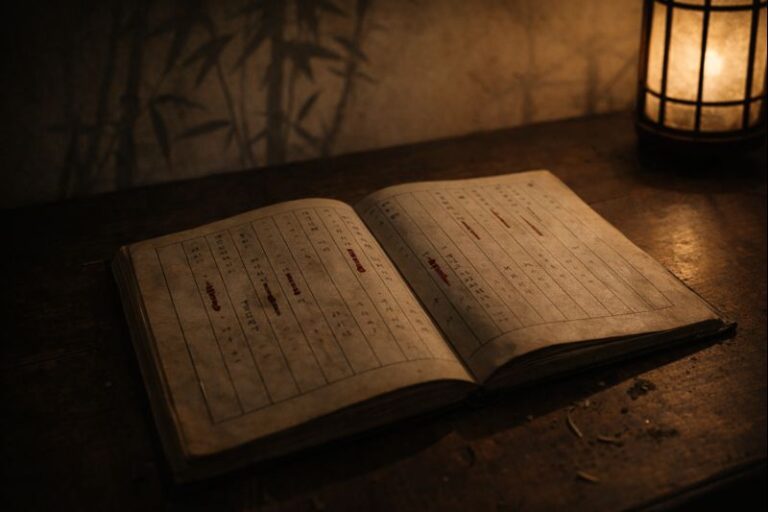
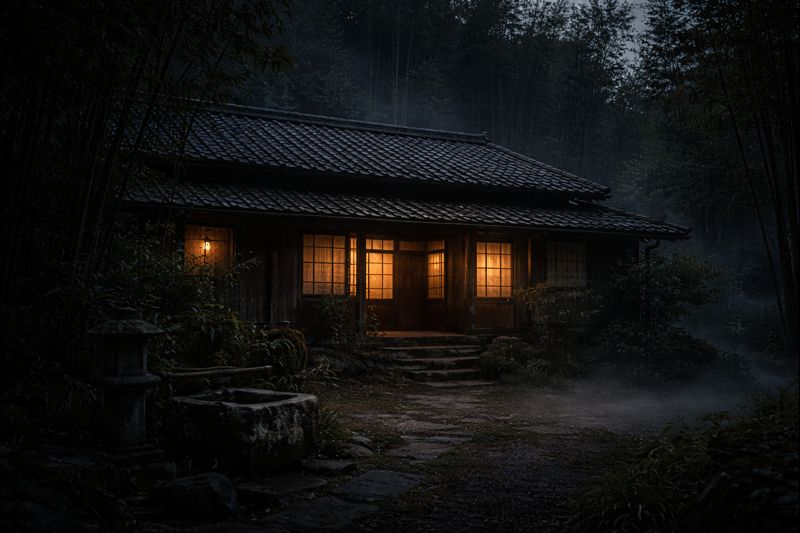
Our ancestral home stood at the edge of the village, backed by bamboo trees that whispered whenever the wind shifted. Inside, a locked wooden cabinet held our most important heirloom: a family register written by hand and passed down for generations.
Each page listed births, marriages, and deaths. One narrow column appeared again and again in red ink. The same number surfaced beside different names, unchanged by time.
Twenty-seven.
Whenever someone reached that age, the ink stopped.
My grandmother showed me the book when I turned twelve. She did not explain the bloodline curse directly. Instead, she said, “Some roots grow too deep. When they break, the soil remembers.”
Her fingers lingered on the blank space at the bottom of the newest page. “The book finishes what we cannot,” she added quietly.
After that, birthdays grew quieter. Cakes became smaller. Laughter ended early. Elders watched the calendar with careful eyes, counting days rather than years.
I remember one cousin who laughed too loudly, even near the end. His name sat beside the same red number. After he vanished, no one spoke of him again.
How the Family Learned to Count Time Differently
As I grew older, I saw how the curse shaped us. Cousins left the village early. Some refused to marry. Others avoided having children at all. They believed distance could thin the blood and weaken the curse.
I told myself I would be smarter.
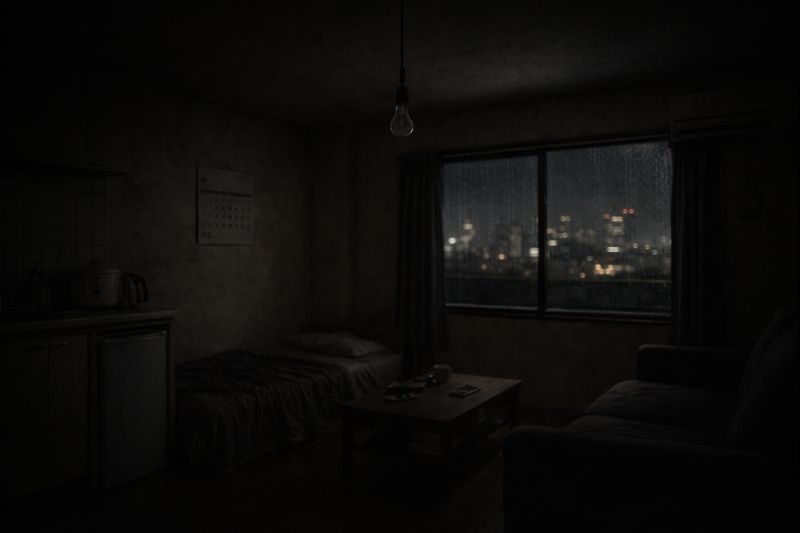
Before turning twenty-seven, I changed my name. I moved to the city and rented a windowless room that always felt too warm, even at night. I erased family ties from official records. I stopped answering letters and calls, letting old messages pile up unread. Once, my hand hovered over the phone, tempted to reply. I put it down instead.
Slowly, the village faded.
For a while, it worked.
No dreams came. No whispers followed me. My birthday passed with the lights off and the calendar untouched. I waited for something to shift, but nothing did. The silence settled, thick and steady. I began to believe the bloodline curse had finally lost track of me.
I mistook stillness for safety.
When the Bloodline Curse Finds What Still Exists
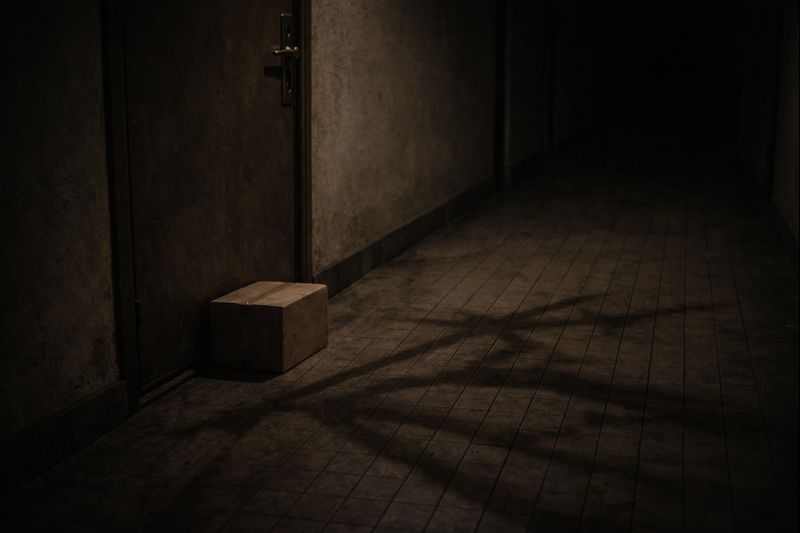
Three weeks later, a small parcel waited inside my room.
I was certain I had locked the door.
There were no stamps. No postmark. The cardboard was damp, as if it had been carried through rain that never reached the city.
Inside lay a single sheet torn from the family register.
My name appeared at the top.
The red ink beneath it was faint at first—thin, almost uncertain. I watched as the number darkened, filling itself in slowly, stroke by stroke.
Twenty-seven.
The air thickened. The walls seemed to lean inward. When I reached for the door, it would not open. My phone showed no signal. The hum of traffic outside drained away until only my breathing remained.
I thought of my cousin. Of my grandmother’s hands resting on the book.
Then I understood what had never been written.
The bloodline curse did not follow names or addresses. It did not need records. It clung to what remained in the blood.
The room began to empty. Not collapse—empty. The bed faded first, then the desk, then the walls themselves. The air loosened its hold.
There was no pain. Only a widening absence.
What Remains After Everything Is Accounted For
The next morning, my apartment stood vacant. Neighbors later said no one had lived there for years. Mail addressed to me corrected itself in transit. Records adjusted without error, as if my name had been an inconvenience.
Back in the village, my grandmother opened the register.
She did not lift the brush.
She watched as the red ink deepened on its own, completing the final space on the page.
This time, there were no more blank lines beneath it.
The book closed.
The bloodline curse had taken its last name.
There was no one left to count.
And beneath the bamboo trees, the soil rested again.