

Everyone in the alley knew the building before they knew its debt.
Ten stories tall and narrow, it stood pressed between food stalls and shuttered shops, its windows stacked like ribs. Sunlight never reached its lower floors. Even after rain, heat clung to the corridors. After midnight, the stairwells felt warmer than the street below, as if the concrete kept a memory it refused to release.
The debt began long before concrete.
More than a century earlier, a poor man lived on that plot in a wooden house. Failed harvests ruined him. He borrowed from an illegal lender. Interest grew faster than mercy. One night, men came. They locked the doors from outside and poured oil along the walls. Neighbors heard screaming until smoke swallowed the sound.
No burial rites followed. No one guided what remained.
The house burned to its frame. Years later, the alley block rose from the same ground.
Mr. Lin inherited the building from his uncle. As a boy, he remembered soot drifting from an upper window long after a small fire was declared contained. As owner, he blamed old wiring—until tenants died.
He tried repainting. He replaced doors. He stood alone in the stairwell some nights, palm against the railing. It felt warm, even at dawn. He told himself it was trapped heat.
He did not tell himself what it felt like.
Fire That Learned the Building

The fires did not behave like accidents.
A stairwell ignited while rain flooded the alley. On the seventh floor, heat warped a steel door while the neighboring unit remained untouched. Survivors spoke of locks that would not turn and air that smelled faintly of old oil.
From inside the walls came a soft crackle, like wood burning where no wood existed.
On the fifth floor, soot sometimes appeared in the shape of fingerprints. Maintenance scrubbed and repainted. The marks returned thinner, closer together.
Priests came with bells and talismans. They sealed doorframes and traced symbols along stairwells. One night, a charm blackened and curled inward without flame. Another ritual ended when a locked stairwell flared, killing a young assistant.
After that, the fires changed.
They climbed.
Not outward, not sideways—up.
Mr. Lin began sleeping in his office. He kept the corridor lights on. Once, at three in the morning, the fire alarms wailed and stopped mid-scream. When he stepped outside, there was no smoke.
He stood there a long time, waiting for something he could name.
The building felt less like a place and more like a habit.
Debt the Monk Would Not Seal
The fifth expert arrived without assistants.
An old Buddhist monk from a mountain temple, he refused payment and asked only to stay overnight. He sat on the third floor, where the first modern deaths occurred, and listened.
By dawn, his robe smelled faintly of smoke.
“It remembers,” he said.
Mr. Lin asked what it wanted.
The monk did not answer at once. Instead, he asked for old records—land transfers, family names, the first deed after the fire. He traced one surname with his finger.
That family still owned warehouses near the river. Their trucks passed the alley each morning.
“The fire began with them,” the monk said quietly. “But it has been collecting from whoever stands closest.”
Mr. Lin felt something close inside his chest.
“What ends it?” he asked.
The monk looked at the stairwell. “Ending and permission are not the same.”
He did not explain further.
When the Debt Was Collected
The lender’s descendants did not believe at first.
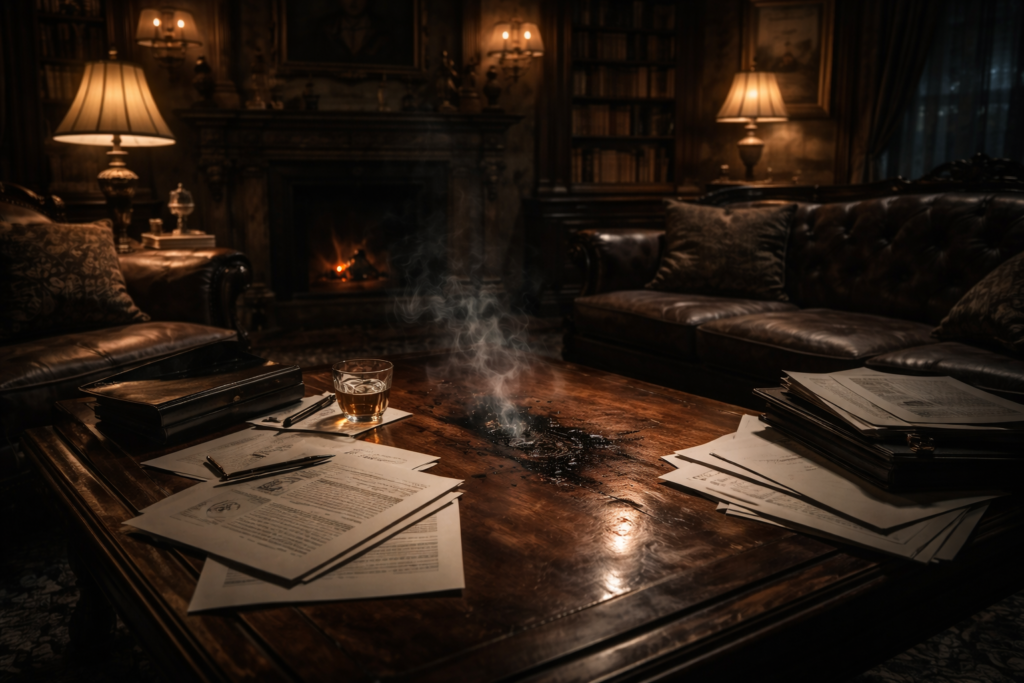
Then accounts froze mid-transfer. Buyers withdrew from signed contracts. Fire alarms screamed in empty homes and cut off mid-wail. Kitchen stoves flared high, then died. Door handles grew hot enough to blister and cooled before water touched them.
Nothing spread. Nothing burned down.
Inside the alley block, the opposite happened. The midnight warmth thinned. Railings cooled. The air no longer carried oil.
The family argued behind closed doors. Donations were made quietly. Lawyers were hired. Nothing shifted.
When the monk returned, he asked for one member of the bloodline to stand inside the stairwell.
The chosen descendant arrived pale, flanked by relatives whose hands gripped his arms too tightly to be comfort. His lips moved once. No sound followed.
The monk began to chant.
Heat pressed inward, as if something beneath the skin had caught. The young man gasped. There was no visible flame, yet the air thickened. A shape formed against his chest—dark, spreading, the outline of a hand.
When he screamed, the fire alarms did not answer.
The heat vanished.
He collapsed. The mark remained.
That night, for the first time in decades, the stairwell felt like stone.
Tenants returned. Doors opened without resistance. Mr. Lin stood alone on the third floor and pressed his palm to the railing. It was cold. He did not feel relief. He felt something closer to complicity.
Before leaving, the monk paused at the entrance. “It will not forget,” he said. “It has only moved.”
Sometimes smoke drifts past the night market, and the glass along nearby buildings reflects it a moment too late. During festival nights, when burners flare and paper offerings curl into ash, the scar tightens against skin.
And somewhere else, something begins to warm.