The lift at Lianhua Residences arrived with a soft, hollow chime that echoed down the narrow lobby.
I had just moved into Unit 704.
Fresh out of a bitter divorce and nearly broke, I had been desperate enough to take an apartment in Block C—a hastily renovated high-rise wedged between rows of decaying shophouses.
The landlord had bragged about the fresh paint, but it could not conceal the sour dampness beneath it—or the unnatural silence that filled the hallways.
As I lugged my first box into the lobby, an elderly woman in frayed slippers stepped out of the lift. Her eyes moved past me and settled on the metal button panel.
“You’re the one who moved into 704,” she said.
I nodded, shifting the heavy box in my arms.
She stepped closer. “When you use this lift, press your floor once.” Her gaze remained fixed on the panel. “Never twice.”
I gave an uneasy laugh. “What happens if I press it twice? Does the lift jam?”
She did not smile. “Don’t.” Her eyes finally met mine. “The man from 1404 pressed twice last month. The camera recorded him entering this lift. It never recorded him coming out.”
Before I could question her, she shuffled through the lobby doors and disappeared onto the street.
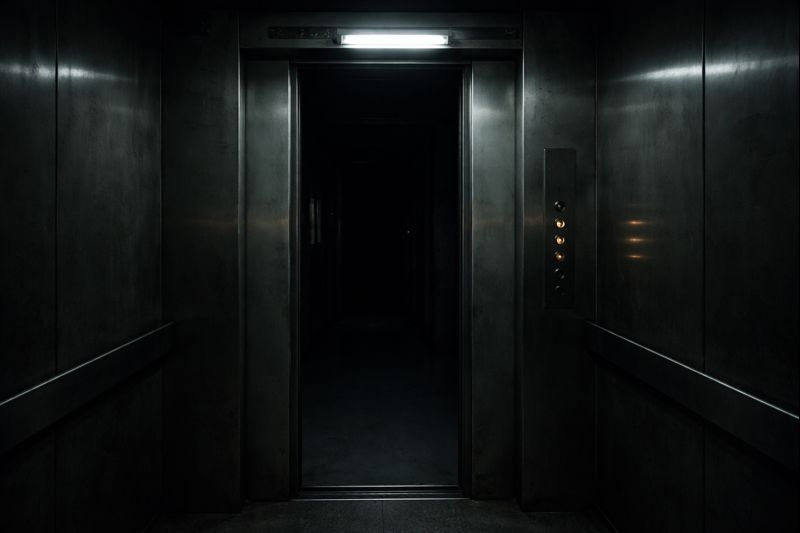
A few minutes later, standing alone inside the cramped lift, I found myself staring at the panel.
Directly beneath the button for Floor 1, a rectangular section of the panel had been covered with darker steel. Unlike the scratched metal around it, the patch was perfectly smooth.
The doors slid shut with a heavy metallic thud. I pressed the button for Floor 7 once.
No light appeared around the button. The lift remained still.
Never Twice
My finger hovered over the unlit button. I waited five seconds, but the lift remained still.
Impatience tightened in my chest.
I almost pressed 7 again, but the old woman’s warning stopped my hand midway.
Only once.
I forced myself to pull back. At last, the cables groaned somewhere above me, and the lift jerked upward.
Over the next two weeks, I tried to dismiss her warning, but Block C made that impossible. Everyone in the building seemed to follow the same unwritten rule.
In the lobby, no one pressed the call button more than once. They pressed it once, then waited in tense silence. Mrs. Tan from Floor 12 kept both hands buried in her pockets whenever she entered the lift.
One evening, a delivery rider rushed in and jabbed his floor button three times. The man beside me immediately stepped out and headed for the stairs.
The rider never returned for his e-bike. It remained chained outside the lobby for days until security finally removed it.
Worse, late at night, I sometimes heard a faint click behind the smooth steel patch beneath Floor 1. It sounded as though something inside the shaft was counting the seconds, waiting for someone to make a mistake.
Two weeks after moving in, I came home past midnight after a gruelling shift.
I stepped inside. The doors slid shut.
My head was pounding, and I was moving on autopilot. Without thinking, I pressed 7.
Nothing lit up.
Exhausted and irritated, I pressed 7 again before I realised what I had done.
The Second Press
The moment I pressed 7 a second time, I froze. A spike of panic went through my chest.
Click.
It was not the usual relay sound. It was deeper and deliberate—like a heavy iron bolt sliding into place somewhere inside the shaft.
The 7 button flashed blue once, then went dark. The overhead light snapped off, plunging the lift into darkness.
The faint electrical hum vanished.
The temperature plummeted. Within seconds, the cold burned my lungs with every breath. The air thickened, reeking of wet iron and rotting wood.
Then the lift dropped several inches and stopped with a bone-jarring crunch.
I staggered backward and pressed my spine against the cold steel wall. My heart hammered so violently it hurt.
“Hello?” I called, my voice cracking. “Is anyone there?”
No answer came.
Slowly, the digital display above the doors flickered back to life. Instead of a floor number, a single blood-red dash glowed in the darkness.
Just beyond my right ear, something pressed against the other side of the steel wall with a wet, fleshy thud.
Then came the scraping.
What sounded like fingernails dragged slowly down the other side of the wall, producing a shrill metallic screech.
A wet, rasping voice breathed through the darkness, seeming to come from every corner of the lift at once.
“Thank you for confirming.”
Below Floor One
The floor jolted beneath my feet, and the lift lurched into motion. The lift was not rising towards Floor 7.
It was descending. The lift gathered speed.
Above me, the cables shrieked against the machinery as it plunged deeper into the shaft. The blood-red dash pulsed on the display, casting the only light inside the lift.
I seized the handrail until the metal bit into my palms.
The descent should have ended within seconds, but the lift did not slow. It kept sinking far below any level shown on the panel.
The air thickened with the stench of damp earth and something long-rotted.
The lift stopped with a brutal metallic grind. The force threw me to my knees, scraping my palms across the icy metal floor.
Silence fell again, deeper than before.
Ding.
The hollow chime sounded warped, as though it had travelled through deep water. Slowly, the lift doors dragged apart with a long scrape of rusted metal.
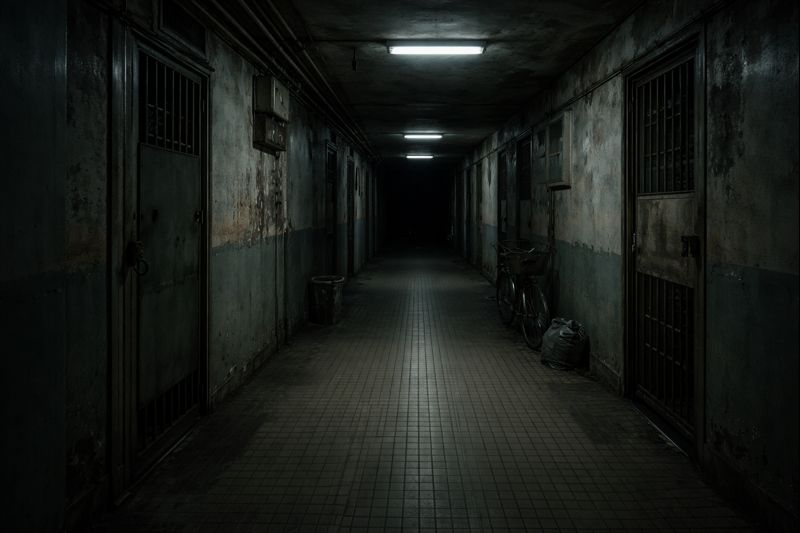
Beyond the doors, there was no familiar lobby, no bright lighting and no tiled floor.
A narrow corridor receded into darkness.
Cracked, wet tiles lined the walls, streaked with dark sludge. Fluorescent tubes dangled from exposed wires overhead, flickering and buzzing in uneven bursts.
A current of freezing air flowed into the lift. The lift doors stood wide open, waiting.
Far down the corridor, beyond the last flickering tube, a faint silhouette stood in the darkness. It was impossibly tall and thin, facing the open lift without moving.
The Dying Lights
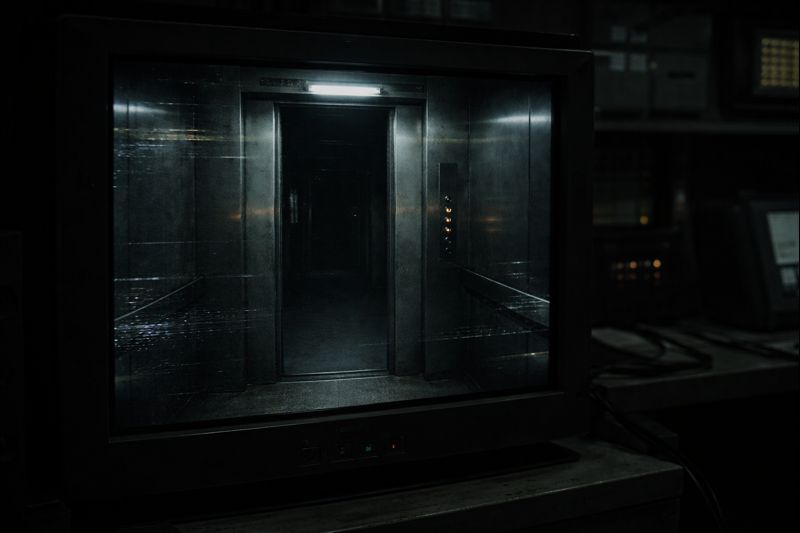
I backed deeper into the corner, my hands searching the smooth steel for anything I could use as a weapon. There was nothing.
The tall figure at the end of the corridor remained motionless, but the fluorescent tubes began to pop and die one by one, the darkness advancing towards the lift.
Snap. Snap.
With each burst, another section of the corridor vanished, making the figure appear closer.
“Close,” I whimpered, striking the door-close button with my palm. “Please close.”
Nothing happened. The red dash blinked weakly. Then a dim emergency light above the doors flickered on, washing the threshold in a dull red glow.
The freezing air pouring into the lift now carried a nauseating mixture of coppery blood and stagnant drain water. Long strands of wet, pale hair slipped down from the corridor ceiling like vines.
Then came the footsteps.
They did not sound like shoes striking tile. Each step landed with the wet slap of a bare foot, followed by a slow drag across the damp floor.
Slap. Drag. Slap. Drag.
By the time the final fluorescent tube went dark, the figure stood just beyond the threshold. In the weak red glow of the emergency light, I could see its face.
It had no eyes, nose or mouth—only smooth grey skin stretched tightly over the shape of a skull.
Slowly, it raised one long, bony arm and pointed directly at me.
Behind my head, the steel wall buckled with a series of wet thuds. Hand-shaped bulges pushed outward around my shoulders, their fingers writhing beneath the metal.
Every Floor Requires a Space
The cold metal behind me bulged outward as wet hands pushed through the steel, pinning my shoulders against the wall.
I screamed and thrashed against the crushing grip as the pale, featureless entity stepped over the threshold and into the lift.
The temperature plunged below freezing, and frost crept along the edges of the display.
The entity’s thin, grey hand reached towards me. Its fingers never touched my skin—they sank straight into my chest and closed around my heart with a grip like frozen iron.
My vision blurred.
Behind me, the hands inside the wall fell quiet, their frantic thrashing slowing to a rhythmic thud.
The thudding was no longer the hands. It had become the heavy mechanical pulse of the lift’s machinery.
The entity leaned close to my ear. It had no mouth, yet its voice resonated directly inside my skull, flat and echoing:
“Every floor requires a space. Every space requires a record.”
The grey skin of its face split down the centre, peeling open like wet paper. Beneath it was neither meat nor bone, but a dark, hollow shaft filled with hundreds of glowing blue buttons, each marked with the number 7.
The entity pressed one of them.
The lift shuddered violently, then lurched sideways into the black void as though the floor had dropped out beneath me again.
My breath caught in my throat as my strength drained away. My body felt weightless and hollow, as though my flesh were turning cold and rigid like steel.
At last, the red dash on the display changed.
The display began counting downward—not 6, 5, 4, but into negative numbers that had no business existing beneath Lianhua Residences.
The Next Record
The negative numbers flickered wildly across the display, then vanished. A steady blue 7 appeared in their place.
The frost melted at once. The suffocating stench vanished. With a soft, cheerful chime, the lift doors opened onto the brightly lit corridor of Floor 7.
I stumbled onto the dry carpet, gasping as I clutched my chest. There were no wounds or bruises—nothing to prove that the entity’s fingers had been inside me.
My apartment door stood only a few steps away, unchanged. I collapsed against it, trembling, convinced I had survived.
Then my phone buzzed in my pocket.
I pulled it out with shaking hands. The timestamp on the security alert was three weeks later than the night I had entered the lift.
Door unlocked from inside.
I froze.
Behind me, the lock clicked. The door opened, forcing me to stumble aside.
A woman stepped out of Unit 704, dragging a flattened cardboard box towards the lift. She looked tired, pale and desperate.
The lift chimed. The doors opened, and she stepped inside. She pressed 1, but the button stayed dark.
I tried to tell her to run, but my jaw would not obey me.
A second later, my lips moved without my permission. They formed words in a flat, hollow voice that no longer sounded like mine:
“When you use this lift, press your floor once. Never twice.”
My hands folded themselves in front of me as the doors began to close.
The lift had chosen its next record.
Editor’s Note
Some buildings renovate. Others adapt.
Shared spaces carry what individual lives cannot. In places where strangers pass without speaking, rules form quietly—not because they’re announced, but because survival demands them.
Not every door should stay sealed. Some remain, waiting, for those who choose to ask twice.
Related Stories
Some places don’t remove a floor when something goes wrong.
They lock the doors, shorten the patrol routes, and tell the night staff not to look too closely.
The Forbidden Floor Security Was Told Not to Watch
Elsewhere in the city, the rules arrive differently.
Sometimes they appear as a notification just before midnight, telling someone not to miss the last train.