

When I joined the night security team at Larkspur Mall, they gave me a badge, a radio, and a list of procedures. Halfway down the page was a rule about the forbidden floor. The mall closed at 10:30 p.m. After that, my job was simple—walk each level, check corners, and log anything unusual.
The fourth floor had two emergency exits, marked A and B. During night patrol, I was told to stand at Exit A, glance down the corridor, and leave. I was not to walk toward Exit B.
“It saves time,” my supervisor said, already turning away.
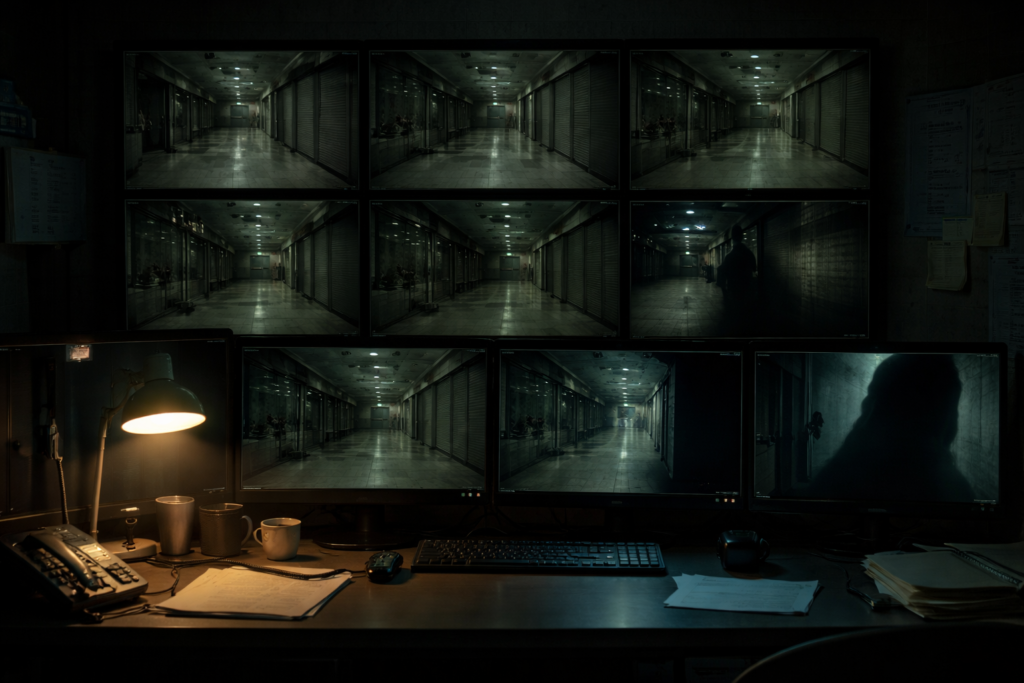
There was another rule. After midnight, I was not to watch the CCTV feed for that level. The monitors stayed on. That channel simply wasn’t meant to be watched.
I followed the rules because I was new. Because night shifts paid better. Because my sister’s medical bills did not wait.
For the first week, the mall felt harmless. Escalators slept. Store gates stayed locked. The radio stayed quiet when it should have hissed. On the fourth floor, an exit sign buzzed near B, its casing warped at one corner. Once, a motion sensor blinked on by itself and shut off again.
I told myself the rules were leftovers from renovation—habits no one questioned anymore.
Then, close to midnight, something moved on the screen.
The Forbidden Floor Rule I Broke
The movement appeared near Exit B—just a shape brushing the camera’s edge. My first thought was practical: someone hadn’t left. I checked the other fourth-floor cameras. Empty corridors. Closed gates. No mannequins in sight.
I should have switched the feed.
Instead, I leaned closer.
If I ignored it and something happened, I’d be the one blamed.
I took the service lift up.
The fourth floor felt colder than the rest of the mall. From Exit A, the corridor was empty. The hum in the vents had stopped. A faint smell hung in the air—sharp, like heated wiring. When the lift doors closed behind me, the quiet pressed in.
Then I heard it. A slow scraping from the direction I was told to avoid.
I walked toward Exit B.
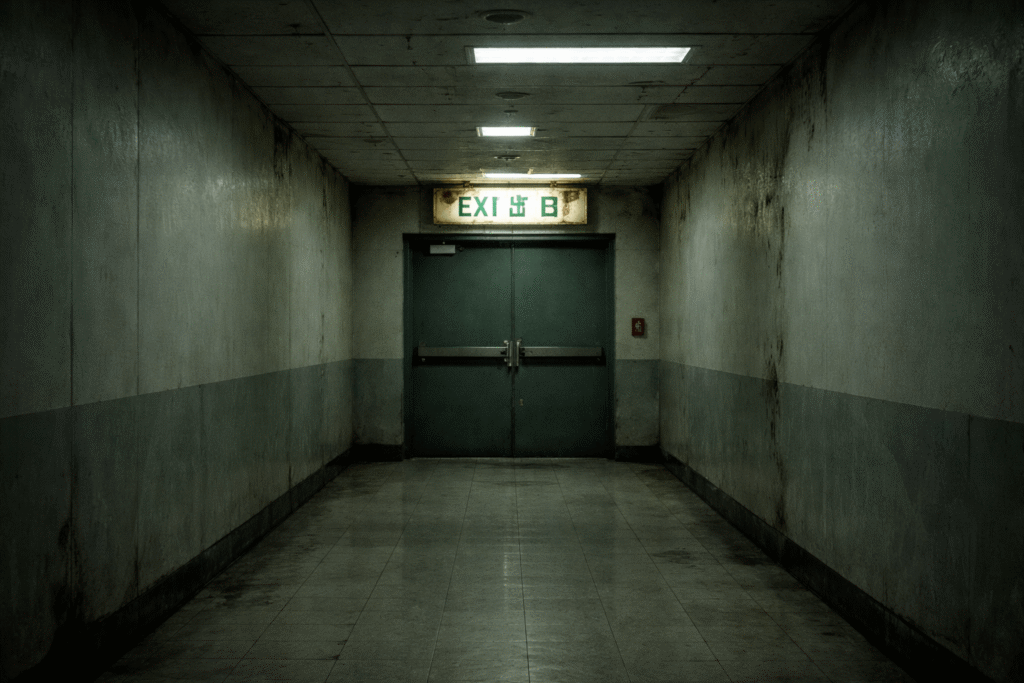
I opened the emergency door.
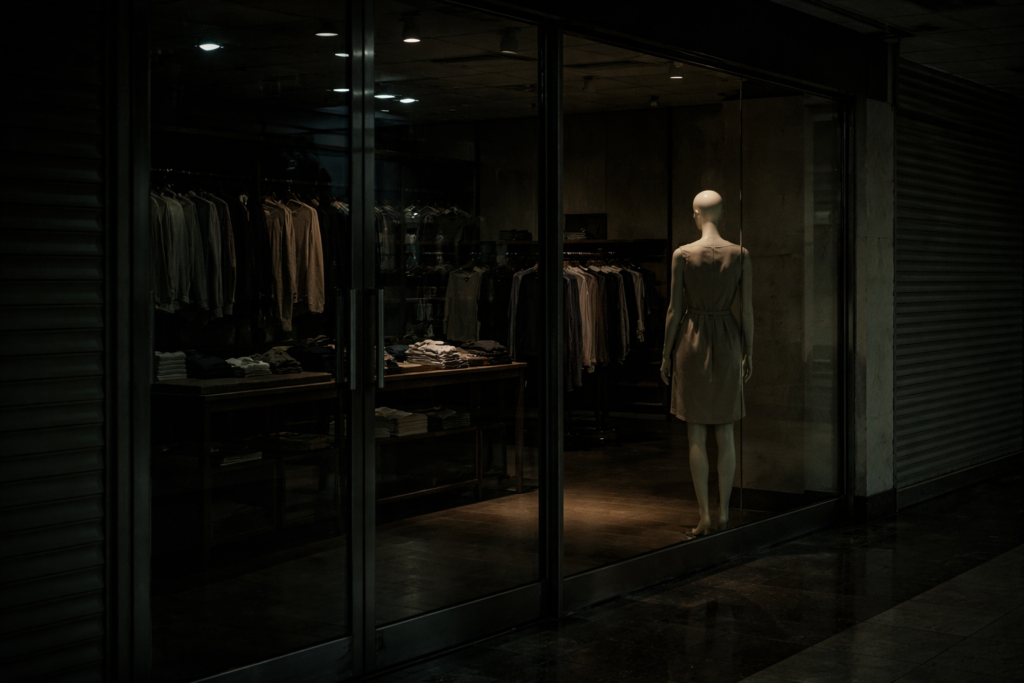
No person stood there. Only a clothing mannequin leaned near the wall, head tilted, arms stiff. The store beside the exit sold clothes. I let out a breath I hadn’t realized I was holding.
Someone must have left it out.
I dragged the mannequin farther inside so it wouldn’t block the door. The plastic felt warm. Not hot. Just warm, as if it had been standing under a light too long.
I did not check the cameras again before going back down.
Back in the security room, I wrote a note for the store owner. Midnight passed while I finished my log. The radio stayed silent.
When the Cameras Looked Back
A black dot pulsed on the fourth-floor feed, always in the same corner. Then another. I assumed a glitch and restarted the CCTV system.
The screens went dark.
They returned all at once.
Every monitor showed the same image—the mannequin standing inches from each camera, facing forward.
Different angles. Same posture.
The fourth-floor corridor could not fit more than one.
For a second, the image wavered, as if the lenses were breathing. The speakers crackled.
“Did you see it…”
The voice sounded strained, as if forced through something narrow.
“Did you see it…”
A knock hit the security room door. Once. Then again.
I waited for the radio to confirm a patrol check. It stayed dead.
The lock clicked.
Footsteps crossed the tile.
The smell returned—thicker now. Not smoke. Something softer. Melted plastic.
My throat closed.
“Did you see it,” the voice said, no longer asking.
I shut my eyes.
When I opened them, a man stood in front of me. His skin looked folded, like plastic left too close to heat. His face had no clear shape. Where his eyes should have been, there was only dark space.
He leaned closer.
“You watched,” he said.
The lights thinned to a narrow strip.
What the Mall Chose Not to See
I woke to daylight and careful voices.
Management spoke in turns, correcting each other. First, they said I’d been overtired. Then that the system had reset overnight. A maintenance binder sat on the desk between us, left open by mistake.
Inside was a printed incident summary. One line had been blacked out. Beneath the marker, I could make out three words:
Exit B — auto-lock engaged.
The timestamp jumped. Forty seconds of static followed.
In the corridor, two managers argued in low voices. One said the lock had always worked that way. The other said it had been changed after.
During renovation years ago, a worker had been assigned near the lift by Exit B. Something went wrong. The cameras showed nothing useful. By the time help arrived, there was nothing left to fix.
After that, patrol routes were shortened. Certain feeds were deprioritized. No one said blame. They said efficiency.
The mannequin arrived during reopening. Logged as inventory.
I resigned that morning.
My badge stopped working everywhere except one door on the fourth floor. Payroll still emailed me a patrol schedule with my name on it. I checked twice before paying my sister’s bill.
Last week, a number from the old night shift texted me. Someone I had trained.
Do I really need to ignore Exit B?
I deleted the message.
At 12:04 a.m., my old badge vibrated once on my desk.
When I pass the mall now, I take the stairs. I don’t let doors close behind me.