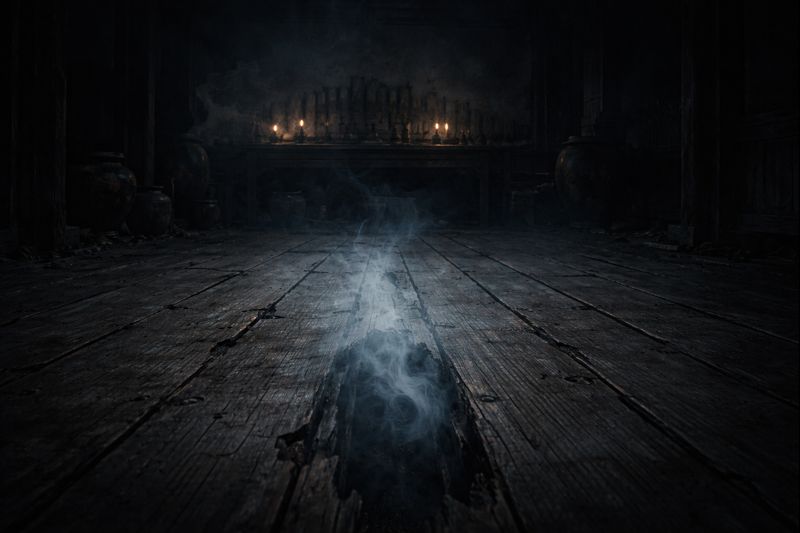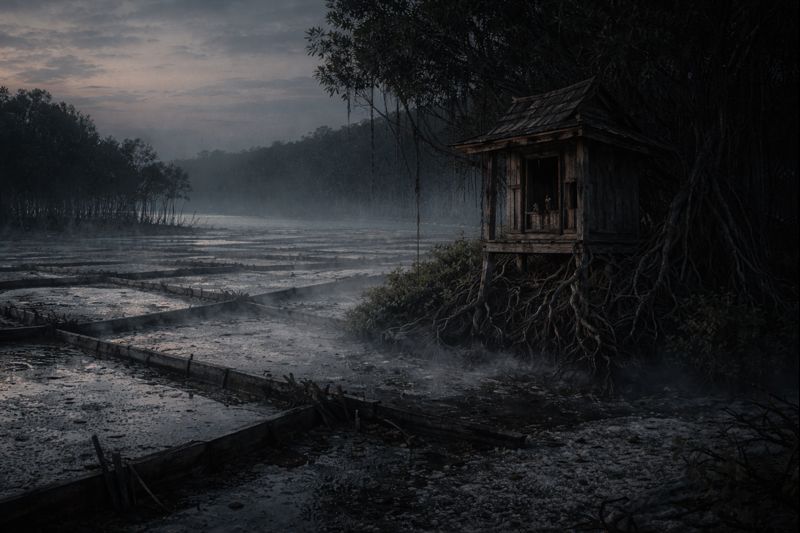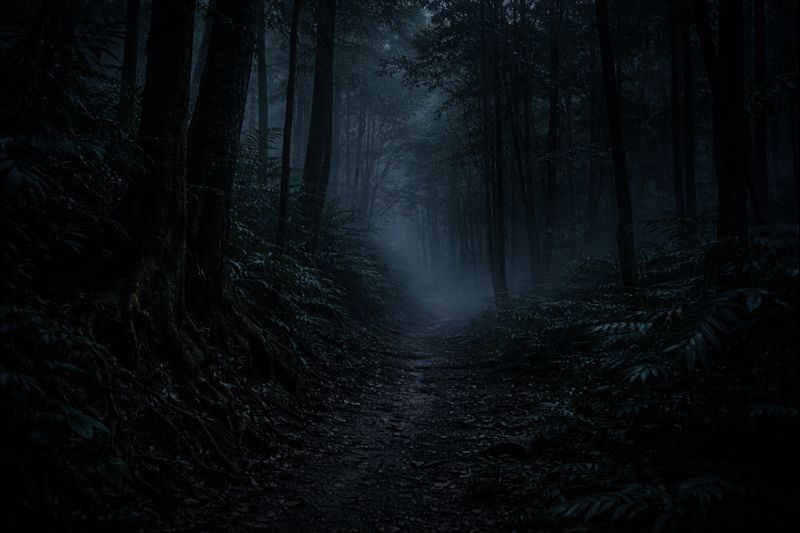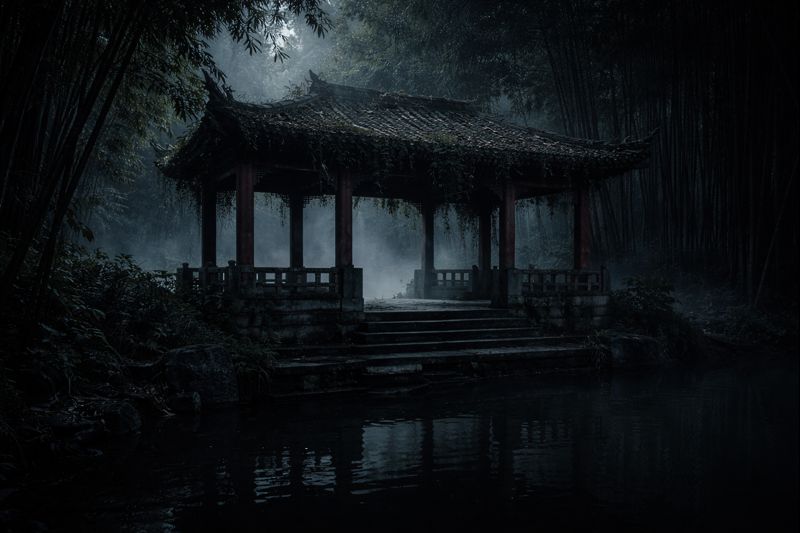
People in my town avoid the Lotus Crossing Pavilion, especially after dusk.
Yet, on a humid evening when the air hung heavy as wet wool, I found myself walking along the abandoned river road, telling myself I wanted only one last look at the pavilion before the wild vines swallowed it whole.
Decades ago, the pavilion welcomed weary travelers. Then the modern highway opened, and the town turned its back. Shops shuttered. Streetlamps rusted into useless spires. Creeping roots slowly devoured the cracked stone steps.
Growing up, I heard the elders whisper that the pavilion had a cruel memory. They claimed it remembered names—especially the ones families tried to bury.
I used to laugh at that. I do not laugh now.
As I neared the tree line, a voice rasped from the gloom behind me.
“Going up there, boy?”
I flinched, turning to see old man Chen leaning on a bamboo cane, his milky eyes fixed on the shadowed path.
“Just taking a walk,” I lied, my voice tight.
Chen spat onto the dust. “The river doesn’t want visitors tonight. Turn back before the water claims your shadow.”
“It’s just an old pavilion—wood and stone,” I insisted, forcing a faint chuckle.
He stepped closer, the smell of stale tea and dried earth clinging to him. “It isn’t the wood you should fear. It’s the breath beneath it.”
I ignored his warning and stepped past him into the dusk.
The Ash Remembers

The stone tiles beneath my boots looked ordinary at first, slick with river dampness. Cicadas screamed a deafening chorus from the canopy overhead, and sweat slid cold down my spine.
Then the air turned bitterly cold.
In a single heartbeat, the insects fell silent mid-cry. The sudden, absolute silence pressed against my ears like heavy water.
Shhhk. Shhhk.
A soft, rhythmic dragging echoed ahead—bare, wet feet shuffling across coarse stone.
“Who’s there?” I called out, my breath blooming in a pale mist despite the summer heat.
No one answered. Every muscle across my shoulders tightened. Beside the path lay neat stacks of joss paper—hell bank notes—crisp and dry despite the dampness. Fresh gray ash clung to the edges, carrying a faint, metallic smell.
My grandmother’s voice echoed in my mind, sharp and terrified: Never step over offerings, child. Walk around. And never let your shadow touch what belongs to the dead.
I carefully skirted the offerings, holding my breath.
Shhhk. Shhhk.
The dragging quickened. It no longer came from ahead, but from the tree line directly to my left.
“I can hear you,” I whispered as panic tightened around my ribs. I turned to retreat, but the path behind me had vanished into an unnaturally thick, writhing fog.
A raspy breath brushed the shell of my ear, ice-cold and reeking of river silt.
“We remember you.”
The Pavilion Without Shadows
The whisper in my ear sent my heart hammering against my ribs. I stumbled forward through the damp fog, desperate to escape the unseen presence, until the mist abruptly parted.
There stood the Lotus Crossing Pavilion.
Its once-vibrant red pillars leaned inward at unnatural angles, as if whispering secrets to one another. The tiled roof sagged like a broken spine.
Pale moonlight spilled across the clearing, but the moment it touched the pavilion, it vanished. The structure should have cast a dense shadow across the stones. Instead, no shadow lay beneath it at all.
That broken law of nature terrified me far more than the darkness.
Against every instinct, I climbed the cracked steps, drawn by a pull I could not separate from my own morbid curiosity. The temperature plunged lower still, freezing the sweat at the back of my neck.
I glanced back. The river below churned, yet its black surface mirrored nothing—neither the moon, the trees, nor me.
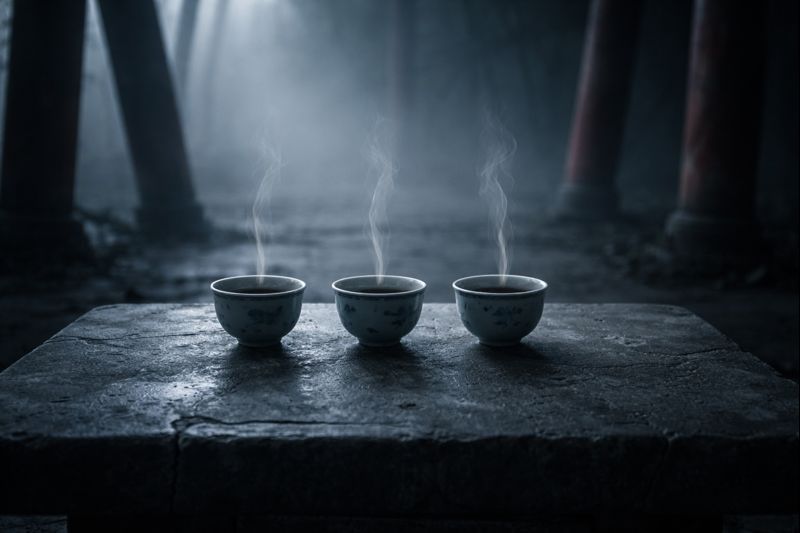
I stepped into the center of the pavilion. Three porcelain cups rested on a cracked stone table.
Hot steam rose from them in delicate, twisting threads.
There was no kettle. No teapot. No host.
My voice trembled as I backed away. “I… I don’t mean to disturb anyone. I’m leaving.”
The rising steam stopped in midair. Each twisting thread whitened into a needle-thin filament of ice.
Three Cups for the Nameless
The needle-thin filaments of ice shattered with a sound like snapping glass, and the pavilion filled with dry, rustling whispers.
The whispers slid along the crossbeams, overlapping until they sounded like a thousand dead leaves scraping across stone. I caught fragments of forgotten dates, archaic dialects, and ancestral titles.
Then one voice rasped above the rest, speaking my great-grandfather’s long-buried courtesy name—a name no living tongue had uttered in twenty years.
“Who are you?” I cried, my hands trembling.
A figure drifted out from behind a pillar. She wore a stained silk robe, her bare feet hovering a hair’s breadth above the stone tiles. Her face was pale as white jade, her expression almost tender—until her mouth split into an impossibly wide smile.
“Sit, child,” she crooned, her voice ringing like hollow bells.
A heavy stone chair scraped across the floor on its own and stopped just short of the backs of my knees.
“I can bring offerings tomorrow!” I choked out. I stumbled sideways, then backed away until my heel struck the edge of the pavilion floor. “Paper money, wine, incense! Just let me go!”
Her smile stretched past human limits, dark cracks appearing along her jawline.
“Those who enter do not leave until the forgotten are named,” she murmured, gesturing toward the table. “Sit. Finish the tea.”
The three porcelain cups rattled violently. The dark liquid inside them boiled, and pale strokes swirled across the surface of the tea in the nearest cup, forming my full name.
The Debt of the Forgotten

The wooden pillars groaned like breaking bones.
I stared in horror at the porcelain cup. Black liquid swirled within, writing and rewriting my name, as if tasting my soul before swallowing it whole.
The pale woman stepped closer, her limbs moving in sickening, joint-snapping jerks. “You let us fade,” she shouted, her eyes black and bottomless. “Your blood stopped burning incense. Your family left our tablets to rot in dust.”
The whispers swelled into deafening shrieks. The tiles under my feet cracked as invisible footfalls circled me, heavy and closing in. Cold, phantom hands began clutching at my ankles, their touch like rotting ice.
Desperation tore through my chest. My grandmother’s warning flashed in my mind: The dead demand respect, or they take life.
I had no incense. No paper money. I had only my memory.
“I remember!” I screamed over the howling wind, forcing myself to speak my great-grandfather’s long-forgotten courtesy name into the dark.
A furious bubbling erupted from the cup. The black liquid surged against the porcelain, and the phantom hands loosened their grip, if only slightly.
Grasping for life, I shouted my grandmother’s childhood name, then my great-uncle’s. With each name I gave them, the screaming thinned, as if recognition itself eased their hunger. But as I reached further back into my bloodline, my memory slammed into a terrifying blank wall.
I couldn’t remember my great-grandmother’s name.
The surface of the cup settled into a mirror shine, holding my face in its depth.
“A debt unpaid,” the woman whispered, reaching out a pale, skeletal hand to seize my jaw. “You give us a name—or you give us yourself.”
The Broken Cup
Her dead fingers locked around my chin, freezing my skin on contact. The pressure inside the pavilion surged until my ears rang and warm blood trickled from them.
“I… I can’t remember!” I choked out, tears burning across my frozen cheeks. “No one ever told me her name!”
“Then you stay,” she whispered, her mouth stretching until the corners tore, exposing endless rows of jagged teeth. “You will sit, and you will become the tea.”
The stone chair lunged forward on its own, slamming into the backs of my knees.
I collapsed onto it, paralyzed as shadowy figures bled from the wooden pillars, their featureless faces leaning toward me, ravenous for life.
My heart hammered against my ribs like a trapped bird.
“I’ll find it!” I pleaded, my voice breaking. “I swear on my blood! I will search every family record. I will speak her name every night and burn mountains of joss paper!”
The woman paused, her black eyes studying the raw terror on my face. The shadowed crowd leaned closer, holding one collective, freezing breath.
“Blood remembers,” she rasped. “Your vow has bought you time. Break it, and we will drag you from your bed.”
She slammed her fist onto the stone table.
The cup bearing my name split down the center with a deafening crack.
Black mist exploded from the fracture, blinding me and knocking the breath from my lungs. The invisible hands released me, and the agonizing cold receded.
“Go,” her voice echoed from everywhere and nowhere. “And do not return empty-handed.”
What Remains Behind
People in my town still avoid the Lotus Crossing Pavilion, especially after dusk. But now, during festivals, they find neat piles of fresh joss paper and burning incense lining the path—left by me.
I survived that humid night, but part of me never truly left the stone steps.
The day after my ordeal, I tore through dusty family trunks, searching old lineage books and yellowed photographs.
By sunset, I had reclaimed my great-grandmother’s forgotten name. I returned to the pavilion before darkness fell and spoke it from the foot of the cracked steps until my throat went dry. Then I cleaned our family altar, lit fresh incense every morning, and offered hot tea to the spirits of my bloodline.
I thought restoring her name had settled the debt. I was wrong.
Last week, an urge that did not feel like my own drew me back to the river road at dawn. The pavilion still stood in the morning light, leaning unnaturally toward the black water, drinking the sunlight and casting no shadow.
I paused at the edge of the clearing, keeping my distance.
The air went dead calm. The birds stopped singing.
From deep within the rotting beams came the same dragging rhythm I had heard that night.
Shhhk. Shhhk.
Then a rasping whisper rose inside my head. It was not my great-grandmother’s voice. Dozens of other voices crowded behind it—nameless, resentful, and hungry.
Together, the voices spoke my name.
I turned and ran. As the wind tore past my ears, the voices followed me with a promise that settled permanently into my bones:
“We do not forget a seat once prepared.”
Related Stories
Some voices wait across still water. Others follow you deep into the forest.
In the mountains of Taiwan, there is a rule locals never break: if something calls your name after dark, you must not answer — because the voice may not belong to the living.
Forest Whispers: The Rule You’re Not Meant to Answer
But some voices rise from the sea, older than the villages that stand beside it.
Along the coast of Ban Chao, fishermen whisper of a presence beneath the waves — one that listens carefully to every word spoken near the shore.