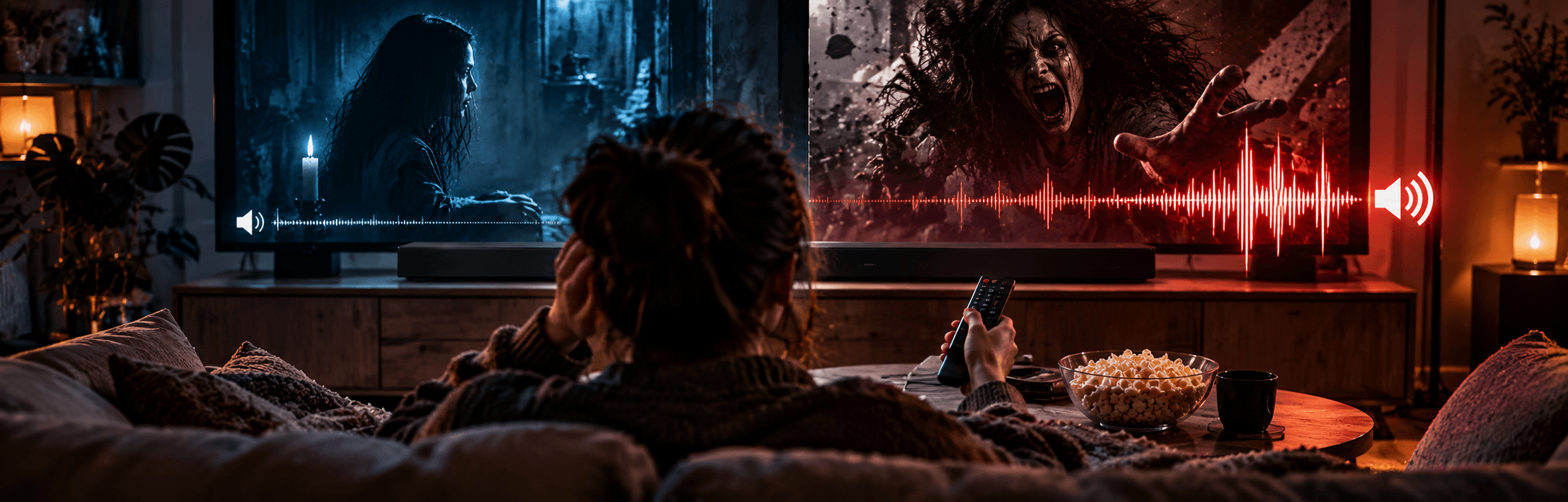
When you watch a horror movie at night, does the remote stay in your hand because you already know what is coming?
The dialogue drops to a whisper, so you raise the volume. Then the soundtrack suddenly erupts and you lower it again. The next conversation disappears, and the cycle starts over.
At some point, you are not watching the movie anymore. You are managing the volume.
That is exactly the problem we want to solve.
A louder soundbar alone will not fix it because horror needs contrast. Quiet footsteps, low rumbles and sudden bursts of sound are part of what creates tension and makes a scare land.
Make everything too similar in volume and the movie loses some of that tension. Leave the quiet and loud moments too far apart and you keep reaching for the remote.
So our priority is narrower: make dialogue easier to follow, reduce uncomfortable volume jumps, and preserve enough bass and atmosphere for the horror to still work.
Our rankings combine manufacturer documentation, published testing from reviewers such as RTINGS, TechRadar and Tom’s Guide, and our own comparison of how well each product fits this particular problem.
Already happy with your speakers? There is also a cheaper Fire TV route later in the guide.
Affiliate disclosure: As an Amazon Associate I earn from qualifying purchases. Using these affiliate links does not add any extra cost to your purchase.
Start Here: Which Route Fits Your Problem?
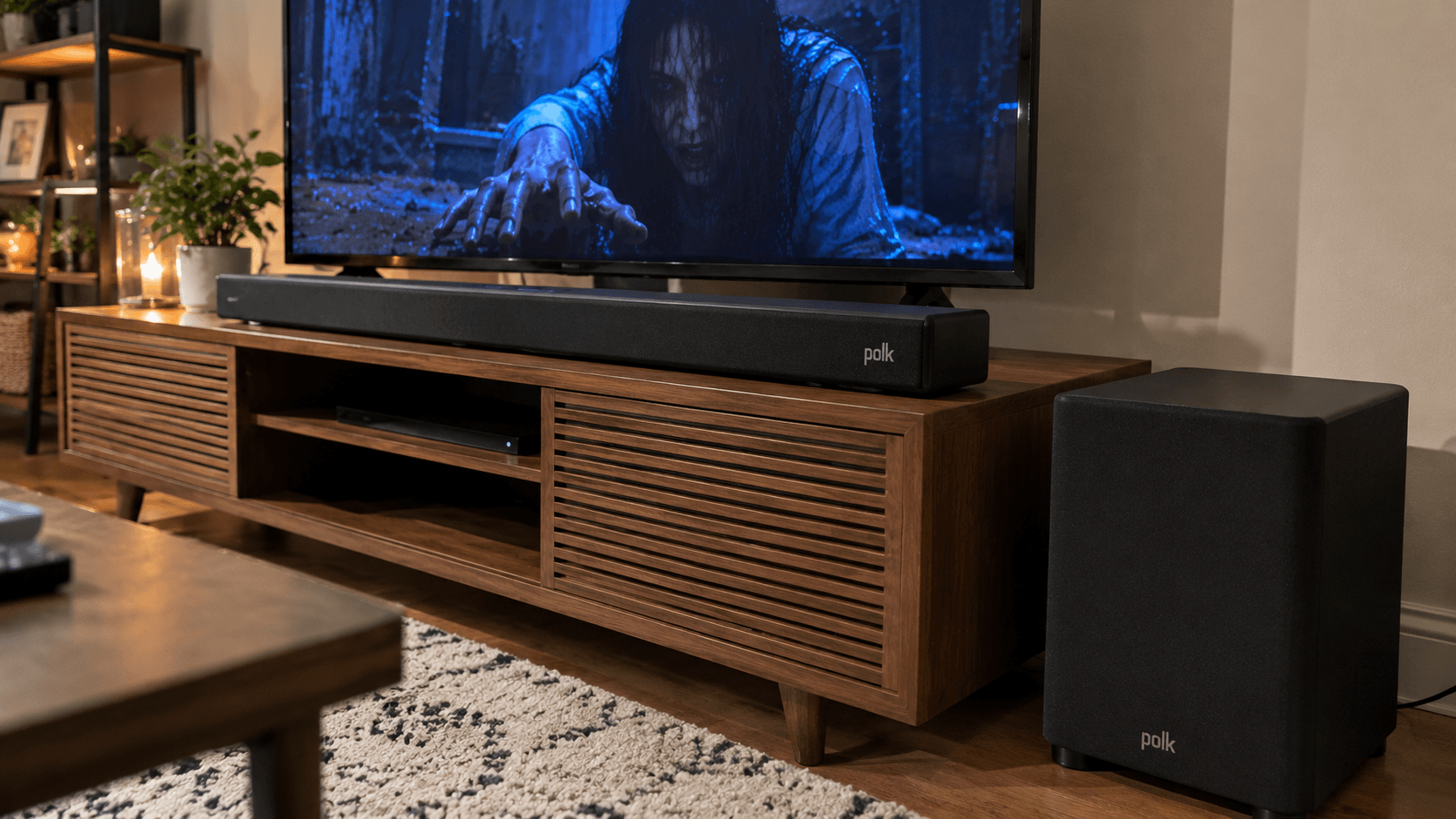
Start with the Polk Signa S4 if you want clearer dialogue, control over loud peaks and a more complete movie soundtrack without moving into premium pricing.
Another route makes more sense when one of these conditions matters more:
| Your situation | Soundbar | Why instead of Polk |
|---|---|---|
| Speech is still your biggest problem, even if the soundtrack becomes less natural or spacious | ZVOX AV855 | Pushes dialogue much further forward and adds output leveling |
| You want to spend less and keep everything in one box | Klipsch Flexus Core 100 | Gives you dialogue control, Night Mode and useful bass without a separate sub |
| You want one compact bar and do not want a separate subwoofer | Sonos Beam Ultra | Keeps the setup to one bar while retaining a centre channel, physical height drivers and useful speech processing |
| You want more bass, width and cinematic scale | Samsung HW-Q800H | The extra money goes mainly into a larger movie presentation, not a fundamentally different dialogue fix |
| You want a straightforward soundbar and separate subwoofer without paying for Atmos hardware | Denon DHT-S316 | Combines three-level dialogue enhancement, Night Mode and a wireless subwoofer in a simpler 2.1 system |
| You want the lowest-cost soundbar route | Roku Streambar SE | Targets speech clarity and volume swings without trying to deliver full home-theater sound |
As a rough guide, Roku sits below $200; Klipsch sits below Polk; ZVOX and Denon occupy the middle of the group; Polk sits above them; Samsung and Sonos move much closer to the premium end.
Prices change, so treat those bands as orientation rather than permanent numbers.
Polk Signa S4: The Best Overall Starting Point
The Signa S4 gives dialogue its own dedicated centre channel instead of asking the left and right speakers to handle everything. VoiceAdjust can then bring speech forward without simply raising the whole soundtrack.
Night Mode tackles the second half of the problem by reducing the difference between quieter and louder moments. Polk also gives you two physical elevation drivers for Dolby Atmos and a separate wireless subwoofer.
RTINGS found dialogue clear and accurately reproduced, with VoiceAdjust providing useful extra control. Its testing also exposed the limits: deep low-bass is modest and surround performance is not especially immersive.
Tom’s Guide adds an important detail. Its reviewer found the lowest VoiceAdjust setting improved dialogue while leaving ambient effects clearly audible, whereas stronger VoiceAdjust settings increasingly reduced bass.
Night Mode has its own cost. Tom’s Guide found it useful for late-night listening, but also heard less bass and less vocal warmth with the mode engaged.
For horror, that means there is a point where solving the volume problem can start taking away some of the tension you wanted to preserve. We would therefore begin with VoiceAdjust and bring in Night Mode only when the louder scenes are still causing problems.
When checked in October 2026, Polk listed the S4 at $359 on sale against a $449 regular price. At the sale price, the additional centre channel, physical height drivers and separate subwoofer are easier to justify. At the regular price, Klipsch becomes a much stronger lower-cost alternative.
Polk stays our starting point because it gives up less across the three things this guide cares about: dialogue clarity, control over loud peaks and preserving enough of the movie around them.
ZVOX AV855: When Speech Intelligibility Matters Most
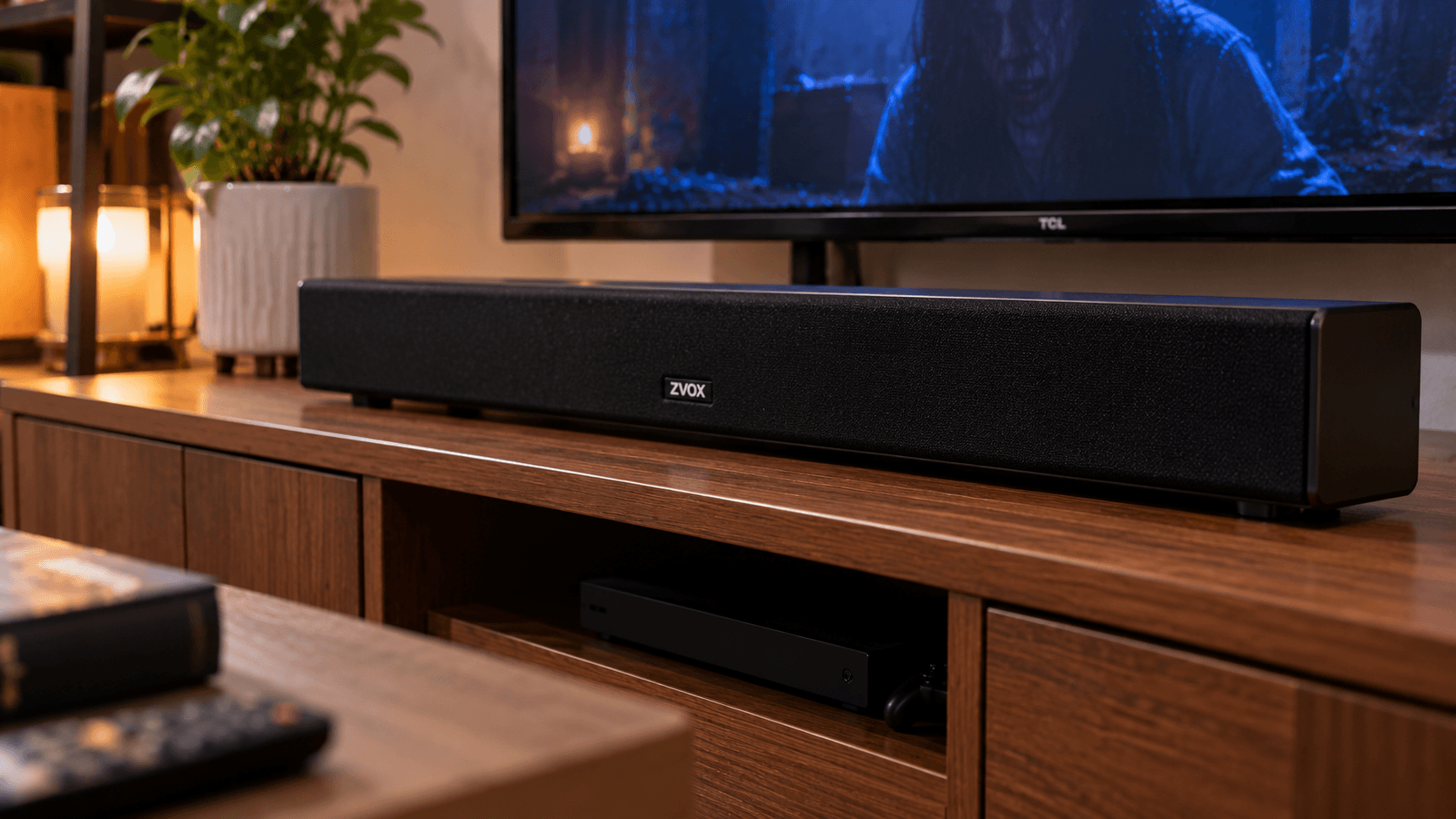
The AV855 is the clearest departure from the Polk route.
It offers 20 levels of voice enhancement across AccuVoice and SuperVoice, so speech can be pushed much further forward than on a conventional movie-focused soundbar.
The other half of the problem is handled through Output Leveling, which works alongside the AccuVoice processing to reduce large changes between quieter and louder material.
TechRadar found the AV855 exceptionally effective at making dialogue easier to understand, particularly when speech would otherwise get buried.
The drawback is not subtle. Stronger processing can make voices sound boxier and less natural, and the overall presentation is less spacious than the more cinematic options here.
That gives Polk and ZVOX a fairly clear dividing line. Polk keeps more of the natural movie presentation, while ZVOX makes speech intelligibility the higher priority.
Klipsch Flexus Core 100: Lower Cost, One Box
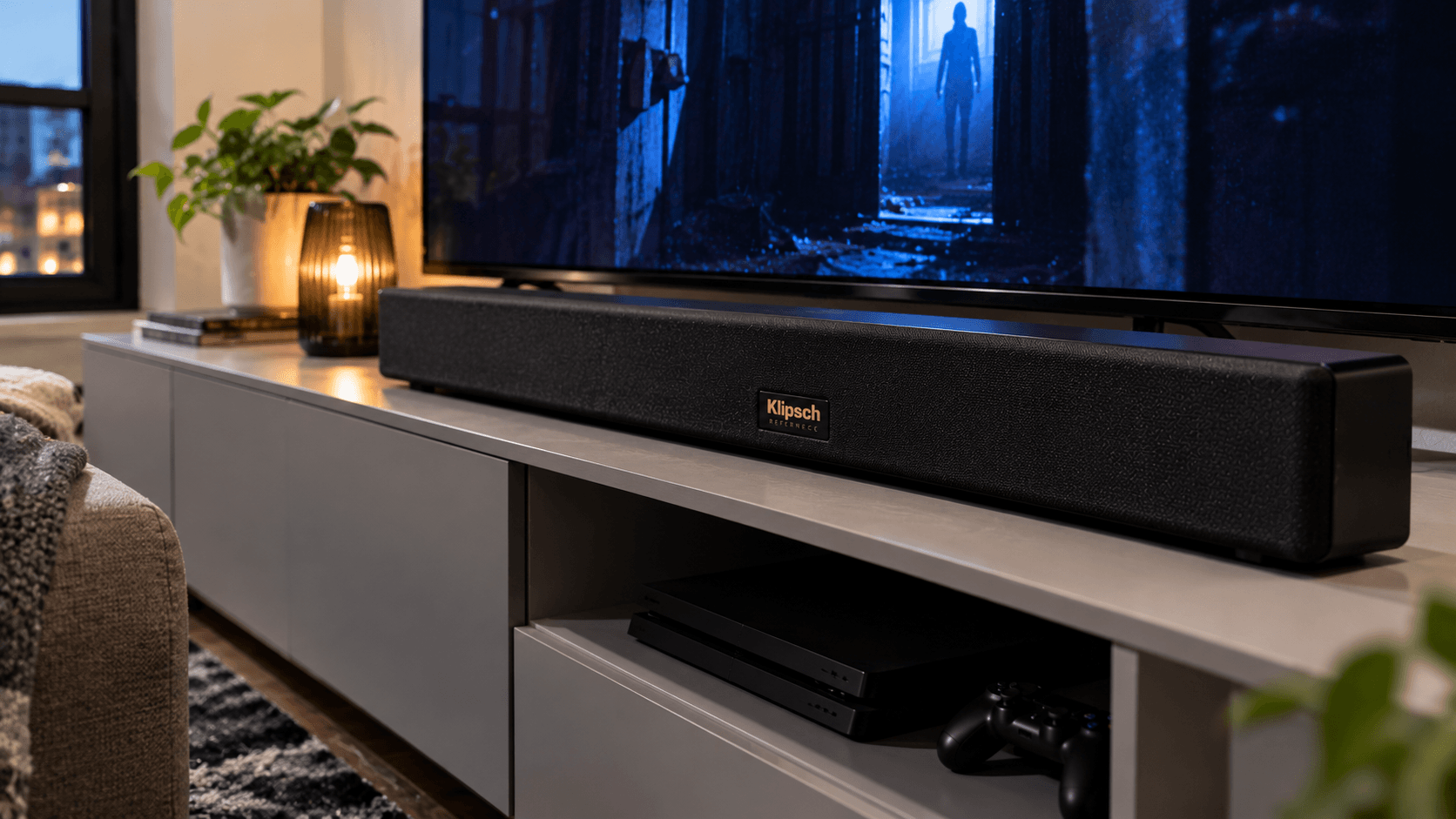
Klipsch is the lower-cost route for someone who does not want a separate subwoofer.
Three Dialogue Boost levels help speech, while Night Mode reduces the overall dynamic range and pulls bass back when late-night listening becomes the problem. Two built-in four-inch woofers provide the low-end weight.
Tom’s Guide found the bass surprisingly powerful for a single bar and described the Flexus as impressive for its price. It also found that dialogue clarity could suffer in action-heavy scenes.
That limitation matters here because buried speech is one of the reasons you are reading this guide in the first place.
Klipsch officially describes the Core 100 as a 2.1 system with virtualized Dolby Atmos. Polk adds a dedicated centre channel, physical elevation drivers and a separate subwoofer.
So the trade-off is straightforward: Klipsch keeps the setup simpler and the spending lower, while Polk gives you more dedicated hardware for dialogue, bass and height effects.
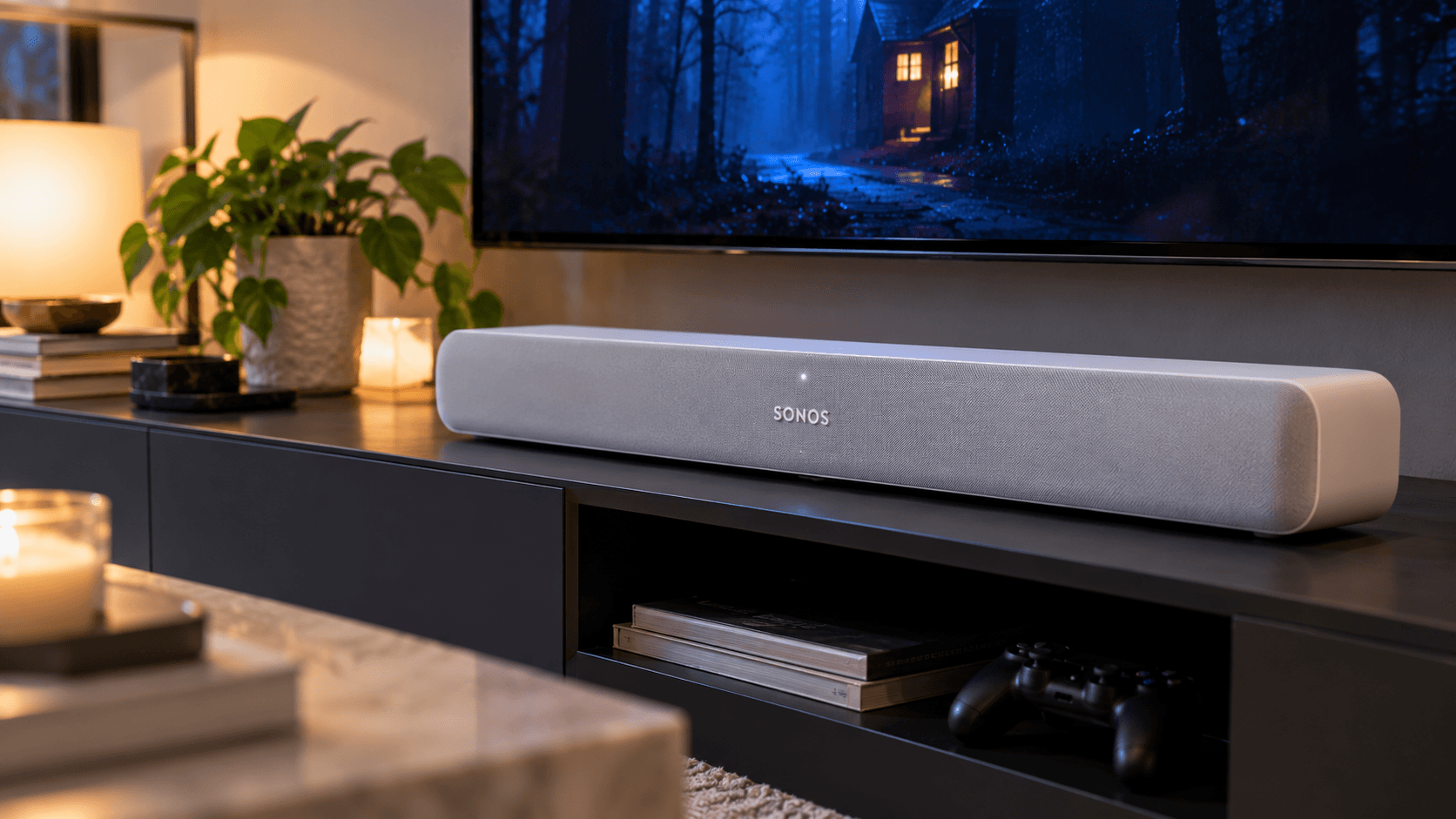
Sonos Beam Ultra: One Box With More Dedicated Hardware
Sonos and Klipsch solve the same space problem in different ways.
Both keep the setup to one bar, but Beam Ultra costs substantially more.
The extra spending goes into more than branding. Beam Ultra includes a dedicated centre channel, physical height drivers, Night Sound and room tuning. TechRadar also found that setting Speech Enhancement to Medium brought voices forward without noticeably hurting other parts of the mix.
The same review found strong bass for a standalone bar and convincing width from Atmos material.
That gives the Sonos route a more specific purpose. It is still a one-box setup, but it adds hardware and processing aimed at dialogue, height effects and room adaptation that Klipsch does not match in the same way.
Klipsch remains the more economical one-box option. Sonos is the more expensive route when you want the simplicity of a single bar without giving up as much dedicated speaker hardware.
Samsung HW-Q800H: More Cinematic Scale
Samsung is not here because it fixes quiet dialogue in a fundamentally different way from Polk.
It is here because it builds a larger system around that fix.
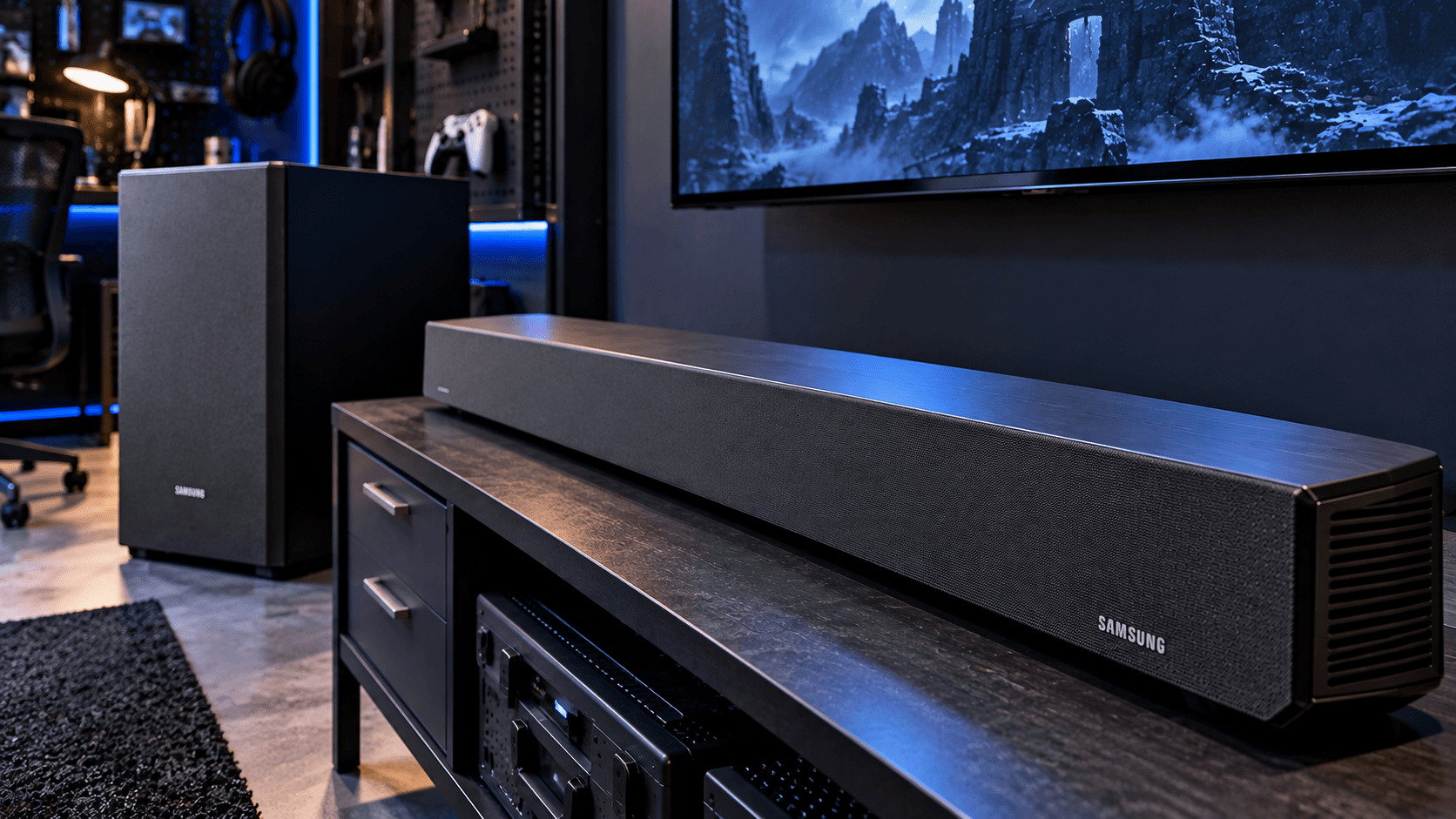
The Q800H combines a dedicated centre with side-firing channels, physical height channels and a wireless subwoofer. Voice-focused processing, Night Mode and Auto Volume address speech and volume swings.
RTINGS found the centre channel clear and powerful, with solid low-frequency extension from the dedicated subwoofer. It also praised the Q800H for movies while noting that there are no discrete rear satellites and DTS support is absent.
What you are paying for is mainly more bass, more width and more scale.
If the original problem is simply that dialogue is difficult to hear and scares are too loud, Polk already addresses that at a lower price. Samsung becomes more relevant when the rest of the movie presentation matters enough to justify the larger jump in spending.
Upgrading horror movie night, not just the speakers?
If The Thing is one of the discs you use to test a setup, our The Thing 4K vs Blu-ray guide breaks down which release makes more sense before you buy another copy.
Denon DHT-S316: A Simpler Soundbar-and-Subwoofer Route
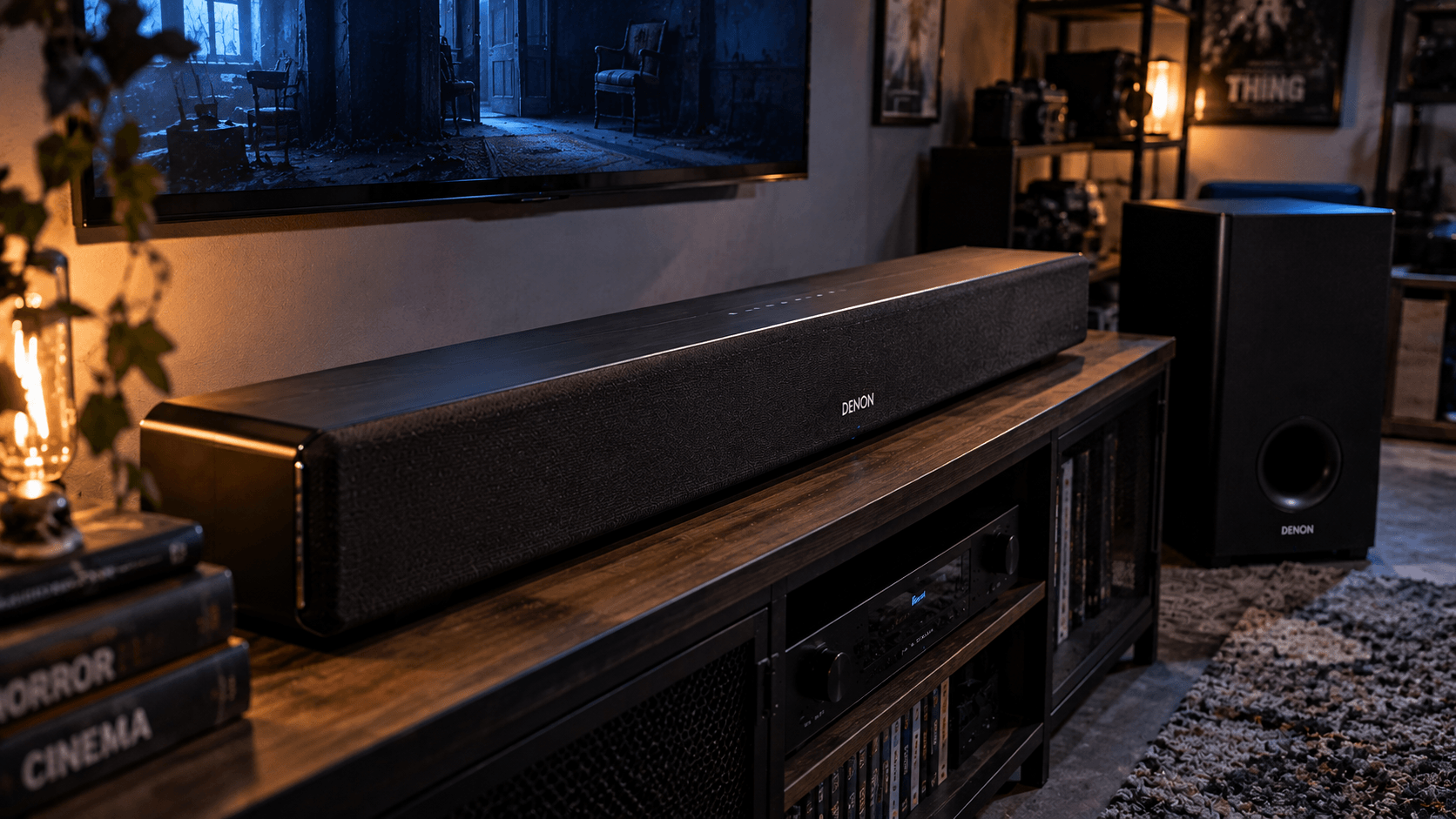
The DHT-S316 takes a more traditional approach than most of the soundbars above.
It is a 2.1 system with a separate wireless subwoofer, without Dolby Atmos height channels or a dedicated centre speaker. Instead, Denon focuses on straightforward dialogue and loudness controls.
Dialog Enhancer has three levels and raises speech without requiring you to increase the overall volume. Night Mode handles the opposite problem by compressing the difference between loud and quiet sounds.
That combination fits this guide better than its simple specification sheet might suggest.
Expert Reviews found dialogue one of the DHT-S316’s strengths, with voices projected clearly ahead of surrounding action while retaining useful detail. It also found the overall soundstage wider and more spacious than typical TV speakers.
The separate subwoofer gives movies substantially more low-frequency presence than a television alone, although it has limits. Both Expert Reviews and T3 found the bass became less controlled at high volumes, and the treble is relatively subdued.
There is also no HDMI passthrough here. The HDMI connection is ARC to the TV, so this is not the answer if you need another HDMI input.
Denon therefore sits between two of our other routes. Klipsch costs less and keeps everything in one bar. Polk adds a dedicated centre, physical Atmos channels and a more complete speaker layout.
The DHT-S316 makes most sense when you specifically want a straightforward soundbar with a real wireless subwoofer, clear dialogue and Night Mode, but Atmos effects are not a priority.
Roku Streambar SE: The Lowest-Cost Route
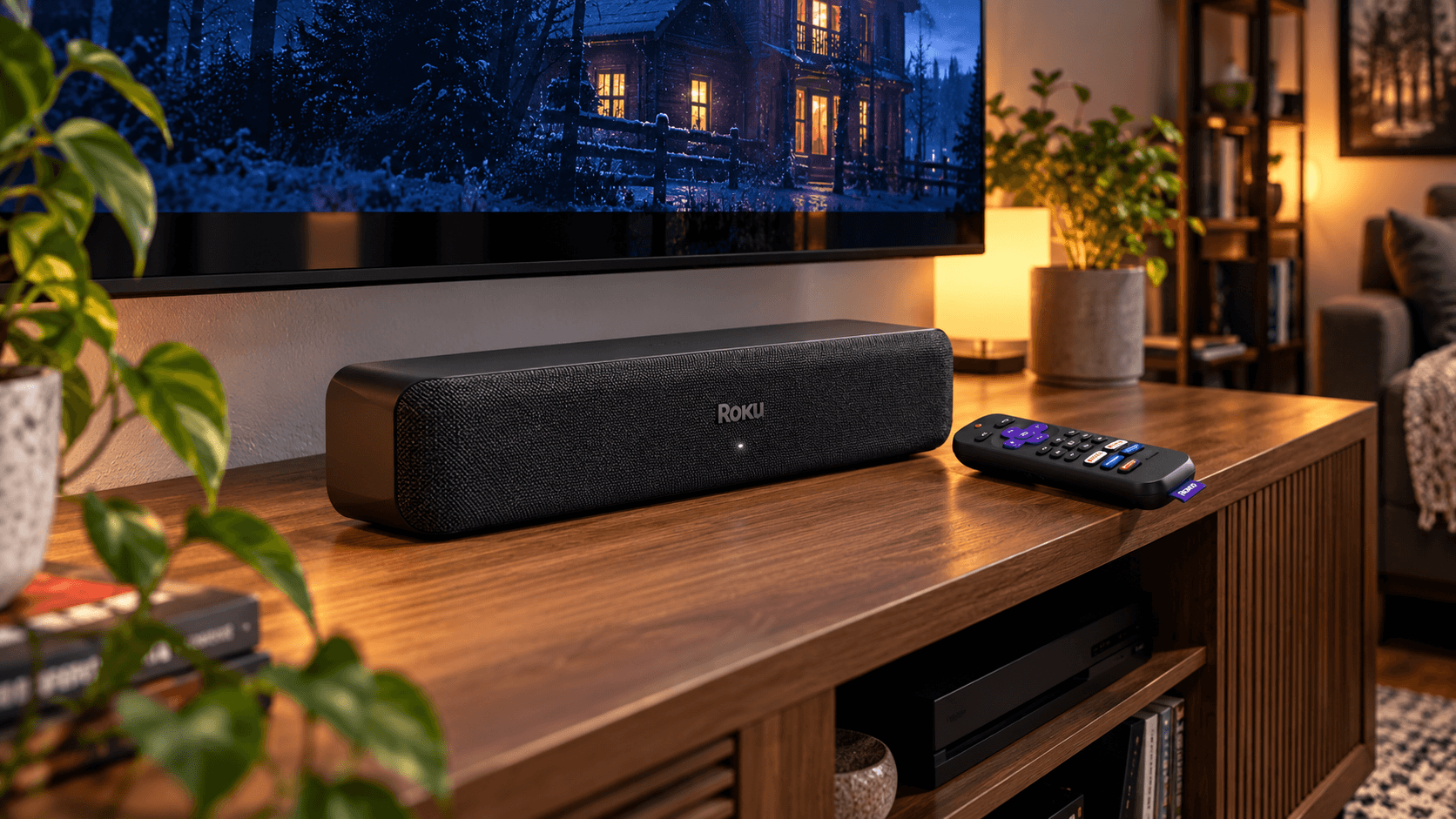
The Streambar SE has much smaller ambitions than the systems above.
Roku gives it Speech Clarity, Leveling and Night Mode alongside built-in 4K streaming. Roku says Speech Clarity boosts dialogue relative to background sound, while its volume modes reduce loud scenes and raise quieter ones.
The compromises are significant.
This is a two-speaker system using PCM audio, without the centre channel, subwoofer or Atmos capability found higher up the list.
So the expectation should be simple: help with the annoyance, not the same movie experience as Polk, Klipsch or Samsung.
How We Would Start the Settings
More processing is not automatically better.
We would begin with the smallest useful dialogue adjustment and add stronger dynamic-range control only when the louder scenes are still causing problems.
| Soundbar | Starting point |
|---|---|
| Polk Signa S4 | Start with a low VoiceAdjust setting. Bring in Night Mode only when louder scenes still jump too far. |
| Samsung Q800H | Begin with dialogue enhancement. Use Night Mode or Auto Volume when the swings remain distracting. |
| Sonos Beam Ultra | Medium Speech Enhancement is a sensible starting point based on TechRadar’s test; use Night Sound for stronger late-night control. |
| ZVOX AV855 | Begin with the lower AccuVoice levels and move upward only as much as speech requires. Output Leveling works alongside the AccuVoice processing. |
| Klipsch Core 100 | Try modest Dialogue Boost first. Use Night Mode when overall dynamics and bass become the bigger problem. |
| Denon DHT-S316 | Start with Dialog Enhancer 1. Move to 2 or 3 only if speech still gets buried, and use Night Mode when the loud-to-quiet gap remains uncomfortable. |
| Roku Streambar SE | Begin with Speech Clarity. Add Leveling when volume swings remain annoying, with Night Mode for stronger late-night control. |
The goal is not to make every scene the same volume.
It is to hear the quiet parts without letting the loud parts take over the room.
Already Using Your TV’s Night Mode?
Before buying anything, it is worth trying the controls already built into your TV.
Start with a dialogue, voice or speech-enhancement setting if one is available. If the bigger problem is the jump between quiet scenes and loud effects, try Auto Volume or Night Mode instead. Use the lightest setting that solves the problem, because stronger compression can make the soundtrack flatter.
If those controls make dialogue easier to hear and the movie still sounds good, you may not need another piece of hardware.
A soundbar becomes more relevant when the TV settings leave you choosing between two bad outcomes: voices are still difficult to follow, or the processing makes the rest of the soundtrack sound too thin or lifeless.
That is where hardware begins to change the equation.
Polk and Samsung give dialogue its own centre channel. Samsung adds more low-frequency capability and side-channel output. Sonos combines speech processing with a more capable standalone speaker system, while Klipsch keeps useful bass without requiring an external subwoofer. Denon takes the opposite approach, pairing a simple bar with a dedicated wireless subwoofer.
A soundbar is therefore not simply another Night Mode button. It can change both how the soundtrack is processed and the speakers producing it.
Already Like Your Speakers? Fire TV Is the Cheaper Route
Sometimes the speakers are not the problem.
The Fire TV Stick 4K Plus can tackle the soundtrack from the source side with dialogue enhancement and volume-leveling controls, making it useful when the existing speakers already sound good but certain movies do not.
There is an important boundary.
Those controls apply to content running through the Fire TV device and can vary by app or title. They do not process a Blu-ray player or game console connected elsewhere.
So Fire TV is not a universal replacement for the soundbars above.
When the speakers are already satisfactory, Fire TV Stick 4K Plus is the lower-cost route we would try before replacing them.
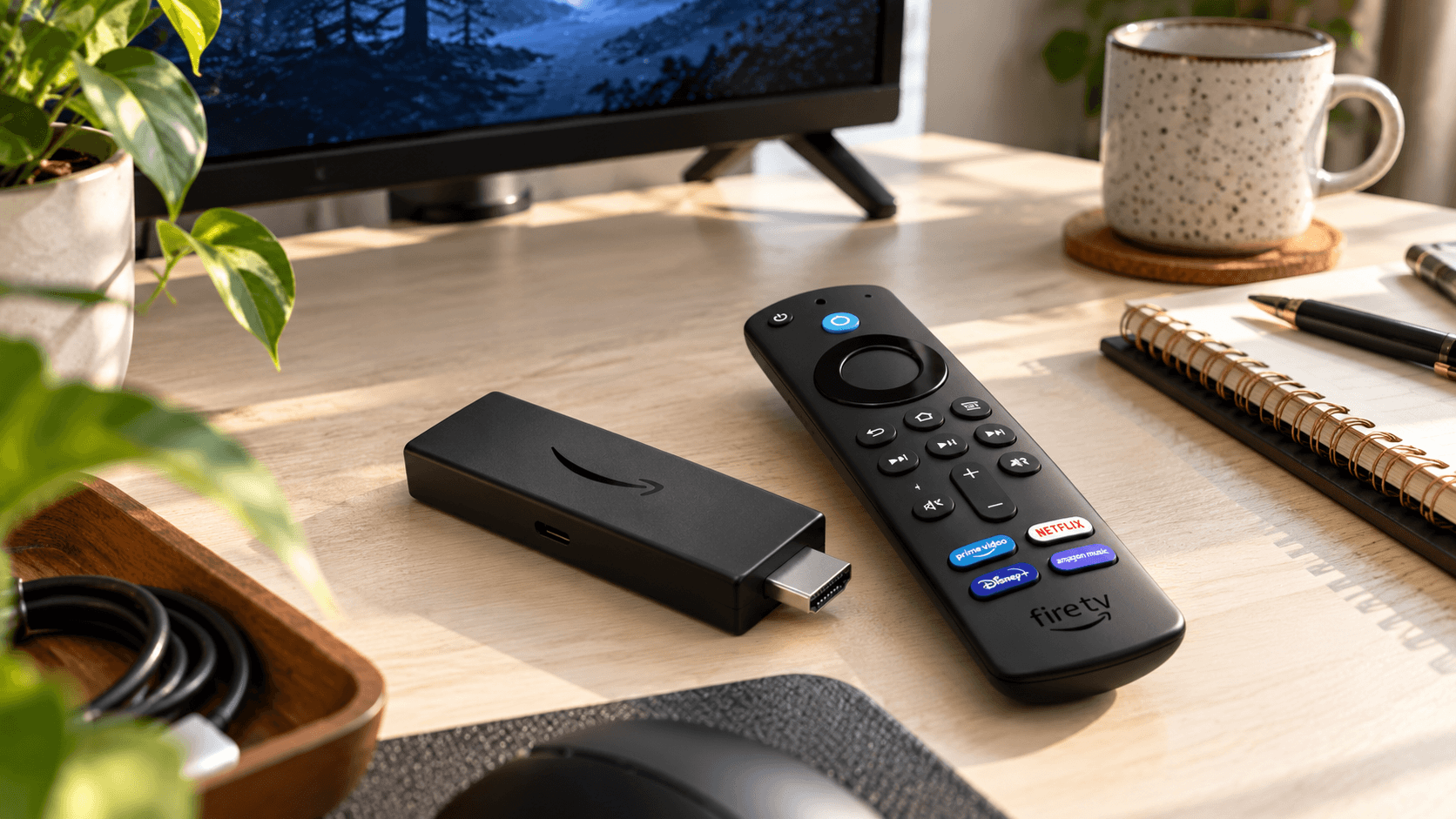
Already like your current speakers? Fire TV Stick 4K Plus is the cheaper route if you want dialogue enhancement and volume leveling without replacing the audio setup. See Fire TV Stick 4K Plus on Amazon →
Two Optional Extras
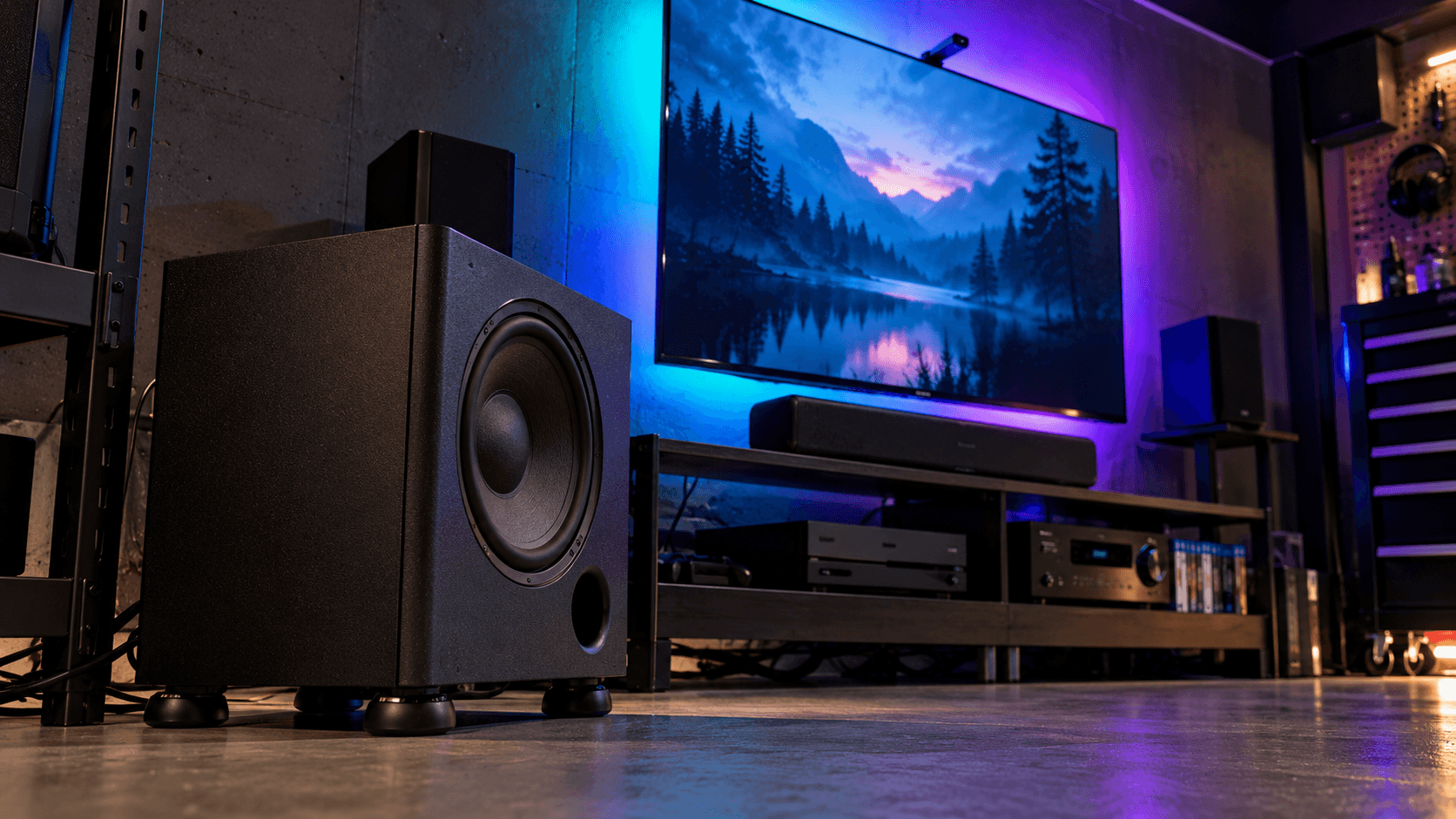
Govee TV Backlight 3 Lite: Add Atmosphere After the Audio Is Sorted
Govee does not solve dialogue or volume swings.
It is here for atmosphere.
Its camera reads colours from the television and extends them onto the wall behind the screen. Horror gives that effect plenty to work with: red emergency lighting, cold blue rooms and green night-vision scenes can spill beyond the bezel.
The camera remains visible and calibration takes some effort.
Want more atmosphere after the audio is sorted? Govee TV Backlight 3 Lite extends the screen colours onto the wall, so it is an optional visual upgrade rather than an audio fix. See Govee TV Backlight 3 Lite on Amazon →
Hudson Hi-Fi Isolation Feet: When the Subwoofer Makes the Furniture Buzz
A bass hit should come from the soundtrack.
The cabinet underneath the subwoofer does not need to join in.
Hudson Hi-Fi’s silicone feet are designed to reduce mechanical vibration passing from a speaker or subwoofer into the surface beneath it.
They cannot stop airborne bass travelling through walls. Their job is narrower: reducing physical coupling that can make a cabinet, shelf or floor vibrate along with the subwoofer.
That makes them most relevant to systems such as Polk, Samsung and Denon.
Is the subwoofer making the furniture buzz? Hudson Hi-Fi Isolation Feet are the inexpensive add-on for reducing physical vibration into the surface beneath the subwoofer. See Hudson Hi-Fi Isolation Feet on Amazon →
Our Final Call
Polk Signa S4 is where we would start.
It gives the strongest overall balance of dialogue clarity, control over sudden volume jumps and enough dedicated hardware to preserve more of the bass, space and atmosphere that make horror work.
Klipsch is the clearer lower-cost alternative, while Samsung is the meaningful step up when cinematic scale matters more.
For the problem this guide began with, Polk remains the strongest overall fit.