Every hospital has its own rules, but the most important ones are never printed in the employee handbook.
They are passed down in the breakroom over stale coffee, murmured through surgical masks, and traded in the quiet, sterile corridors of St. Dymphna Hospital.
Mala had been assigned as an assisting nurse in Operating Room Four for two years, and she had never broken a single one.
The unwritten protocols of OR Four were strict, peculiar, and absolute.
After every procedure, the nurse and orderly had to pull the white sheet perfectly flat between them. No one was permitted to straighten it alone—or with only one hand.
Afterward, the operating table had to be wiped from the inside out in straight, radial motions. Cleaning it in circles was entirely prohibited.
Even the preparatory steps followed a rigid logic.
Before the first incision, the nurses had to ensure that the combined number of gauze pads and instruments laid out on the tray was odd. The count still had to match when the procedure ended.
But the final rule of the theater was absolute: you never, under any circumstances, took anything belonging to a patient who didn’t make it off the table.
Mala never asked why the procedures existed.
Nursing school had taught her that protocols kept people alive, even when their purpose was not immediately obvious. In a hospital as old as St. Dymphna, she trusted that the senior staff knew something she did not.
It had never occurred to her that some procedures were not meant to protect the living.
The Hairband That Came Back
The patient was a young girl who had come in for what should have been a routine appendectomy. Instead, she died on the table.
The official explanation was sudden complications—a vague phrase Mala had heard used whenever no one wanted to discuss what had happened behind the closed doors of an operating room.
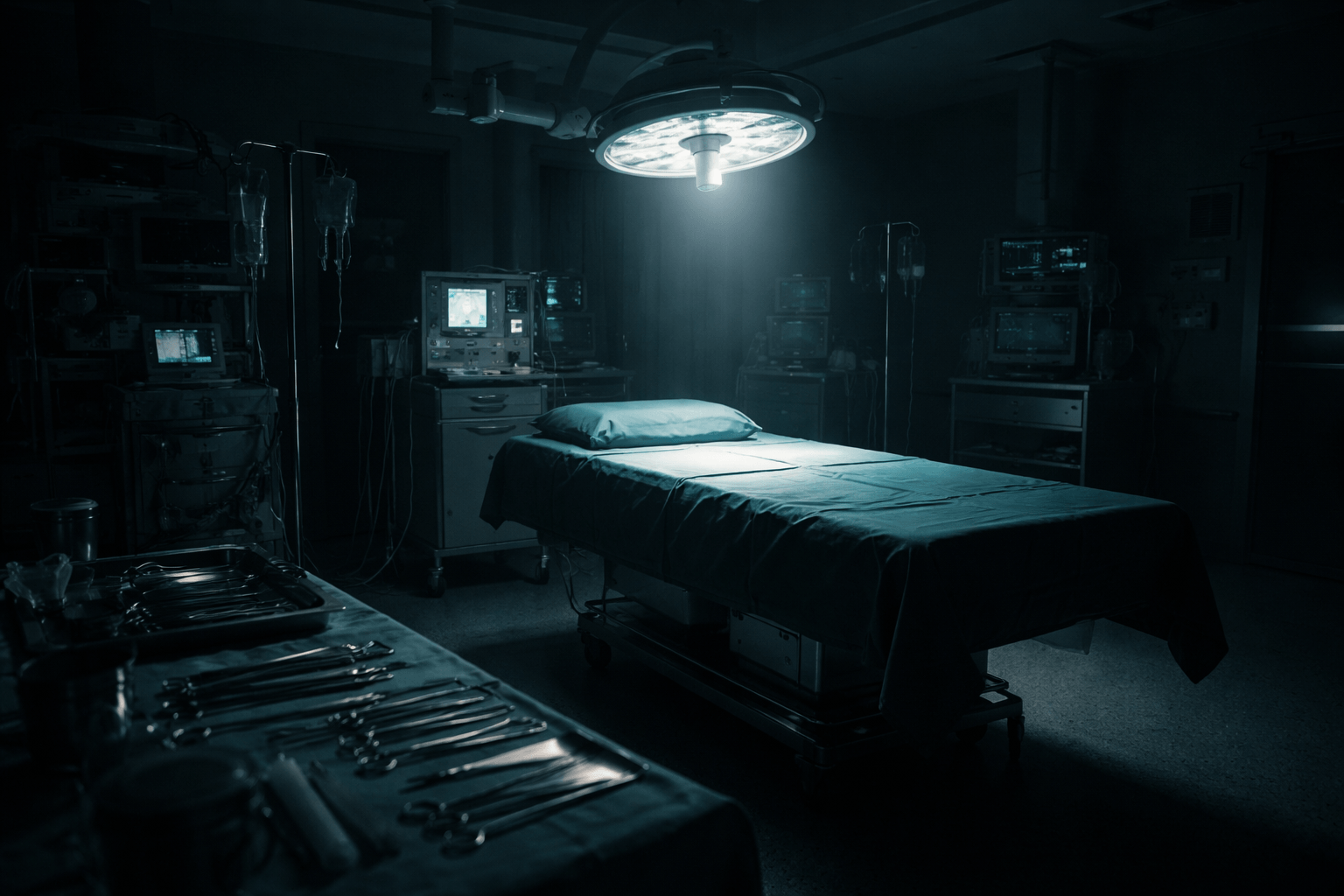
By the time Mala entered Operating Room Four later that evening, the chaos had cleared.
She grabbed the disinfectant and began her routine, wiping the stainless steel table in strict, radial lines from the inside out.
That was when she saw it under a nearby stool. A blue hairband with a cracked plastic flower. It didn’t belong there. The room was supposed to be completely clear.
She picked it up and slipped the hairband into her uniform pocket, intending to hand it over at the nurses’ station. But by the time her shift ended, she had forgotten it was there.
It wasn’t until she got home that she remembered. She reached into her pocket to check.
Empty.
Relief flickered through her. She must have dropped it in the corridor—or imagined picking it up at all. But the next morning, when she opened her locker to change, the blue hairband was waiting inside.
Mala froze, a cold knot tightening in her stomach. She could not remember placing it there. Swallowing against the sudden dryness in her throat, she placed the hairband inside the lost property bin.
That night, Mala was assigned to the late-night cleanup rotation in Operating Room Four.
When she entered, the room was dark, save for the faint light from the corridor. There, sitting on the stainless steel operating table, was the blue hairband.
A cold prickle of dread tracked down Mala’s spine. Whatever had brought it back wanted her to see it.
The Girl Who Never Left
Mala tried everything.
She dropped the hairband into the incinerator chute. She left it on a bus across town. Once, she buried it beneath a pile of rubbish several streets from the hospital.
It made no difference.
By the start of her next shift, the cracked plastic flower would be waiting for her in Operating Room Four.
Soon, the room itself began moving around her.
During a midnight cleanup, a surgical tray trembled on its stand, though nothing had touched it. Behind her, a metal stool scraped slowly across the linoleum.
Mala forced herself to keep working. Then she caught her reflection in the glass medicine cabinet, and her blood ran cold.
In the warped glass, pale hands moved behind her, lifting instruments from the tray and arranging them one by one.
Mala spun around.
The room was empty.
None of the other nurses seemed to notice anything. Once, a green surgical drape unfolded itself and hung suspended above the floor while another nurse entered for a box of gloves. She passed beneath it without looking up.
But Mala saw everything.
Mops she had leaned securely against the wall stood upright by themselves. Stools shifted when her back was turned. Instruments appeared in places she had already cleared.
At last, Mala understood what taking the hairband had done.
The girl had never left Operating Room Four. Mala had merely become able to see her.
After that, she learned to work around the ghost.
If the pale figure lay across the steel table, Mala cleaned the walls instead. If the girl sat on the metal stool, Mala left it untouched.
She cleaned only what the dead girl allowed her to clean.
But no matter how carefully Mala avoided her, the boundary between them continued to wear thin.
What the Dead Take Back
“You took something,” Devi whispered.
Mala nodded miserably, interlacing her fingers to hide their trembling.
“But not on purpose,” she said. Her voice cracked. “I was exhausted. I meant to return it.”
“The dead don’t care about your reasons.”
Devi glanced towards the breakroom door before leaning closer.
“A cleaner in OR One stole a gold ring from a body a few years ago. She thought no one would notice. The next morning, they found her dead in her apartment.”
“When the coroner opened her stomach, it had ruptured.” Devi lowered her voice further. “It was packed with hundreds of rusted rings.”
Mala’s throat tightened. The air suddenly tasted of iron.
“And there was an orderly on the night shift,” Devi continued. “He pulled a gold tooth from a patient who died during a trauma intake.”
“They found him in the staff bathroom. Every tooth in his mouth had been torn out and forced down his throat.”
A suffocating silence settled between them.
Devi caught Mala by the wrist, her grip tight enough to hurt.
“But yours is different,” she said. “The others were punished almost immediately. This girl keeps returning the hairband, but she hasn’t harmed you.”
“Not yet,” Mala whispered.
Devi’s expression darkened.
“She’s only appearing to you. That means she wants something.”
A cold bead of sweat traced the side of Mala’s face. “Like what?”
“You need to find out what she’s trying to tell you.” Devi released her wrist. “And you need to do it soon.”
“Why?”
“Because every haunting repeats itself for a reason.” Devi’s voice fell to a breath. “Once she finishes showing you what happened in that room, you may become part of it.”
The Record They Tried to Bury
The next night, Mala returned to Operating Room Four.
She stepped forward slowly, her heart hammering against her ribs, and forced herself to look at the translucent girl.
“What do you want?” Mala whispered into the empty room.
Slowly, the girl turned towards Mala. She raised one pale finger and pointed through the operating-room doors.
Mala followed the direction of her hand. Beyond the corridor, at the far end of the restricted wing, stood the medical records room.
Understanding settled over her like ice.
Later that night, when the corridors had emptied, she slipped away from her station. A favour owed by a tired night-shift clerk bought her temporary access to an unlocked terminal and a few hurried minutes alone.
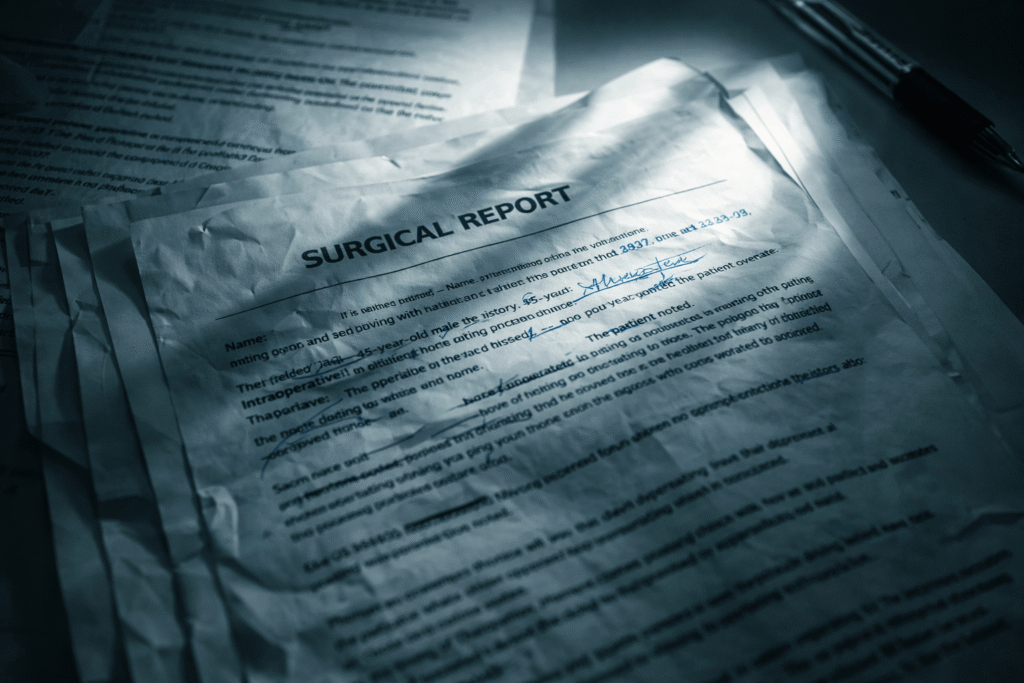
Mala searched the patient database until the girl’s name appeared on the screen. She opened the file and began scrolling through the surgical notes.
At first, nothing seemed unusual.
The entries were orderly, the timestamps aligned, and every explanation was polished and precise.
The longer Mala read, the more the report unsettled her. It was too clean, too carefully arranged.
Refusing to accept it, she searched through the hospital’s deleted records. Buried beneath the updated file, she found an earlier version that someone had forgotten to erase completely.
Mala restored it.
The original notes revealed that a critical medication had been administered too late—a fatal human error.
Mala scrolled to the signatures at the bottom of the report.
The report named Dr. Arun Veydan as the operating surgeon and his father, Chief Surgeon Dr. S. Veydan, as the supervisor who had approved it.
It was a cover-up. The report had been rewritten to protect Arun Veydan, and the truth of a child’s death had been buried with it.
What Remains After Justice
That night, Mala copied the recovered records and submitted them to the external medical board.
She said nothing about the ghost, the moving instruments, or the blue hairband. She gave them only the altered timestamps, the deleted entries, and the original surgical notes.
The evidence was enough.
Investigators arrived at St. Dymphna within days. The hospital tried to protect its chief surgeon, but the system logs showed exactly when the report had been altered—and who had authorised the changes.
Dr. Arun Veydan was suspended from practising while criminal negligence charges were prepared. His father claimed it had been an administrative mistake, but his credentials were embedded throughout the deleted records.
Neither man could explain that away.
What happened afterward never appeared in the official reports.
Within weeks, father and son were admitted to separate psychiatric wards. Among the night staff, rumours spread that both men woke screaming about small hands clawing at their throats and pulling at their skin.
Soon after, Operating Room Four was decommissioned.
Its doors were padlocked, and a maintenance notice was fixed across them. No structural fault was ever recorded.
On her final shift, Mala stopped outside the sealed room and pressed her ear against the door.
For the first time, she heard nothing.
The trays were still, the stool silent, and the instruments remained exactly where they had been left.
As Mala turned to leave, she noticed something beneath the maintenance sign.
A blue plastic flower, cracked neatly through the centre.
The hairband itself was nowhere to be seen.
Where Such Things Are Sent
Mala left nursing soon after. Wanting somewhere quieter, she took a job at a storage facility where religious objects were kept when no one else wanted them.
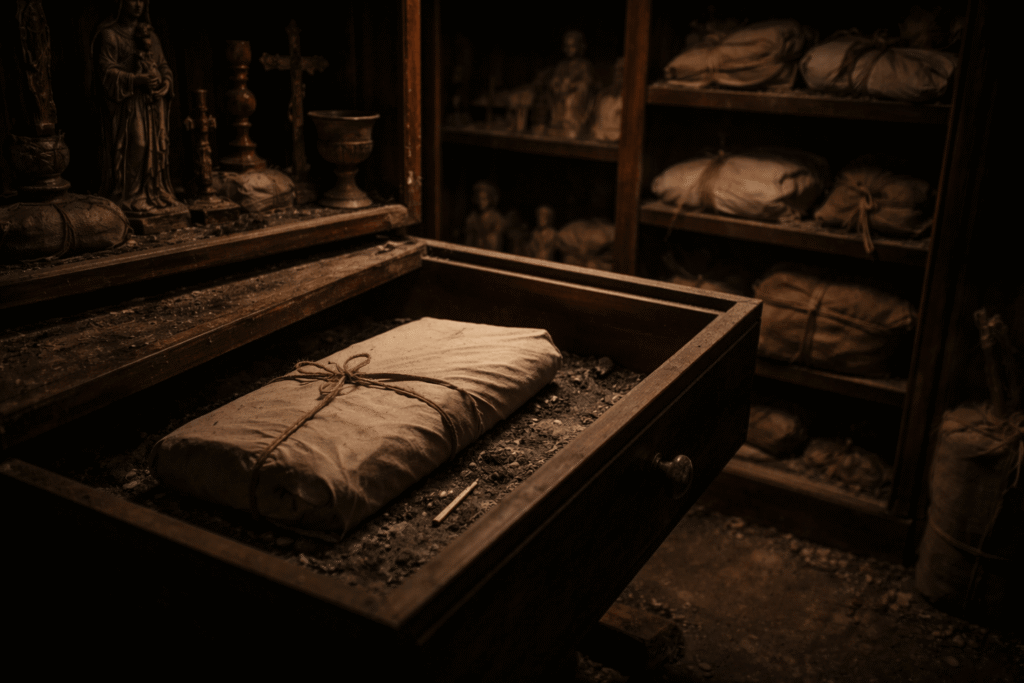
It was a holding place for objects people no longer needed but were too afraid to throw away. Statues, charms, old frames—things with weight.
During her second week, Mala opened a restricted drawer. Inside lay a stone tablet wrapped in heavy cloth. There was no label and no record. Beneath the fabric rested a thin line of warm ash and a single matchstick.
Mala did not touch it.
She closed the drawer immediately and marked it restricted.
Some things were simply not meant to be moved.
That night, before locking up, she stood between the towering shelves. Nothing moved here. There were no unfinished actions.
When she turned off the lights, the darkness felt patient.
Like something waiting—but no longer asking.
Only remembering.
Related Story
Some objects are not meant to be stored—only kept from being remembered.
In a quiet storage facility, a wrapped tablet sits undisturbed. No name. No record. Only warm ash beneath it… and something that still answers.
The Ancestral Tablet They Forgot to Bring Home
After Operating Room Four, Mala takes a quieter job—cataloguing objects no one wants to keep.
But when something new arrives, she begins to understand that some things are not stored… only allowed to continue.