

The first time I heard of the name-eating river, I thought it was only a warning meant to keep children from wandering too far. Still, the name-eating river curved through our village with patient certainty, as if it had been waiting long before we began whispering to it.
Each morning, mist gathered low across its surface. No one crossed without stopping. One by one, villagers leaned down and whispered their names into the water before stepping onto the stones.
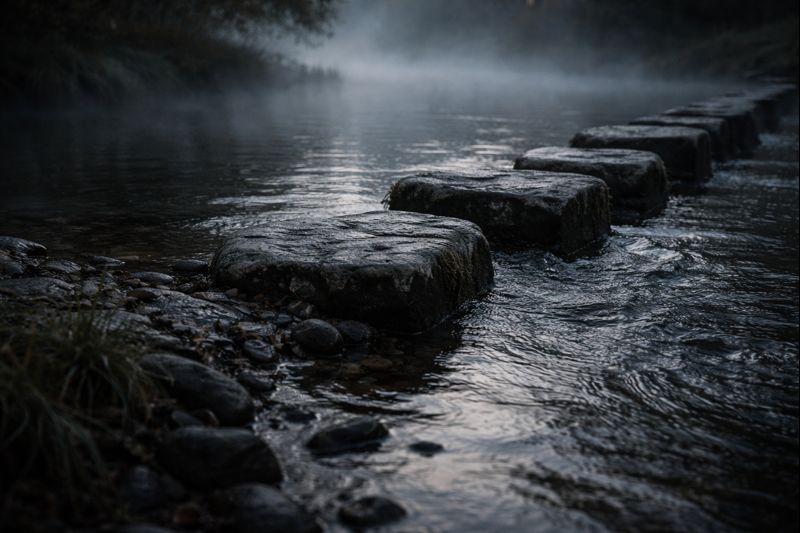
Most walked on as usual. Some slowed. A few pressed their fingers to their throats, blinking as though something had brushed too close to hear. Then the fields needed tending. Bread needed baking. The ritual continued.
Fear did not feel like fear anymore. It felt like timing.
How the Name-Eating River Became a Rule
My grandmother said the name-eating river once protected us.
Long before records or maps, floods tore through nearby settlements. Ours remained untouched. The elders believed the river recognized those who belonged. Names were offered as greetings, not payments.
Over time, greetings became requirements.
You had to whisper. You could never repeat your name after crossing. No one crossed after sunset. When asked why, the elders answered with looks that ended conversations.
The changes began small enough to deny.
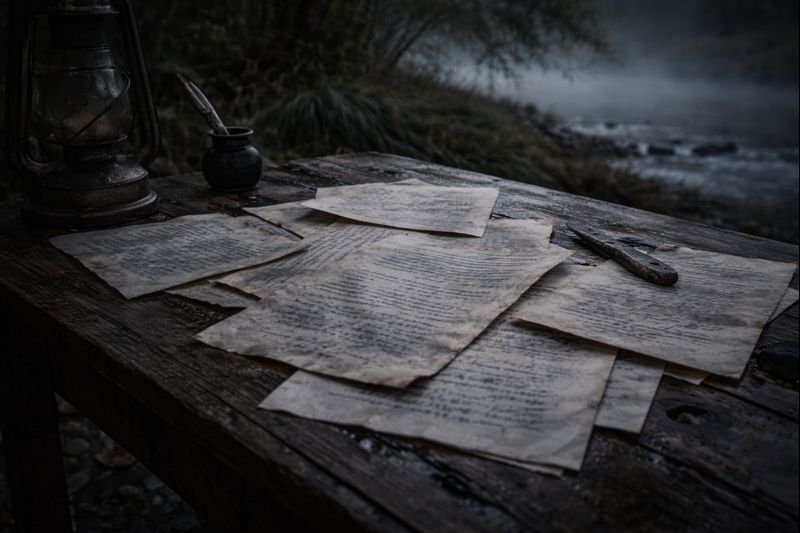
Handwriting bent in unfamiliar ways. Official letters returned, stamped with errors because the names signed no longer matched the names remembered. Laughter stopped short. Neighbors paused mid-sentence, waiting for a word that would not arrive.
Once, while writing my own name, I hesitated. The last letter felt heavier than the others.
No one said what we were losing. We only crossed more carefully.
The Day the River Took More
My cousin Mara crossed late one afternoon. The light was still strong, but she lingered at the bank longer than usual. I watched her kneel. I watched her whisper.
She remained there, mouth still open.
She stood slowly.
“Did I always say it that way?” she asked, touching her throat.
That evening, she could not sign her name. Her hand hovered above the page. She frowned, then laughed softly, as though embarrassed by something small.
The paper stayed blank.
Over the next days, small things slipped first. The name of the baker. The path to the well. Then faces. Then mine.
Once, she looked at me and waited for me to introduce myself.
I went to the elders. They did not argue. They did not explain. They only said that if we stopped, the river would not wait for permission anymore.
No one asked what that meant.
Crossing the River Without a Name
I began waking before dawn, repeating my name under my breath just to hear it hold.
One morning, it felt thinner.
That was when I returned to the river.
Mist lay thick against the surface. The water moved slowly, as though waiting for a sound.
My mouth dried. The first syllable rose and stalled. I let it fall back inside me.
I stepped onto the stones without whispering.

The river drew inward. Not rising. Not flooding. Just tightening. The air cooled sharply against my skin. Something tugged at the back of my thoughts, testing for a loose edge.
I kept walking.
The stones shifted once, then steadied.
The next day, another followed. Then another. Each time, the river stirred, listening for what it did not receive. The pull remained, faint but searching.
No new names disappeared.
The ones already taken did not return.
Mara never fully remembered her name. Sometimes she touches her throat, as if checking whether it is still there. But she learned who she loved. She learned which house was hers. She answers when we call her something new.
The river still runs through the village.
It no longer waits for whispers.
But some nights, when the mist gathers thick and low, I wake with the shape of my own name caught in my mouth—almost spoken, almost heard—from somewhere beneath the water.