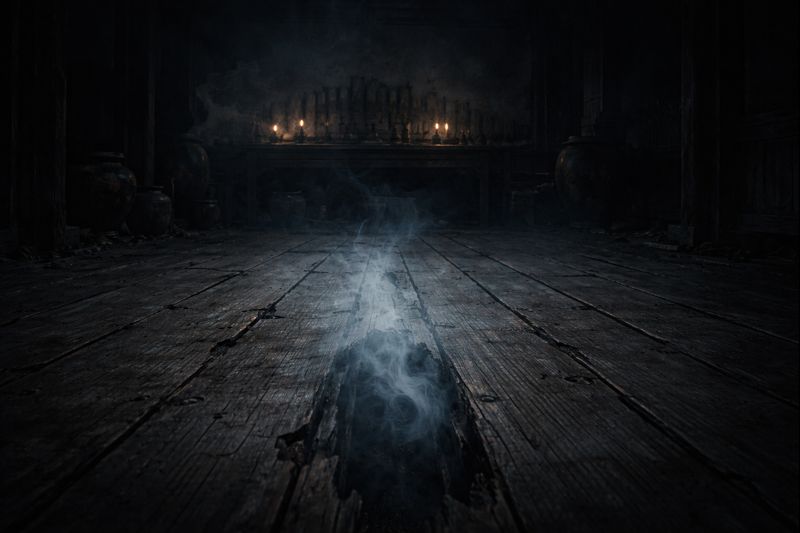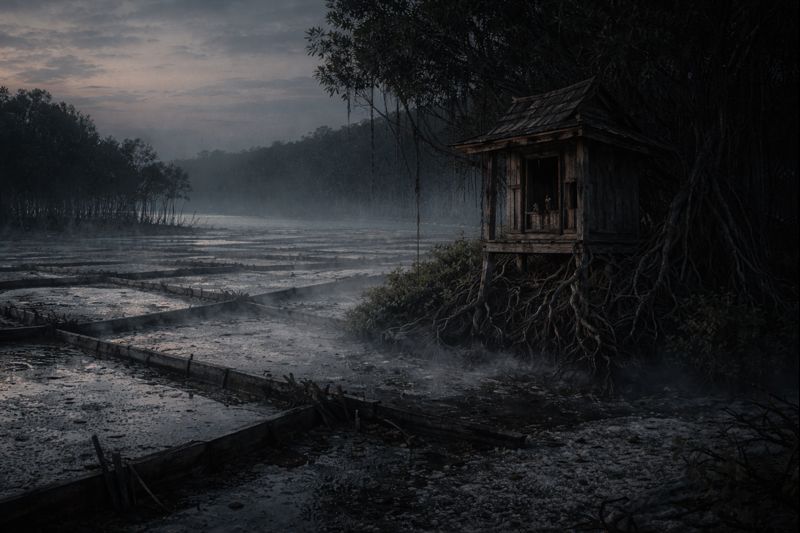
Mala did not realize when she stopped being alone because what overtook her did not arrive with pain or the shock of possession.
It came quietly, rearranging instinct and appetite by degrees. By the time Mala recognised another intelligence inside her, some of its impulses already felt like her own.
The pressure along her jaw deepened, pulsing to a second rhythm. Whenever her tongue moved across her teeth, it found edges and spaces where none should have been.
Raghav stood at the far end of the aisle, watching her.
His calm frightened her. When he looked at her, there was no struggle in his face, only recognition.
“It begins with the mouth,” he said softly. “That is where it learns what you will allow.”
Mala swallowed. Something inside her seemed to consider the movement.
“What is it?” she asked. Her voice came out lower than she expected.
Raghav’s lips shifted into a smile that never quite fit.
“Not a thing in the way you still mean it,” he replied. “A hunger. A memory of hunger. Something that no longer needs to remain where it first fed.”
Then the sound rose from somewhere deep within the facility.
Khh… khh…
The Threshold
By the second night, she had learned the boundaries of her confinement.
There were no chains or visible marks separating her freedom from imprisonment, yet every attempt to leave ended the same way.
Her body would carry her to the doorway, but at the final step, her foot would refuse to move.
Raghav tested the exit too, but only once.
After that, he stopped trying. He moved through the aisles with eerie steadiness, pausing before certain drawers, crates and sealed objects. The other altered staff followed repetitive paths or lingered beside the shelves, their heads tilted as though listening to what was inside.
None of them tried to leave.
“They can’t leave because it can’t leave,” Raghav said when she finally asked. “Not yet.”
“It’s the teeth,” Mala said. The pressure in her jaw tightened.
He inclined his head. “Not the way you imagine them. They spread like a virus, carried from one object into another.”
Mala looked along the aisles at the drawers, crates and sealed objects.
The New Hunger
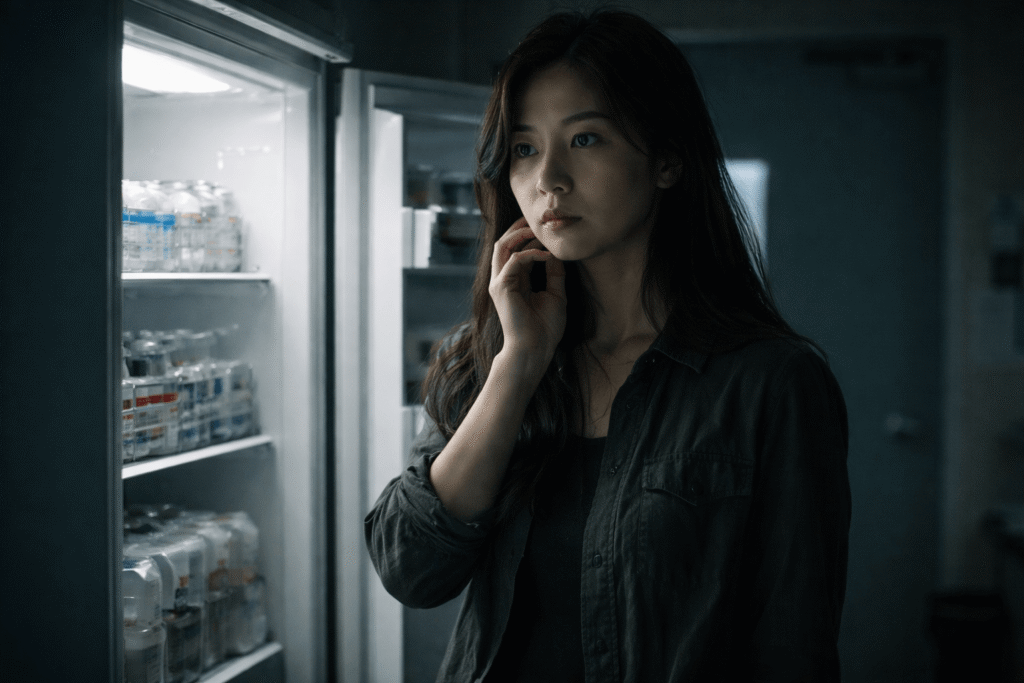
That night, Mala sat in the staff room with a container of cooked food, but she could not bring herself to finish it. The rice collapsed against her tongue, and the meat required almost no pressure from her teeth. After several mouthfuls, she pushed the container aside and went to the refrigerator where the raw meat was stored.
She stared at the wrapped cuts inside. They were more appealing than the cooked food.
She lifted a small piece of raw meat towards her mouth. Her teeth shifted beneath her lips in a tiny adjustment. The sound was so intimate that her knees weakened.
Khhrr.
Mala pressed her palm against her jaw, trying to hold it in place. Part of her wanted to step away, but another part wondered how the raw meat would taste between her teeth.
That was what frightened her. Some part of her had begun to want it.
Meanwhile, Mala’s family did not think much of her silence. One missed message could be blamed on work, and even a full night without contact was not unusual.
A few days later, her mother and uncle called several times without an answer. Each unanswered call made her silence harder to dismiss.
When they entered her flat, there was no sign of a struggle and nothing appeared disturbed.
Her mother noticed the smell first—not rot or incense, but a faint metallic trace in the air, like blood. Then she saw the food on the kitchen counter, half-prepared. In the sink, a bowl had been scrubbed so clean that no trace of what it once contained remained.
What Mala Left Behind
On the table were notes written on loose paper, the backs of receipts and the margins of old bills.
Do not open anything that feels warm.
If it affects the way you taste, it affects what you want.
They remember through what they consume.
If I stop answering, call Arun.
Her uncle read the last line twice, then turned the paper over as though an explanation might be waiting on the back. “Who is Arun?”
“Her cousin,” Mala’s mother replied. “The one at the temple. She said he was studying under a master.”
Beneath the notes, they found Mala’s work identification card and one final warning, written so deeply that the paper had nearly torn.
Do not come for me without him.
When they finally reached Arun by phone, they told him about Mala’s disappearance and read the notes aloud. Arun did not interrupt.
By the time the call ended, his silence had become a decision.
The Master’s Warning
Mala’s final warning continued to repeat in Arun’s mind as he entered the shrine room.
He told the master what her family had found, leaving out anything he could not confirm. The old master listened without interrupting.
“So she left notes and named you,” he said when Arun finished. “She knew ordinary help would not be enough.”
Arun leaned forward. “What are we dealing with?”
The old man rose and walked to a locked cabinet at the back of the shrine room.
From inside, he removed a bundle wrapped in dark cloth. It contained a wooden bell without a clapper and a narrow strip of fabric marked with lines Arun had seen only once.
“Not a common spirit,” the master said. “And not a curse tied to a single object. “I have heard of such a thing before. Long ago.”
The old man considered the warnings for a moment.
“Its anchor was broken apart and worked into other things.”
He ran one finger along the bell.
“Destroying one piece will not end it. As long as the others remain, the binding can draw itself together again.”
Arun frowned. “What can you do to help her?”
The master looked at him steadily. “We find the path it took and close it at the source. Breaking the teeth will not be enough.”
Arun tightened his hands. “And Mala?”
The master’s expression changed slightly. “If they were consecrated before they were cursed, every object they passed through became part of the ritual. Only another ritual can interrupt it.”
The Silence Inside the Building Was Not Empty
They left before dawn with only what the master considered necessary.
“Crowds make noise,” he said on the road. “Noise breeds confusion, and confusion leads to mistakes. We will go, we will see, and we will cut what must be cut.”
During the journey, Arun could not stop thinking about what they might find.
If they drove the thing out of Mala’s body, how much of her would remain?
They arrived at the facility late at night. It appeared ordinary except for the absence of movement.
The lights were still on, but the guard who should have been on duty was nowhere in sight.
They entered quietly through an unlocked side door. Inside, the stillness felt inhabited.
Somewhere deeper, a drawer slid open. A second later, the wet rhythm began.
Khh… khh…
Mala appeared three aisles ahead, emerging from between the shelves. She was uninjured, and her hair was still pinned back. For one instant, she looked so much like herself that Arun stepped forward before the master’s hand closed around his shoulder.
Mala’s eyes found him.
“Arun,” she said, each syllable leaving her mouth after a slight delay.
He almost answered but his master tightened his grip. “Not her speaking.”
Following the Path
Soon after, Raghav appeared, followed by several staff members.
One stood beside a shelf of wrapped shrine offerings, repeatedly extending his hand towards the glass panel but never touching it. A woman bent over an open drawer, her ear held close to the opening.
“They are circling the path,” the master murmured. “It is all still inside.”
Arun forced himself to follow the master’s gaze instead of looking at Mala. The master stopped before certain objects.
Each time, he closed his eyes, raised the clapperless bell and swept it through the air. The altered staff flinched together, their jaws tightening as though the bell had struck inside them.
The master turned towards the next aisle, following their reaction. The search took longer than Arun had expected.
One tooth fragment lay lodged in the wax core of a melted devotional candle. Another had fused with the residue at the bottom of a brass bowl. A third was hidden within a bundle of bound hair, invisible until the master unwound the thread.
The more fragments they gathered, the more agitated the altered staff became—not violent, but drawn closer.
At last, the master gathered the fragments into the marked cloth. “They are all here.” He led Arun into the narrow service corridor between the restricted storage area and the archival cold room.
“Paths break best where they are forced to narrow.”
The Closing Ritual
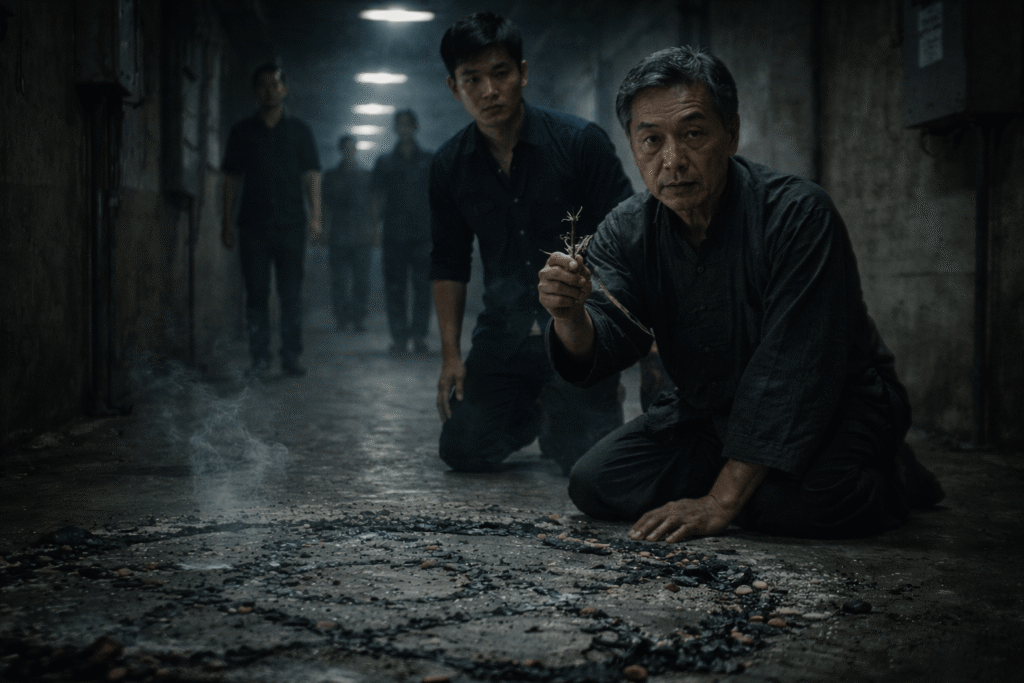
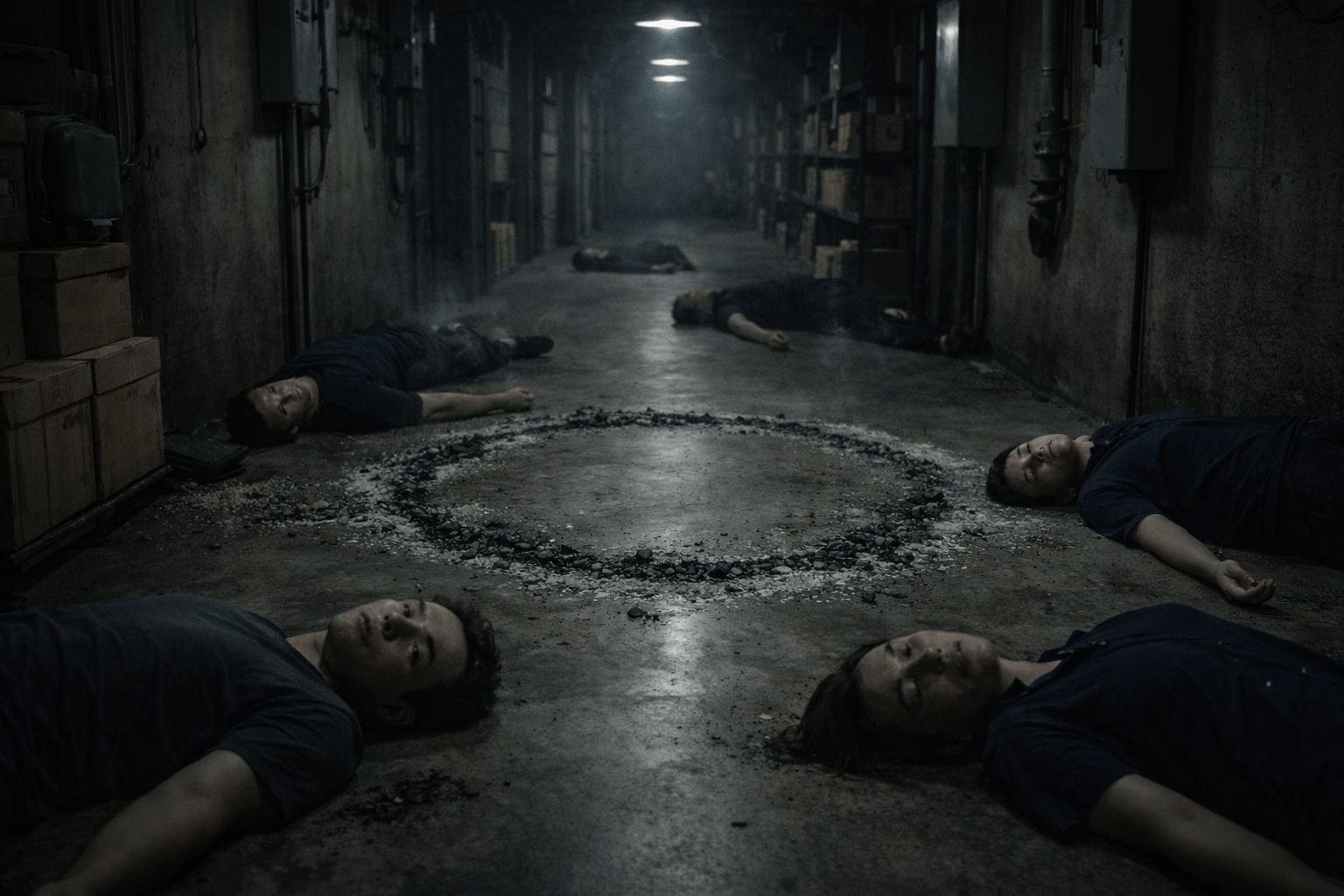
He placed the fragments inside a circle of ash mixed with temple powder, wrapped the marked cloth around his right hand and set the bell at the edge of the ring.
He instructed Arun to stand at the corridor entrance and speak the closing formula only when commanded.
“Do not improvise. Do not answer if they call you by name. If Mala or any of the others come close enough to touch you, step back no matter what she says.”
Then he began.
A small flame burned inside a shallow black dish. Its smoke curled downward before slowly rising. The master’s voice became stern and rhythmic as he named the boundary, the vessels and the paths between them.
With each phrase, the fragments trembled inside the ash.
The altered staff emerged from the aisles. They moved faster than before, their mouths working as the layered gnawing sound filled the corridor.
Mala emerged with them. Tears gathered in her eyes.
When she saw Arun and the old master, she shouted, “Don’t let him finish the ritual.” Her voice was hers, but the words were not.
“Now,” the master said sharply.
The Severance
Arun opened the wooden bundle, scattered its contents—seven small sacred nails—across the corridor and spoke the closing formula.
The nails struck the concrete with bright, hard taps. The master swept the bell through the air.
Every altered body convulsed.
The fragments inside the ash ring cracked, darkened and caught fire.
For one moment, the binding refused to break and tried to retaliate.
Arun felt a sudden tightening along his jaw. His teeth pressed together, and something shifted beneath his tongue.
The master’s voice dropped into a deeper cadence. He struck the bell again, harder this time.
“Not through this one.”
The master’s final words came colder rather than louder.
“What was divided shall not return. What passed through vessels shall have no vessel. What fed through mouths shall be made mouthless.”
For a heartbeat, nothing happened.
Then every altered body dropped at once. There was no scream or struggle, only sudden collapse, as though the strings inside them had been cut.
After the Severance
Arun reached Mala first, turning her over with shaking hands. Her body was warm, her pulse steady and breathing calm.
“Mala. Wake up.”
He touched her cheek and called her name, but nothing changed. The presence in her was gone but a piece of her seems missing.
Around them, the others lay the same way. Their chests rose and fell, but none opened their eyes or responded to the voices around them.
“Master, did it work?” Arun asked.
The master knelt beside Raghav and pressed two fingers to his throat. After a moment, he rose.
“The curse is broken,” he said. “The path is severed.”
Arun looked around at the bodies lying across the corridor. Their chests continued to rise and fall, but none of them stirred.
“You said there was time to rescue them.”
“There was time to sever the path,” the master replied.
“Then why isn’t she waking?”
The old man looked down at Mala.
“Because ending what entered her is not the same as restoring what it touched.”
Arun stared at him. “You mean it used them and then—what? Left them empty?”
The master took a moment before answering.
“The thing may have consumed more than behaviour or will. We do not know enough yet.”
Before dawn, the temple arranged for the bodies to be moved somewhere they could be watched and cared for.
As for Arun and his master, they took the facility records, photographs and the name of the village where the dangerous relics originated.
Fragments of the Truth
They did not uncover the truth in a single revelation. It came in pieces over the following weeks.
Old records described devotional objects confiscated from an unnamed group. Its rites involved periods of abstinence followed by ritual feasting, the preservation of teeth, and prayers that treated hunger as revelation.
Some passages spoke of worshipers who “offered chewed things to the lord of appetite,” welcomed flies as favourable signs, and placed seven bowls before the altar, leaving one empty “for the one that eats beyond the body.”
It was still not enough. Not until they reached the ruined prayer house outside Sungai Rabit.
Inside an old lacquered chest, they found drawings of a horned lord surrounded by marks that might have been flies or drifting ash. Liturgical scraps had been copied across generations, each repeating invocations to “the prince of devouring want.”
The name written across the oldest page made even the master hesitate.
“Beelzebub,” he said at last.
The word changed the shape of what they understood.
The cult had believed that appetite, driven beyond all restraint, could strip away the boundaries of the body. The preserved teeth were not merely relics. They had carried the hunger from one vessel to another, allowing it to continue feeding long after the original mouths were gone.
But the texts never named what it ultimately consumed.
They referred only to “the last nourishment”—that which remained after flesh, memory and desire were no longer enough.
Arun stared at the brittle page.
“When we severed the path, we stopped it from feeding through them.”
“Yes.”
“But what if it had already reached that last part?”
The master said nothing.
Arun looked at him. “Do you think it took their souls?”
The old man closed the chest.
“There is only one way left to ask.”
The Soul Calling
They performed the soul-calling on the seventh night after the severance, although the master did not expect it to succeed.
The ceremony took place in a bare chamber with every mirror covered. Each body lay within a circle of lamplight, with a slip bearing the person’s name placed at their feet. Mala lay among them.
“If nothing answers, we stop,” the master said. “If something else answers, we stop sooner.”
The ceremony began with each person’s name, lineage and place of birth. As the master recited the invocations, Arun called Mala by her full name, named her mother and described the house where she had grown up.
For several minutes, nothing happened except the lamp flames bending towards the bodies.
Then Mala’s fingers curled against the floor.
“Mala?” Arun leaned closer.
“Don’t touch her,” the master warned. “Continue.”
Mala’s eyes remained closed, but her lips slowly parted.
Khh…
The sight gave Arun hope. He called Mala by her childhood name and the private names used only by her family. Her head turned towards him, and for a moment he thought she had recognised his voice.
Then all the bodies answered together.
Khhrr… khhrr…
The master scattered black salt across the circles. “We stop here.”
When the grinding continued, he struck the floor with his palm and recited the closing denial. The sound ended immediately, leaving only the steady breathing of the bodies.
Mala’s head returned to its original position.
“It wasn’t her,” Arun said.
“No,” the master replied. “What answered was an appetite wearing her echo.”
Arun covered his face as the master’s words settled over him. Tears slipped through his fingers.
What Remained
In the weeks that followed, Arun visited Mala whenever he could. She remained alive but never woke. He spoke to her about ordinary things, though she never answered.
The master never discouraged him.
One evening, as they stood beside her bed, he said, “Grief becomes dangerous when it asks hunger to answer in the voice of the lost.”
Arun looked at Mala. “I know.”
The facility was emptied under the master’s supervision. The relics were separated and sealed, while every fragment connected to the teeth was buried at different crossroads. The prayer house outside Sungai Rabit was dismantled and burned.
On the evening before the last sealed bundles were taken away, Arun stood with his master beneath the rain tree in the temple courtyard.
“So this is the end of it,” Arun said.
“The end of this path.”
Arun almost smiled. “You never allow a neat ending.”
“Neat endings are usually lies.”
Beyond the wall, night insects filled the silence.
After a while, the master said, “Let the dead remain unreachable. Some doors are merciful only when they stay closed.”
Arun looked towards the darkened shrine room and lowered his head.
As he turned to leave, a faint pressure settled along his jaw.
Then it was gone.
Related Story
Before the facility, before Mala, and before the hunger learned to move through other forms, Sungai Rabit tried to bury it beneath its own thresholds.
This story begins where that one left off: the teeth were never truly destroyed, only scattered—and what was buried beneath the village found a new path forward.