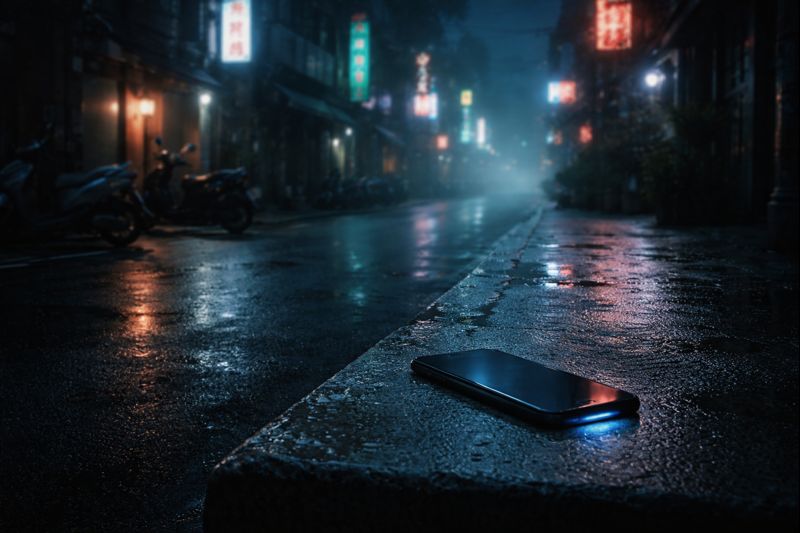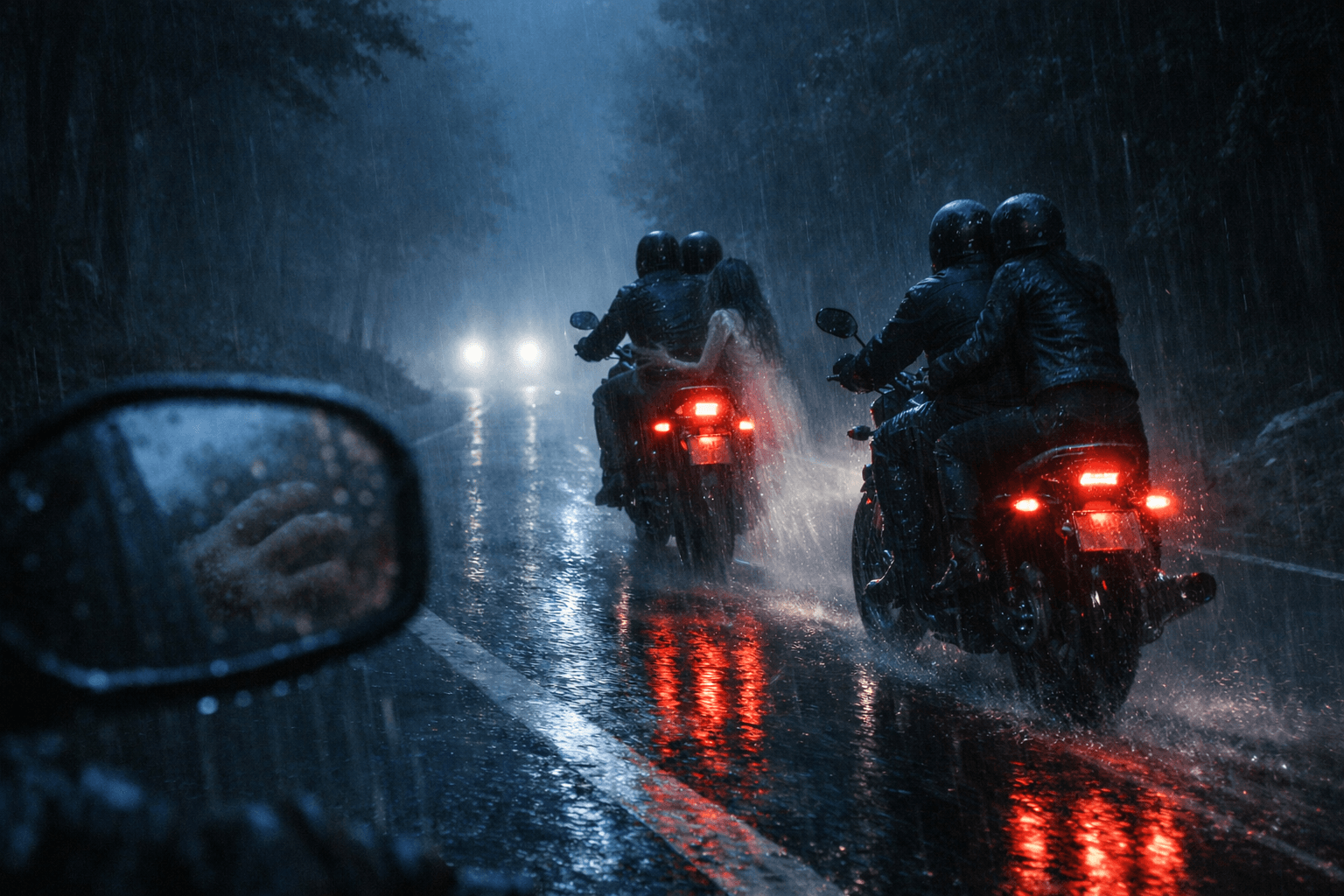
By evening, the rain had been falling for so long that it felt as though it had decided to stay. It pressed against the windows in thick, slanting sheets, overflowed the drains and blurred the streetlights into trembling smears of gold and white. Every road below turned into a black ribbon of water, with reflections trembling and breaking apart with every passing car. From the kitchen, where Mabel Tan stood rinsing a cup and pretending not to glance towards the living room, the whole night looked as though it had been drowned and then poorly pieced back together.
Ryan Tan, as usual, behaved as though none of that had anything to do with him.
He was sprawled across the sofa, phone in hand, smiling faintly at something on the screen, while the television muttered uselessly in the background about flood alerts and reduced visibility. The ease with which he ignored every warning around him was both familiar and exhausting to Mabel, because Ryan had reached that age where drifting could still be seen as freedom; where sleeping through the day, refusing steady work and only coming alive after dark could still feel like a lifestyle rather than a slow collapse.
Mabel’s Warning
“You’re not going out in this weather,” Mabel said at last. She didn’t speak sharply at first because he would only have grinned.
Ryan didn’t even look up. “It’s only rain.”
“It’s been pouring since the afternoon.”
“So?”
Mabel turned to face him fully, cup still in hand. “So the roads are dangerous. Visibility is bad. Normal people stay at home.”
This finally made him look at her, and there it was: that lazy half-smile which always made him look younger and more infuriating at the same time. “Lucky for me, then, I’m not normal.”
“That is not funny.”
“I’m just going out for a while.”
“You always say that,” she replied, her voice flattening with fatigue rather than rising with anger because anger required energy, and Ryan had a way of making people waste theirs. “One ride becomes coffee, coffee becomes midnight, midnight becomes you coming home like nothing matters.”
Ryan sat up, reached for his jacket and stretched, as if the argument had already bored him. “Aiya, Jie, I’m not going alone.”
The Names That Should Have Stopped Him
That should have reassured her, but it did not because she knew exactly who it meant. Ken was steadier than Ryan, but he was too used to following his mood. Then there was Jun Wei, who always acted as though fear was something invented by other people. Then there was Mei Ling, who had school the next day and should have been home early, but who still sometimes followed Jun Wei because it was easier than arguing with him. Then there were Farid and Aisyah, who had originally planned to come but had already sent a message saying that they needed to go elsewhere first and would not be joining them after all.
By the time Ryan had put on his shoes and reached the door, the rain had become louder again. It was striking the corridor railings with such force that the whole block sounded hollow.
“Be careful,” said Mabel, putting everything she could not control into those two words because she knew “don’t go” was already lost.
Ryan opened the door, laughed lightly over his shoulder and replied with the same careless confidence he used for almost everything important: “Always.”
It wasn’t true, and they both knew it, but he said it as though repetition alone could turn a lie into a habit. Then he was gone, leaving Mabel alone with the rain and an overwhelming, inexplicable dread.
The Four Under the Shelter
By the time Ryan arrived, Ken and Jun Wei were already waiting beneath the void-deck shelter downstairs. The rain was blowing sideways in a cold, fine mist that clung to their jackets and darkened the concrete beneath their feet. Mei Ling stood beside Jun Wei’s bike with her arms folded. Her school bag was still slung over one shoulder; she had come straight down to make sure he didn’t do anything stupid before going home.
‘Wah, finally,’ said Ken when he saw Ryan jogging through the spray. “At this rate, the rain will stop before you get there.”
Ryan grinned and immediately reached for Ken’s keys. “Then I’m lucky I’m here in time.”
Ken frowned as Ryan swung himself onto the bike’s rider seat. “Eh, don’t start it yet. The road is really slippery tonight.”
“I know how to ride.”
“That’s not the problem,” Ken muttered, climbing behind Ryan anyway.
Meanwhile, Jun Wei wiped the rain from his mirror with the edge of his sleeve, while Mei Ling watched the road ahead, her expression making it clear that she thought the whole night was a bad idea. “I still think you shouldn’t go too far,” she said. “Tomorrow I have school, and honestly, this kind of weather doesn’t feel right.”
Ryan laughed. “Since when does rain have a feeling?”
Mei Ling looked at him. Since she was usually the quietest among them, her words always carried more weight. “Since people start acting stupid in it.”
Jun Wei shook his head, half amused and half impatient. “We’re not going far. Just one round first.”
The Ride They Should Have Skipped
Farid’s message came in, lighting up Jun Wei’s phone. He read it, then looked up. ‘Farid and Aisyah aren’t coming. He says they need to go somewhere else first and won’t make it.”
Ryan clicked his tongue. ‘Waste of time. There’s only us left.”
‘Us is enough,’ said Ken.
For a brief moment, with only three boys and one tired girlfriend under the rain-blown shelter, the whole thing might still have dissolved into common sense. They could have taken shelter longer, had a drink downstairs, gone home separately, and the night might have ended as nothing more than bad weather and wasted plans. But nights rarely announce themselves when they are about to become important. They often begin inside ordinary stubbornness.
“Come lah,” Ryan said, starting the engine. “If we stand here any longer, we’ll grow roots.”
The bike roared beneath him. Jun Wei started his own a moment later. Mei Ling sighed, climbed onto the back of his bike, and tightened her grip around his waist with none of the usual teasing complaint in her voice.
Then, with rainwater hissing beneath their tires and the streets ahead reflecting the city in broken fragments, the three of them pulled away from the shelter and rode toward the hill road, unaware that the storm had already done its part hours before they arrived.
The Hill Road and the Police Search
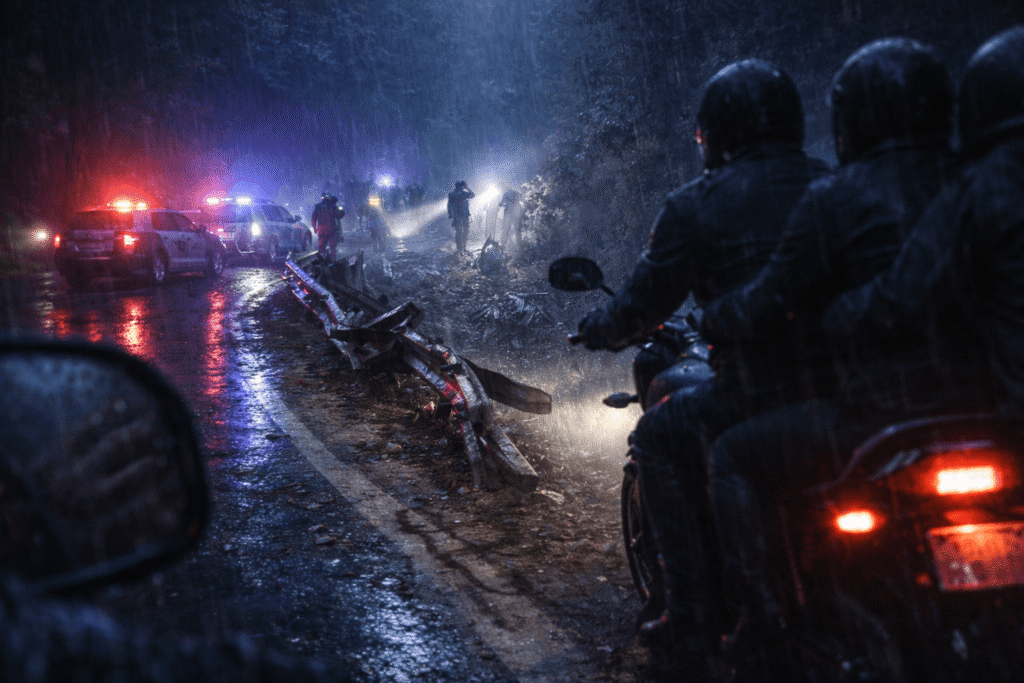
They saw the lights before they reached the bend.
At first, they could only make out an unnatural pulse through the rain-dark distance: a flicker of blue and red against the wet trunks of roadside trees and the shiny metal of the guardrail. However, as they drew nearer, they realised that the scene was far more serious than they had expected. The hill road ahead was already crowded with police vehicles and search personnel, and the hard shoulder had been sealed off with tape. Torches swept the slope below in urgent arcs, while officers moved through the rain with the grim speed of people already dealing with something too ugly to soften.

Ryan slowed down immediately, not out of caution at first, but out of the instinctive curiosity that accidents always inspire in onlookers.
“Look! What happened there?” Ken asked, close behind him, his voice now stripped of its earlier impatience.
By the time they reached the damaged section of road, the answer was visible, but not fully revealed. A section of the guardrail had been bent outwards at an angle that could not have been caused by a mere scrape. The earth below, though repeatedly washed by rain, was streaked with dark collapsed mud. Several searchlights were focused lower down the slope. Rather than sweeping broadly for one large object, they paused in short, concentrated bursts at different points, as though whatever had gone over the side had not remained intact.
An officer lifted one arm and shouted through the rain, “Don’t stop here! Move along.”
No one argued. No one wanted to.
The Words That Followed Them
Yet, in the moment before Ryan twisted the throttle again, all four of them looked downwards. Though none of them would later claim to have seen the rider clearly, what they did see was enough to complete the picture in their minds: a dark motorbike frame half-hidden in the undergrowth below, a forensic evidence tent closer to the trees, another searcher kneeling beside something obscured by the angle and the rain, and the unmistakable atmosphere of a scene where the dead had not yet been fully collected.
Mei Ling tightened her hold on Jun Wei at once. Ken’s hand pressed more firmly against the back of Ryan’s jacket. Even Ryan, who would usually have broken the tension with a careless comment, remained silent until they had travelled several hundred metres beyond the cordon.
Then, tongue-tied by embarrassment, he laughed lightly and said the worst possible thing: “With the police searching like that, the rider must be gone by now.”
Ken answered immediately. “Hey, don’t talk like that.”
Ryan shrugged, though the shrug felt strained now. “What? Am I wrong, then?”
“It’s not about being wrong.”
Mei Ling’s voice came from behind Jun Wei, quiet but clear over the sound of the rain. “Some things don’t need to be said.”
Ryan smirked, not knowing how else to escape the discomfort. “Do you all think he can climb back up and come and find us?”
Nobody laughed.
The rain-slick, empty road stretched ahead.
From that moment onward, even the sound of the engines seemed to carry a different note.
The Coffee Shop and the Choice to Stay Over
They didn’t ride for much longer after that because the mood that had existed before the hill road had already dissolved. When they stopped at a late-night coffee shop not far from Ken’s house, the fluorescent lights, hot drinks and ordinary noise of forks against plates did little to calm them down. Ordinaryness failed to settle them; the police lights still lingered behind their eyes, refusing to fade.
Mei Ling kept checking the time, her unease obvious now. Jun Wei smoked more than usual. Even Ryan sat quieter than before, stirring his drink without drinking it.
Finally, Ken leaned forward and said, “I think after this, no one should go off alone.”
Ryan looked up. “Why suddenly?”
“Because… tonight feels wrong.”
That was too direct for Ryan’s liking, and so he laughed lightly again, but the laugh had lost most of its confidence by then. “Ha.. you becoming superstitious now ah?”
“No,” said Ken, and this time the answer came too quickly to sound casual. “I just don’t think it’s a good night.”
Mei Ling looked relieved that someone had said it. “Honestly, I’m going home. I need to sleep, and I have school tomorrow.”
Jun Wei nodded at once. “I’ll send you.”
After Mei Ling Left
Ken turned to Ryan. “After that, you and Jun Wei come to my house first. Just stay there till morning.”
Ryan scoffed because scoffing was easier than admitting he did not want to be alone either. “Stay over for what? We’re not kids.”
“Then think of it as not wasting petrol,” Ken replied, though his tone suggested he no longer cared what excuse Ryan needed.
There was a brief silence.
Rainwater dripped steadily from the awning outside.
Somewhere beyond the coffee shop’s open front, thunder rolled again, lower now, farther away, but not gone.
At last Ryan shrugged. “Fine. Fine. Since you all so scared.”
He said it mockingly, yet he agreed too quickly for the mockery to hold.
So after they finished their drinks, Jun Wei sent Mei Ling home first, dropping her at the foot of her block while she reminded him twice to stop riding around after that and go straight to Ken’s place, and when she stepped off the bike, she looked back once with the uneasy expression of someone who did not know exactly what she feared, only that she did not like leaving the three of them behind in the shape the night had made them.
Then only the boys remained: Ryan on Ken’s bike with Ken behind him, and Jun Wei following alone on his own, the roads emptier now, the rain reduced to a fine cold drizzle that blurred the city lights without softening them, as the three of them made their way toward Ken’s flat with the exhausted quiet of people who were not yet ready to admit they had rearranged the rest of the night around fear.
The Crawling Thing at Ken’s House
Ken’s house should have felt safe simply because it was indoors. His grandmother was asleep in the back room, the lights worked and the door locked. Human beings are always most willing to trust walls long after they have stopped deserving that trust. However, safety is often less about structure than certainty, and the latter had already been damaged by the time the three of them stepped into the small, familiar living room with its old sofa, humming fan and faint smell of rain-damp clothes and medicated oil.
Ryan threw himself onto the sofa first, trying too hard to force normality upon the situation. “See? Nothing. Just sleep, and tomorrow you’ll all laugh at yourselves.”
Ken spread thin blankets on the floor without answering. Jun Wei sat cross-legged near the coffee table, staring at the muted television screen as if it might distract him from the restlessness still moving under his skin.
Outside, the sound of rainwater ticking from ledges and pipes continued. Inside, the wall clock above the television ticked irritatingly every second, seeming louder than it should have in the middle of the night.
Eventually, the conversation thinned out and then ended.
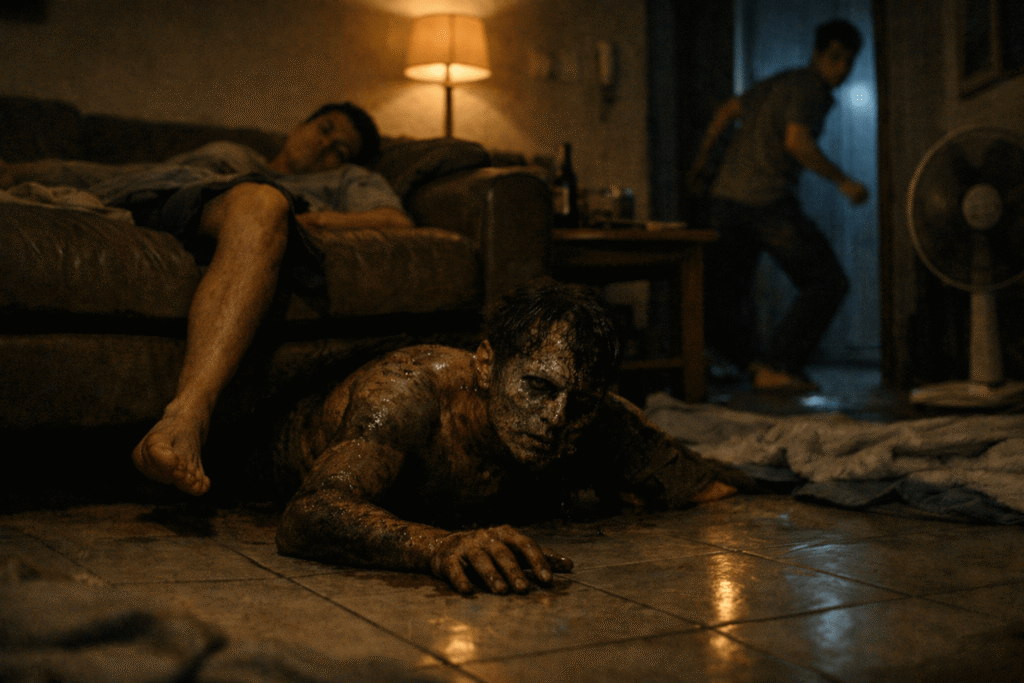
Ryan was the first to sound as though he had fallen half asleep, with one leg hanging over the edge of the sofa.
Ken lay near the far armrest on the floor.
Jun Wei was the last to fall asleep, not by choice, but because he could not sleep. As he stared into the dimly lit room, listening to the oscillating fan and the faint tapping of the rain against the window grilles, he became aware of another sound moving underneath all the others.
The Sound Beneath the Silence
At first, it was so subtle that he thought it was just the unease from the road continuing in his mind.
Then it happened again.
A low, wet scrape.
A pause.
Then the drag of something pulling itself forward over the tiles.
Every fibre of his being told him not to turn, because when you’re afraid, there’s always one last second when ignorance remains possible, and once you surrender to it, you can’t get it back. But the sound came again, closer and more distinct now, and dread itself became a command.
Very slowly, Jun Wei turned his head towards the sofa.

What he saw near Ryan’s dangling leg was not something that any frightened mind could later dismiss as a mistake.
There, with one muddy hand braced flat against the floor.
Another reaching forward.
Then the rest followed—only the upper half of a body dragging itself across the tiles with slow, deliberate intent. Below the ribs, there was nothing — no hips, no legs, no completion — only the abrupt, ruined ending of flesh that should have continued, but did not.
The face, when it tilted upwards into the dim light, was mangled down one side so badly that it looked less wounded than unfinished — as though the road, the railing and the mud had taken away whatever the world no longer required in order for it to keep moving.
For a few terrible seconds, Jun Wei could not speak. Terror had paralysed him completely, even his breath seemed trapped outside his body, and he could only stare as the creature drew closer, its torso sliding with a damp, scraping sound over the floor near Ryan’s ankle.
Run Before It Reaches You
Then, driven by the urge to survive, he broke free from his paralysis.
“RUN!” he shouted, the word tearing out of him with so much force it shocked even him. “RUN, RUN!”
Ken jerked upright at once and looked where Jun Wei was looking, and whatever he saw there erased all need for explanation. Ryan woke in confusion, half rising with his eyes still unfocused, while Jun Wei scrambled backward and Ken lunged for the door.
“What happened?” Ryan shouted. “What happened?”
“RUN!” Jun Wei yelled again, because language had already failed the moment sight took over.
Ken reached the door first and tore it open.
Jun Wei was right behind him.
Ryan stumbled after them last—confusion slowing him just enough to feel dangerously late.
In that first burst of panic he was still half-awake, still trying to understand why Jun Wei was shouting and why Ken had already torn the door open and fled into the corridor with such naked urgency.
By the time instinct finally caught up with him, he ran blindly, driven by the primitive fear that if the other two had abandoned the room that quickly, then whatever remained inside it was something he could not afford to ask.
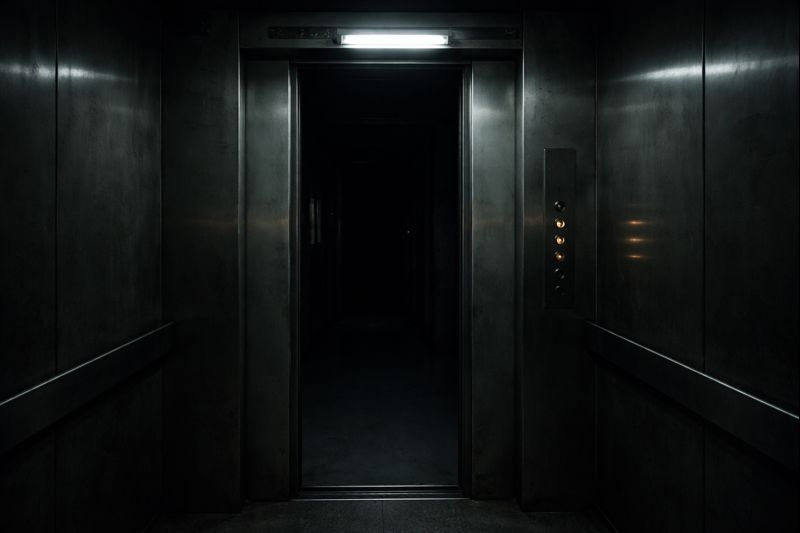
They did not stop to take anything. They ran out of the house, down the corridor, past the lift lobby, then chose the stairs because standing still in an enclosed space suddenly felt impossible, and by the time they reached the ground floor, all three of them were breathing hard, shaking, and already half-soaked again by the windblown rain.
They fled to the nearest 24-hour coffee shop because light and noise and other people were the only things left that still resembled ordinary life.
The Bruise at the Coffee Shop
When they reached the coffee shop, they slumped into the plastic chairs beneath the merciless glare of the fluorescent lights. They didn’t speak for several seconds, not because they had nothing to say, but because terror leaves the body in fragments rather than all at once, and they were all still trying to regain control of their breathing.
Ryan was the first to find his voice, though his words came out raw and uneven, stripped of his usual swagger. “What happened? Why did you all suddenly run like that?”
Jun Wei bent forward, resting both elbows on the table, his gaze fixed somewhere below the surface as if the thing might still be there. “I… I saw it,” he said at last. “On the sofa. Beside your leg. Just its half-body. Crawling.”
Ryan stared at him, denial forming and faltering at the same time. “What half body?”
Ken lifted his head slowly. “I saw something too. Earlier, after we passed the police… I looked in the mirror.”
The fluorescent light above them flickered once, briefly dimming before returning to its harsh brightness. None of them looked up.
“I saw muddy hands holding the back of the bike,” Ken said. “Something was trailing us.”
At the next table, someone had stopped talking. Not turning, not moving—just listening.
The Mark It Left Behind
Jun Wei gave a broken laugh that contained no humour at all. “Too late already.”
Ryan leaned back in his chair very slowly, and for the first time that night he seemed unable to assemble even a weak joke around what he was hearing.
He dropped one hand to his leg, perhaps without thinking, perhaps only because the story of the crawling thing had made him suddenly conscious of his own body again, and the moment his fingers brushed his ankle, his expression changed.
“What?” Ken said at once.
Ryan lowered his gaze.
On the exposed skin just above his sock, where there had been nothing before, five dark marks were blooming clearly against the flesh, curved in a shape no fall or scrape could explain, each bruise deepening by the second until the whole outline resolved into something horrifyingly precise—a handprint, as if fingers had clamped around his ankle hard enough to leave their claim behind.
For several seconds nobody moved.
Nobody spoke.
The fluorescent light above them buzzed faintly. Cups clinked somewhere behind the stall. Rain whispered at the edge of the awning outside.
Then Ryan pulled up his pant leg with shaking hands and stared harder, as though closer inspection might somehow make the shape less unmistakable.
“It grabbed me,” he said, but not to either of them. He said it the way people speak when realization is still landing inside them and language has not yet caught up. “It grabbed me.”
This time, no one contradicted him, because terror becomes certainty very quickly once it leaves a mark.
The Ride He Should Not Have Taken
Ken and Jun Wei wanted to keep Ryan there until morning, though neither of them said it in those words. Ryan was now more humiliation than disbelief, and had reached a point where fear and pride feed each other. The need to prove control grows when it has already been lost.
“I’m not sitting here all night like some idiot,” he said at last, standing too quickly, his face pale and his voice trying to recover firmness it no longer possessed. “Maybe I just need to go home and sleep.”
Ken stared at him. “Are you mad? After what we just saw?”
Ryan looked away first. “You saw it. He saw it. I didn’t. I only know both of you are scaring yourselves.”
Jun Wei slammed a hand against the table. “RYAN, don’t be stupid.”
But Ryan’s fear had already twisted itself into defiance. He turned to Ken and held out his hand. “Give me your keys.”
Ken recoiled. “No.”
“Give me.”
“I said NO.”
Ryan’s jaw tightened. “Fine, then I’ll walk, and if something happens on the way, it’s on you.”
It was a cruel thing to say, and perhaps Ryan knew that, but fear often makes cruelty feel like leverage, and Ken, exhausted and shaken and angry, made the mistake of thinking that giving him the bike would at least get him home faster, home safer, home where walls and family and daylight’s approach might finish what reason could not.
So he handed over the keys.
“Listen, you go straight home,” Ken said. “No detour. No nonsense.”
Ryan took them with a brittle, mocking smile that did not reach his eyes. “Nothing will happen.”
He kicked the engine to life. Something cold seemed to tighten around his ankle but was gone before he could react.
The Call the Next Morning
The words should have died the moment he spoke them.
Instead they followed him.
Jun Wei and Ken watched from beneath the awning as Ryan climbed onto Ken’s bike and rode out into the thinning rain alone, the red tail light shrinking along the wet road until it was swallowed by distance and dark, and both of them stood there longer than necessary afterward, not because they believed looking harder might bring him back, but because neither of them could shake the feeling that they had just watched someone move deeper into a sentence the night had already begun writing for him.
The call came the next morning.
Not from Ryan.
From Mabel.
Ken answered first, his sleep still heavy and confused until the tone of her voice cut through everything else. It was the flat, strained tone of someone who had not yet allowed herself to cry because practical things still needed doing.
“Ryan had an accident,” she said. “He’s in the hospital.”
Ken sat upright so fast he nearly dropped the phone. Jun Wei, seeing his face, was already awake before a word was spoken aloud.
Mabel continued, each phrase sounding forced into order. “He was found after the bike went down near a junction. He’s alive. But he’s unconscious. Doctors say coma.”
Jun Wei took the phone next and asked questions that received only broken answers—what time, how bad, which hospital—but even before they reached the ward later that day, both boys were already carrying the same unbearable certainty: Ryan had not simply crashed.
Something had followed him until the road could finish what it began.
The Hospital and the Waiting Shape
Ryan remained in a coma for several days, and those days stretched with the peculiar cruelty that only hospitals produce, where time becomes both too full and completely empty, where hope rises with the slightest movement and collapses again under the weight of unchanged monitors and careful medical language, and Mabel, who had entered those first hours desperate only for her brother to wake, found herself gradually confronted by something even worse than unconsciousness—the possibility that whatever had struck him had done so with intention rather than force.
Ken and Jun Wei visited, pale and guilty and unable to tell her everything at once. Eventually they told her enough: the hill road, the police search, the words Ryan said, the crawling thing in Ken’s living room, the bruise at the coffee shop, Ryan riding off alone because among the three of them he was the only one who had never truly seen it with his own eyes.
Mabel listened in silence so complete it unnerved them both.
On the fourth night, when the ward had gone quiet and only the distant movement of trolleys and the soft breathing of sleeping patients travelled through the corridor, Mabel stood beside Ryan’s bed adjusting the blanket over his legs when she felt the temperature change slightly, not enough for a nurse to notice on a chart, but enough to tighten the skin at the back of her neck.
Then came a sound from below the edge of the bed.
A low, wet scrape.
She froze.
It came again—closer this time, followed by the unmistakable friction of something moving on its hands.
What Waited Beneath
Mabel looked down.
At first she saw only shadow.
Then, from the dimness at the foot of the bed, an outline resolved itself slowly into shape: one hand planted against the tile, another half-lifted, a torso angled low, and above it a face broken down one side so badly that even in half-light it appeared less wounded than unfinished, as though the road had stripped it down to only what was needed to keep moving.
It was not looking at her.
It was looking at Ryan’s legs beneath the blanket.
And in that moment, more clearly than any doctor’s explanation, Mabel thought she understood what the thing had come for. It had not followed Ryan to kill him quickly. It had followed him… or at least, that was the only explanation that seemed to make sense. The dead rider had gone over the hill in rain, broken and incomplete. Now Ryan lay alive but cut off from the lower half of himself in another way, not by blood, but by something that had taken its place.
But she never said any of this out loud—not to the doctors, not to Ken, not even to herself more than once.
What It Came to Finish
The figure at the foot of the bed did not move toward her. It did not lunge, hiss, or ask to be seen. It merely remained there with the terrible stillness of something that had already arrived exactly where it intended to be.
When Ryan woke the following day, his consciousness brought a brief flare of relief that did not survive the first attempt to move his legs. The doctors found no satisfying reason for the loss. Tests were discussed. Terms were offered. Outcomes were left vague. But Mabel no longer needed medicine to explain what medicine could not.
Later, when she and Ken passed the yard where the damaged motorbike had been placed, she saw the dried mud handprints fixed at the rear of the seat, and everything locked into place with a finality that made her feel cold even in the afternoon heat.
That night Ryan called for her softly from the bed, his face grey with exhaustion.
“Jie,” he whispered when she leaned closer. “Sometimes when I’m trying to sleep… I hear something under the bed.”
Mabel took his hand because it was the only answer she had left to give.
Outside the room, the ward remained ordinary—nurses walking, wheels rolling, doors opening and closing—but beneath those ordinary sounds, very faintly, as though it had all the time in the world, she thought she heard once again the damp, patient drag of something moving on its hands through darkness, still holding on, still not finished, making sure that a sentence spoken too carelessly in the rain would never again feel small in anyone’s mouth.
Closing Line
After that, the story did not remain confined to the hospital. Instead, it moved quietly—through nurses, through riders, through late-night conversations where voices were always lowered at the same point.
Some say that the rider who went over the hill that night was never found intact. Others claim the search ended too early, that the rain hid more than it revealed. No one agrees on what really followed those who passed the road afterwards, only that something did.
That is why people who know the hill road say that if you see police lights flashing through heavy rain, you should keep your eyes on the road and say nothing. Some accidents do not end where the cordon begins, and some of those flung down into the muddy darkness do not stay where they fall. They climb and follow. If you speak for them before the road is finished, they may come back with only their ruined hands.
Every version ends the same way—after that night, no one who jokes about that road ever rides it the same way again.
Related Story
Mabel Tan had already learned that some patients do not come back alone.
Before her brother’s accident, she spent nights in Room 713 watching another survivor lie between life and something waiting beside the bed.